

Travis MacDonald and the Melancholy of Counter-Culture: “Had a Farm” at CFA Berlin

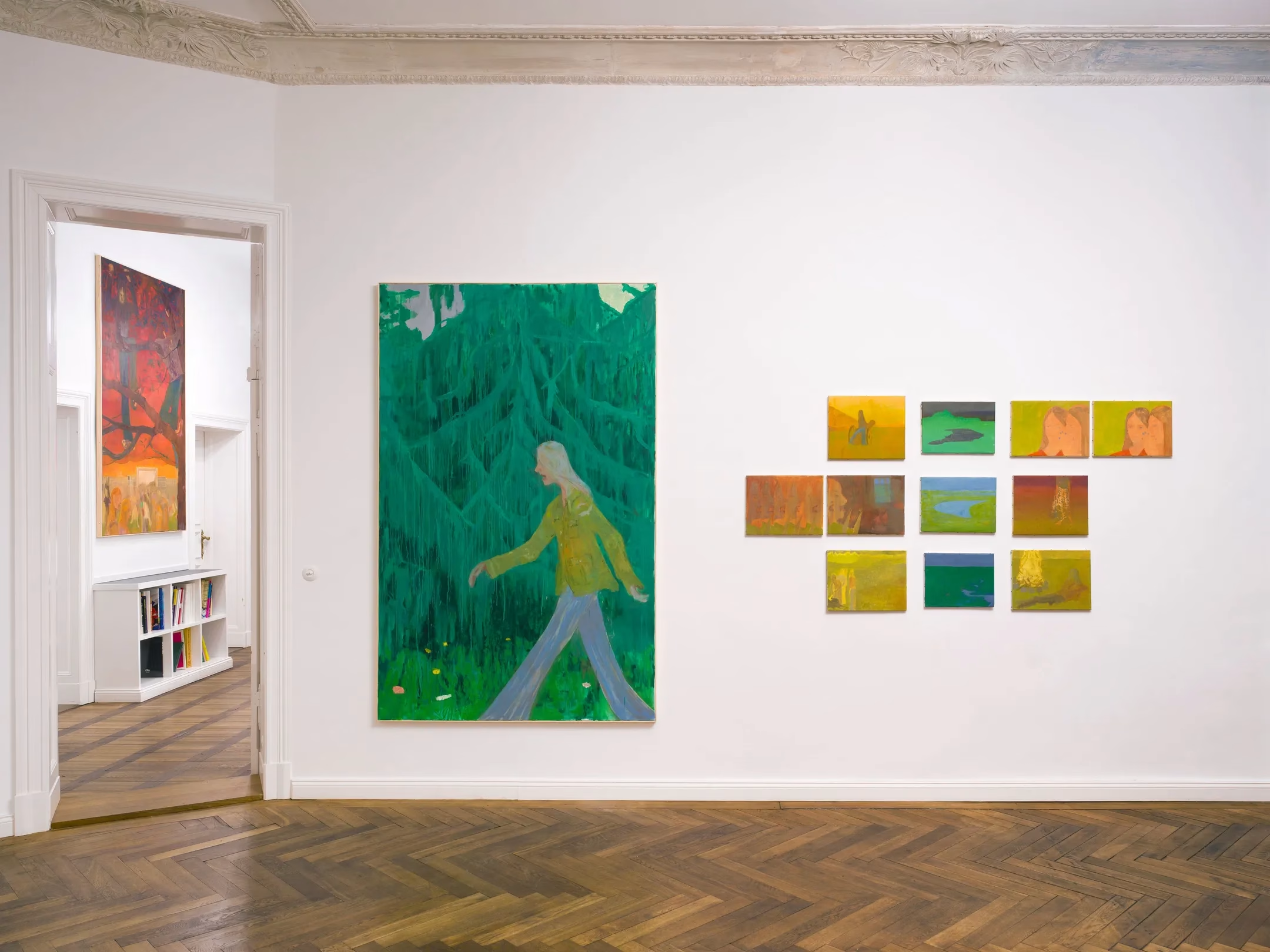
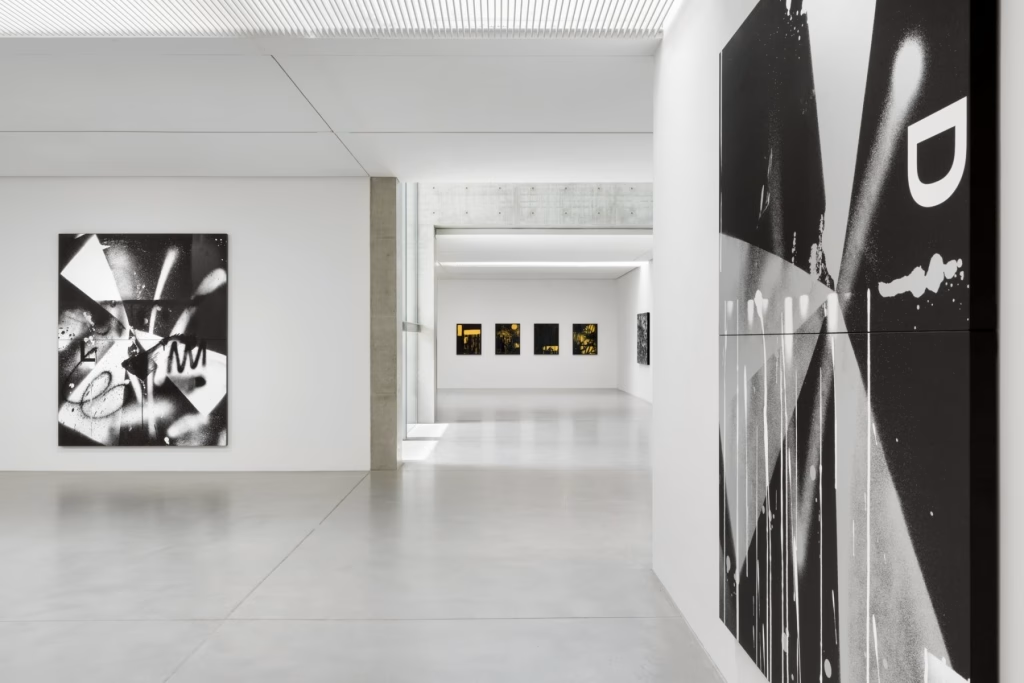
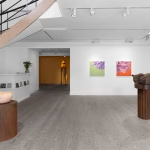
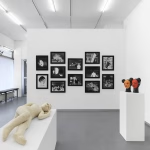
Stepping into the upper floor of Contemporary Fine Arts (CFA), leaving behind the familiar, fast-paced, and crowded energy of Gallery Weekend Berlin, I felt the flow of time suddenly decelerate. Travis MacDonald’s new solo exhibition, “Had a Farm,” greets the viewer with a clever irony—a folkloric play on words between the artist’s surname and the children’s nursery rhyme Old MacDonald Had a Farm. However, as you move deeper into the space, you realize that the “farm” here represents not a pastoral retreat, but a fictional and uncanny ecosystem where an ideology, an artistic practice, and even hair itself are cultivated.
Wandering through the exhibition, I felt that I wasn’t just observing MacDonald’s works, but being pulled into a screenplay he had constructed. Indeed, the artist’s creative process functions exactly this way: before a brush ever touches the canvas, he sits down to write a script and develop a storyboard.
Conflict in the Countryside: The Limits of Utopia
The starting point of the story MacDonald tells in his paintings is quite familiar and timely: a young, educated generation fleeing the housing crises of major cities to settle in the countryside on abandoned farms. And, of course, the inevitable, silent cultural collision they experience with the conservative locals who have lived there for generations…
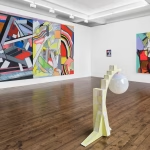
Feeding off photo archives of experimental communes from the 1970s, these scenes are not conveyed through sloganeering or loud political art language, but through highly indirect, subtle gestures. In compositions dominated by earthy tones and a natural color palette, the drama exists as a grounded, quiet tension.
Hair’s Trial by Gravity and the Art Nouveau Spirit
As you approach the canvases, your eye is caught by the long-haired, androgynous figures. Rooted in the hippie movement, these figures also function as reflections of self-portraiture. However, what struck me most was the use of hair not just as a symbol of “style” or “rejection,” but as a material surrendered to the nature of the paint itself. MacDonald’s wet oil paint yields to gravity, gliding downward and bestowing a ghostly, melancholic contour upon each body and the surrounding atmosphere. These bodily elongations perfectly echo the romantic, elegant, and slightly Gothic spirit of Art Nouveau.
Pasolini’s Legacy: The Body as a Political Sign
The conceptual backbone of the exhibition rests on Pier Paolo Pasolini’s unforgettable 1973 essay, Il discorso dei capelli (The Speech of Hair). MacDonald directly responds to Pasolini’s sharp vision, which reads outward appearance as a political sign.
In an era where authoritarian thought is resurging globally, looking back at these “non-conforming” expressions from the past is profoundly meaningful. Standing before the paintings, you realize once again: in this context, what we call “care” is not a naive softness, but a state of political alertness—an ethic of resistance.
Leaving the gallery, you feel clearly that Had a Farm does not offer a sweet escapist fantasy. Instead, the artist pushes us into a charged social field where belonging is temporary and identity is open to interpretation. He poses the difficult question: Despite so much external pressure, is it still possible to build something collective that is larger than the “self”?
If you are in Berlin, make sure to visit MacDonald’s quiet yet deeply unsettling cinematographic world.
Save the Date:
- Venue: Contemporary Fine Arts (CFA) – Upper Floor, Berlin
- Exhibition Dates: May 2 – June 6, 2026
- Context: Gallery Weekend Berlin 2026