

On this hazy February evening in 2026, for souls weary of the massive explosions in cinema auditoriums and the never-ending “smart” algorithms of digital platforms, Michael J. Weithorn has delivered a film that feels like medicine: The Best You Can. In an era where cinema increasingly prizes “more, faster, louder,” Weithorn shows us how revolutionary it can be to simply pause, breathe—and even just stare at a screen and share a conversation with a stranger. The film masterfully sidesteps the conventional action opening—a botched burglary attempt—and instead builds, from the adrenaline wreckage of that moment, a friendship that quietly blossoms in the stillness of the night.
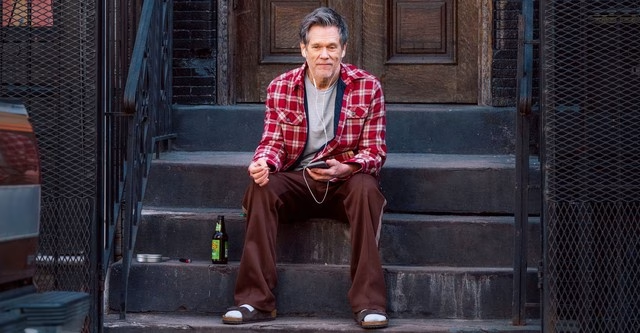
At the center of the story stand Kevin Bacon, with his signature weary yet dignified expression, as security guard Stan, and Cynthia (Kyra Sedgwick), the woman whose home he protects. Bacon and Sedgwick bring the calm authenticity of their real-life forty-year partnership to the screen so naturally that you feel in your bones how every short text message between Stan and Cynthia becomes a kind of refuge. This is not a passionate, world-shaking love story; it is the story of two adults who gradually soften simply because they are seen by one another. Weithorn’s cinematic language flows not at the pace of an action film, but at the slow tempo of a midnight conversation.
A perfect addition to 2026 cinema’s emerging wave of “Adult Coming-of-Age Stories,” the film frames aging not as decline but as a relational recalibration. In a time when middle age weighs heavily on the shoulders, when caregiving responsibilities and past regrets crowd the mind, the light leaking from Stan and Cynthia’s phone screens offers the viewer an emotional shelter as well. The film does not attempt to reinvent its characters; it accepts them exactly as they are, with all their flaws and fatigue. In the midst of 2026’s “burnout culture,” it whispers to the audience that you don’t have to achieve anything grand—that simply doing “the best you can” is enough.
The film’s posture in awards season is as modest yet dignified as the work itself. With only one nomination so far, it proves it is registering not on the radar of big Hollywood spectacles, but with critics who still value sincerity. Yet The Best You Can is the kind of film that will grow legendary through word-of-mouth rather than podium speeches. Kevin Bacon’s protective yet distant courtesy paired with Kyra Sedgwick’s intelligently layered quiet tension elevate the movie beyond mere drama into a kind of “emotional validation” experience. Sometimes in cinema, the loudest scream is the soft “ping” of a late-night text message.
In the end, Michael J. Weithorn uses the disruptive event of a burglary merely as a door-opener, reserving the real story for the compassion that enters through it. The Best You Can reminds us that love doesn’t always have to radically change our lives—sometimes it is enough simply to hold them steady. If, in the complicated world of 2026, you want to understand the freedom of remaining imperfect and the preciousness of connections that arrive late, you should join Stan and Cynthia in their quiet dance. Because sometimes, just being there and listening is the most radical form of love in the world.