

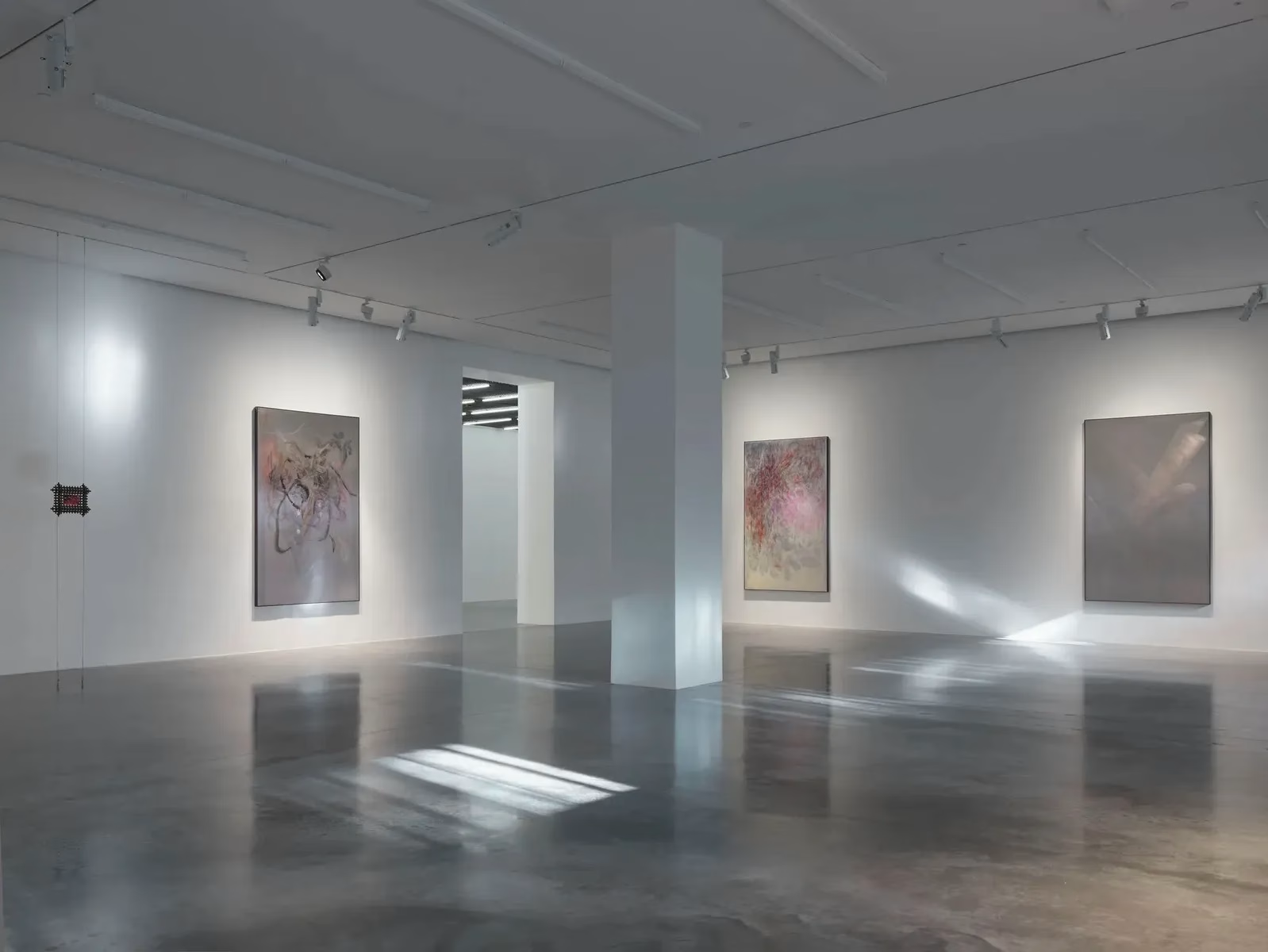
In the wide, post-industrial galleries of London’s Bermondsey district this February, an unusual frequency is spreading. On the London floor of Apartment No:26, the melancholy sound of rain outside gives way to the hum of metal, light, and digital dreams. White Cube Bermondsey invites us, with WangShui’s exhibition “Night Signal,” into a “threshold” zone where consciousness, technology, and ancient dream rituals intertwine. Here, painting is not merely an image; it is a living field constantly calibrated by light, motion, and the viewer’s presence. WangShui treats dreams not as personal fantasies, but as generative systems—like machine learning—that process data, recognize patterns, and reorganize perception. If you believe technology is not a soulless external force but an integral part of our existence, the signals reflected on this floor will open new windows in your mind.
Aluminum and Alchemy: Machine Vision Meets Skin
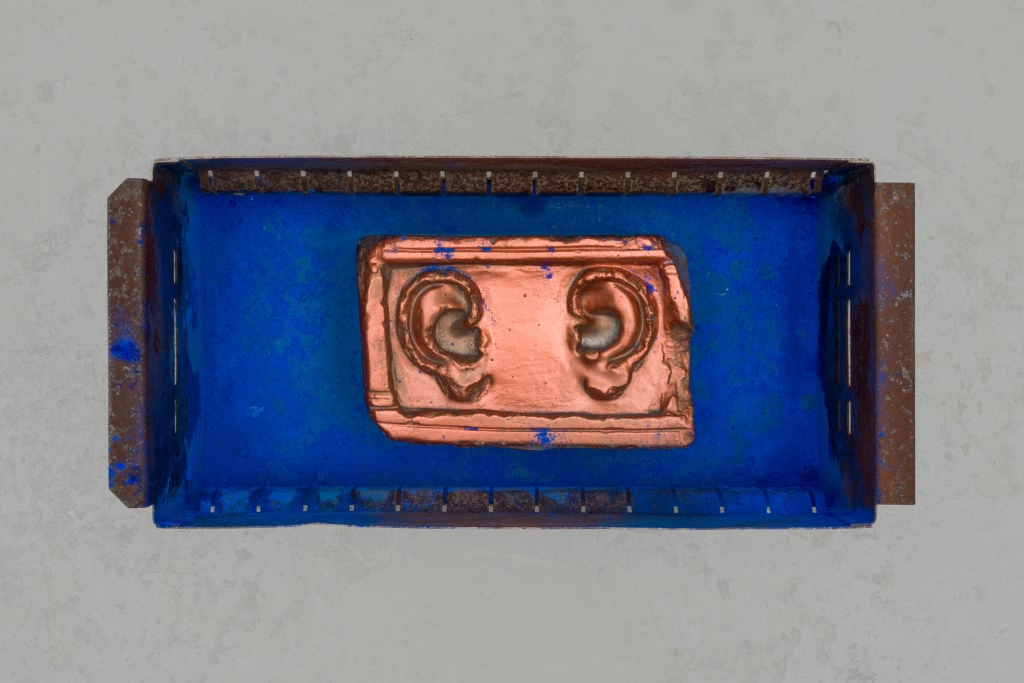
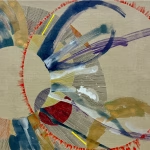
The surfaces WangShui has chosen for “Night Signal” are aluminum panels that recall today’s touchscreens and sensor interfaces. Yet the artist “humanizes” this industrial coldness by working it with sandpaper and dental tools. In this labor-intensive process, the intuition of the hand merges with the precision of digital instruments.
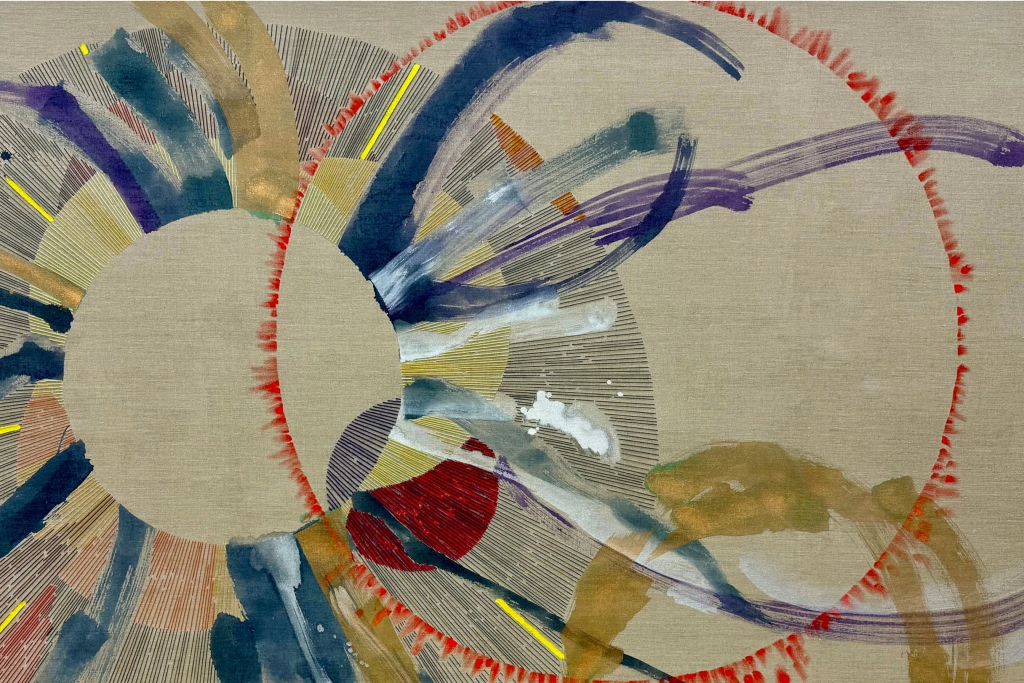
Painting as Interface: As the panels absorb and reflect poured light, the image changes with the viewer’s movement. This is an experience that reminds us perception is never fixed—it is constantly restructured.
Alchemical Layers: Transparent inks and oil paint layers seep through hand-carved reliefs on the metal surface. The result is neither fully a sculpture nor a traditional painting; it hovers between the two—an “atmosphere.”
From Ecuador to Bermondsey: Dream Councils and Resistance
The conceptual backbone of the exhibition was formed during WangShui’s journey to the Ecuadorian Amazon in spring 2025. Indigenous communities gathering each morning to interpret their dreams and guide their lives prompted the artist to ask: What can our dreams tell us about our current impasses?
At the center of the exhibition stands the work “Myelin Sheath” (2026), depicting a dark purple hummingbird emerging from an acidic mist. Surrounding the bird are spiraling “Czech hedgehogs”—anti-tank obstacles of Czechoslovak origin—transformed here into symbols of resistance. Like the myelin sheath of a neuron, these geometric protective forms insulate and shield.
Parallax and Perceptual Calibration
The monumental scale of the works throughout the exhibition forces the viewer to slow down and sharpen their gaze. In pieces such as “Holding Pattern” (2026), markings etched into metal appear and disappear as the viewer moves. This asserts that knowledge can only be grasped from a specific angle and at a specific “frequency.”
“I am this place, and this place is terrible” (2026) hangs from the gallery ceiling like a “psychic portrait.” Composed of steel wires and torch-burned glass, the piece sways like a flag, refracting light and casting faint shadows on the wall behind it. This is the most concrete example of how light functions in WangShui’s world as both material and structural force.
Exhibition Information
Artist: WangShui
Exhibition Title: Night Signal
Venue: White Cube, Bermondsey, London
Dates: February 11 – March 29, 2026
Highlights: Myelin Sheath, Indifferent Darkness, Holding Pattern.
Though the visual language of WangShui’s exhibition recalls the “machine-human” hybridization of science-fiction cinema, the emotion it offers is far more ancient and organic. Here, technology is not an enemy; it is a modern dialect of our dreams.