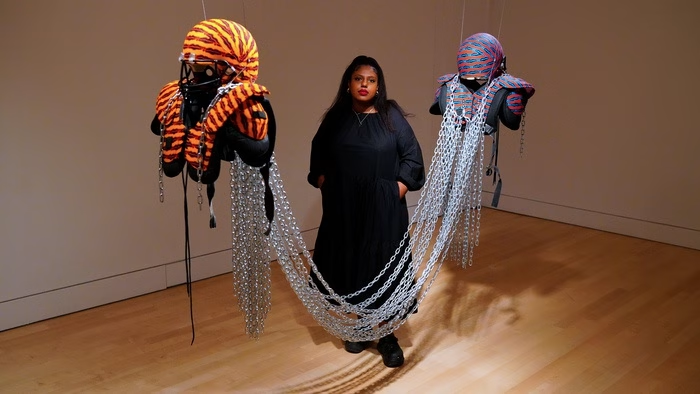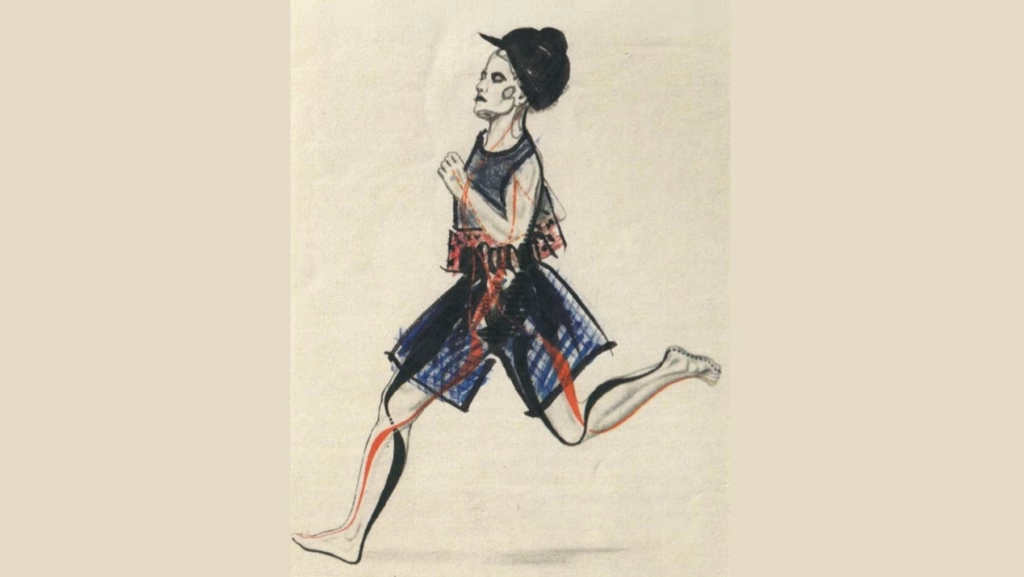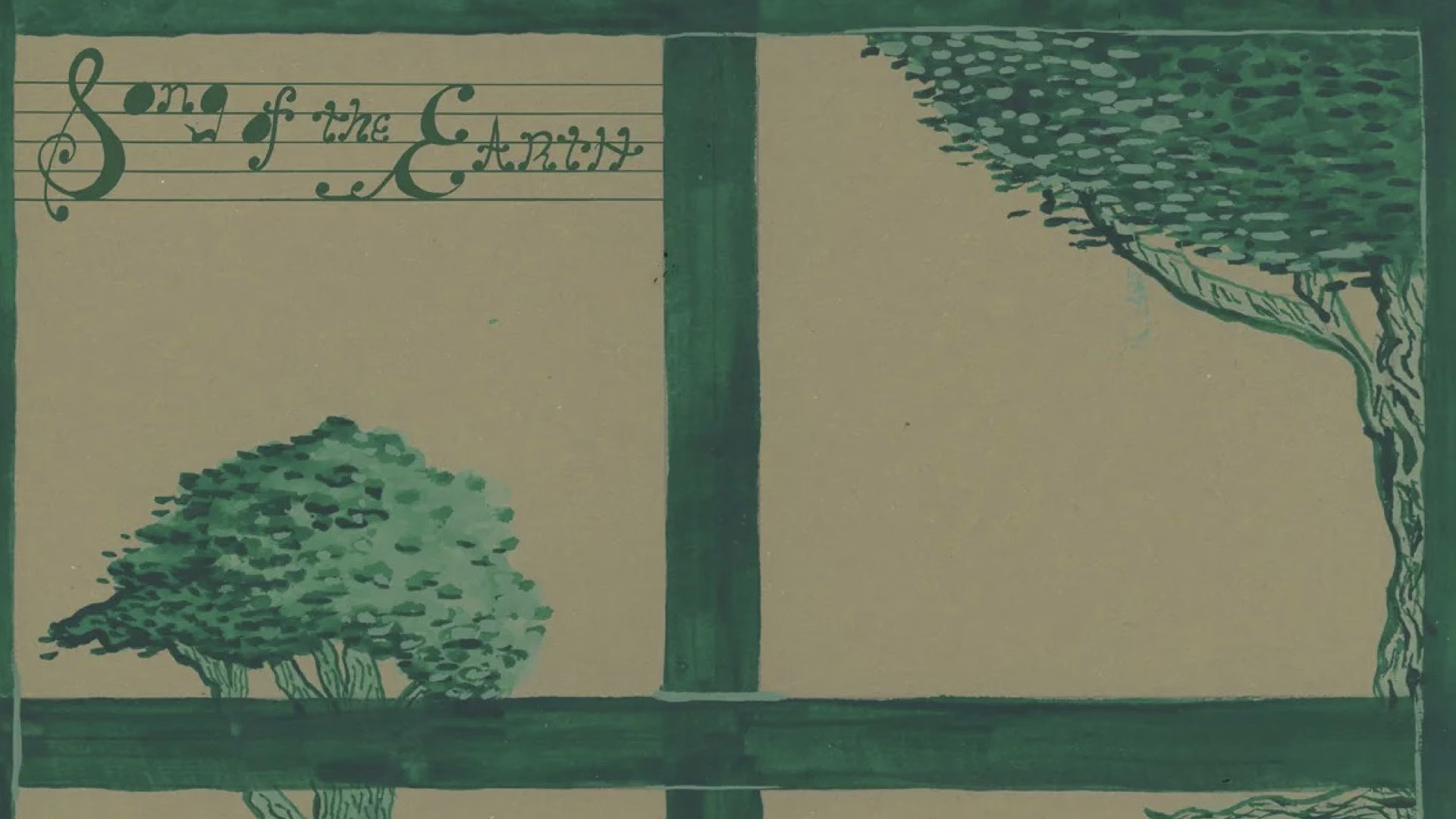


History is sometimes made of shadows that never entered official records, yet continue to exist only through objects, sounds, and documents. With EBENHOLZ, Galerie Thomas Schulte presents James Gregory Atkinson’s research-intensive practice, bringing to light the complex and long-ignored stories of Black Germany in the post-World War II era. Atkinson’s minimalist presentation reveals a dense web of historical references hidden beneath what appears, at first glance, to be ordinary.
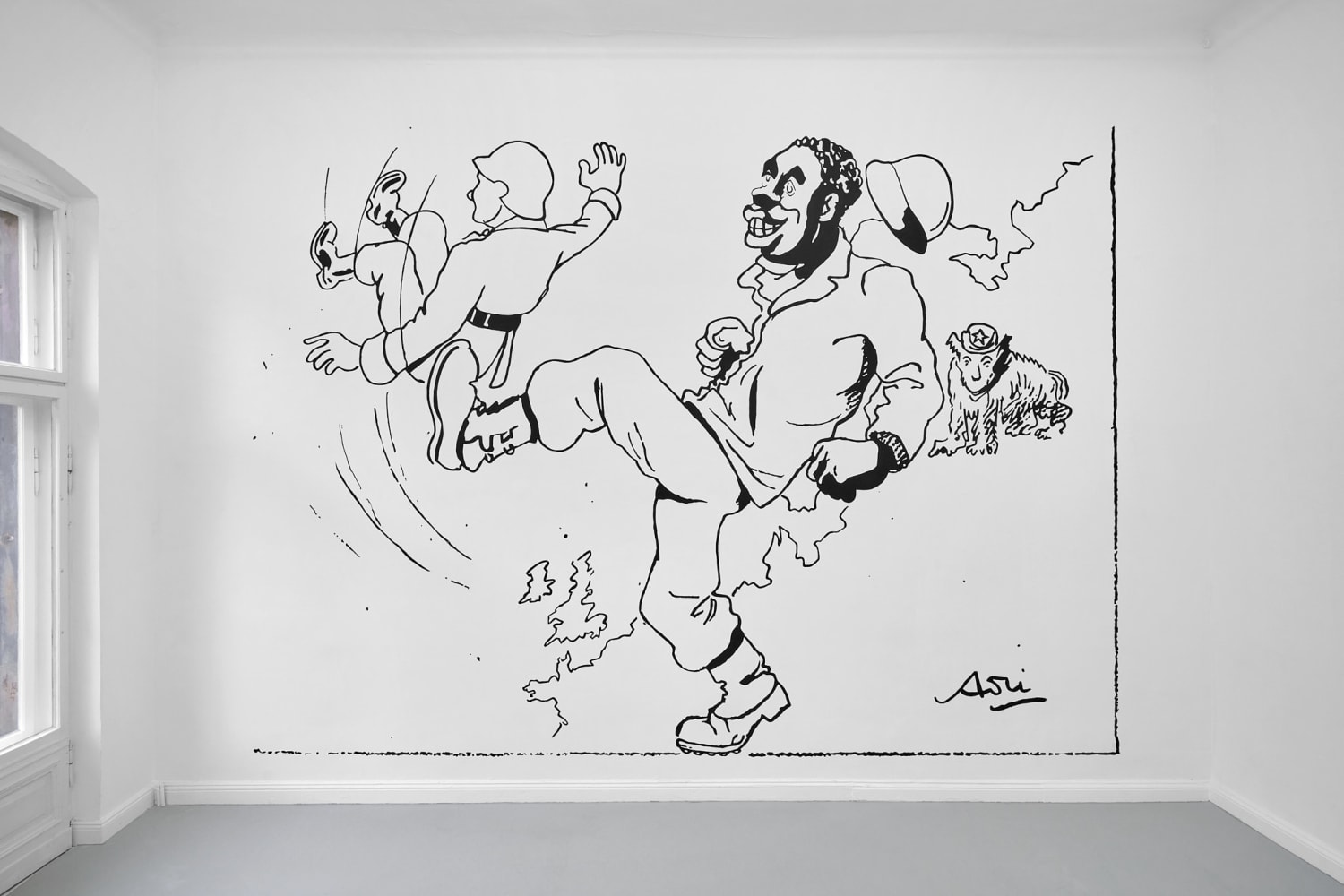
Marie Nejar and the “Mysterious” Orphans
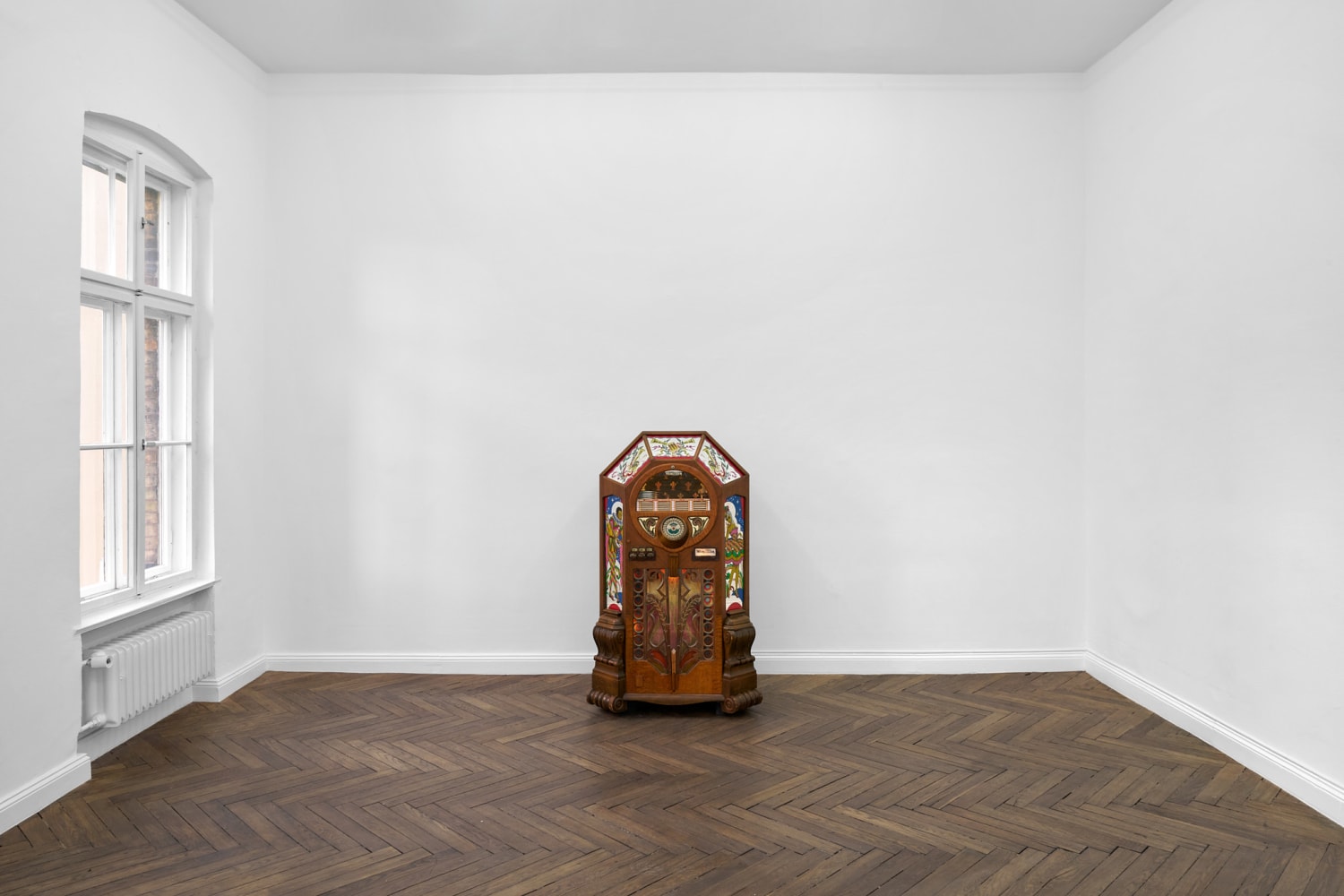
The installation moves at the intersection of biography and history. At its heart are numerous references to the musical career of Marie Nejar (1930–2025), who passed away in May 2025. Forced to appear in Nazi propaganda films in the 1940s, Nejar later performed in the 1950s as a “child star” under the stage name Leila Negra. She was also one of the last surviving Black witnesses of Nazi Germany. Her life and voice are honoured through a jukebox selections and a large gelatin silver print, serving as a trusted guide on Atkinson’s archival journey.
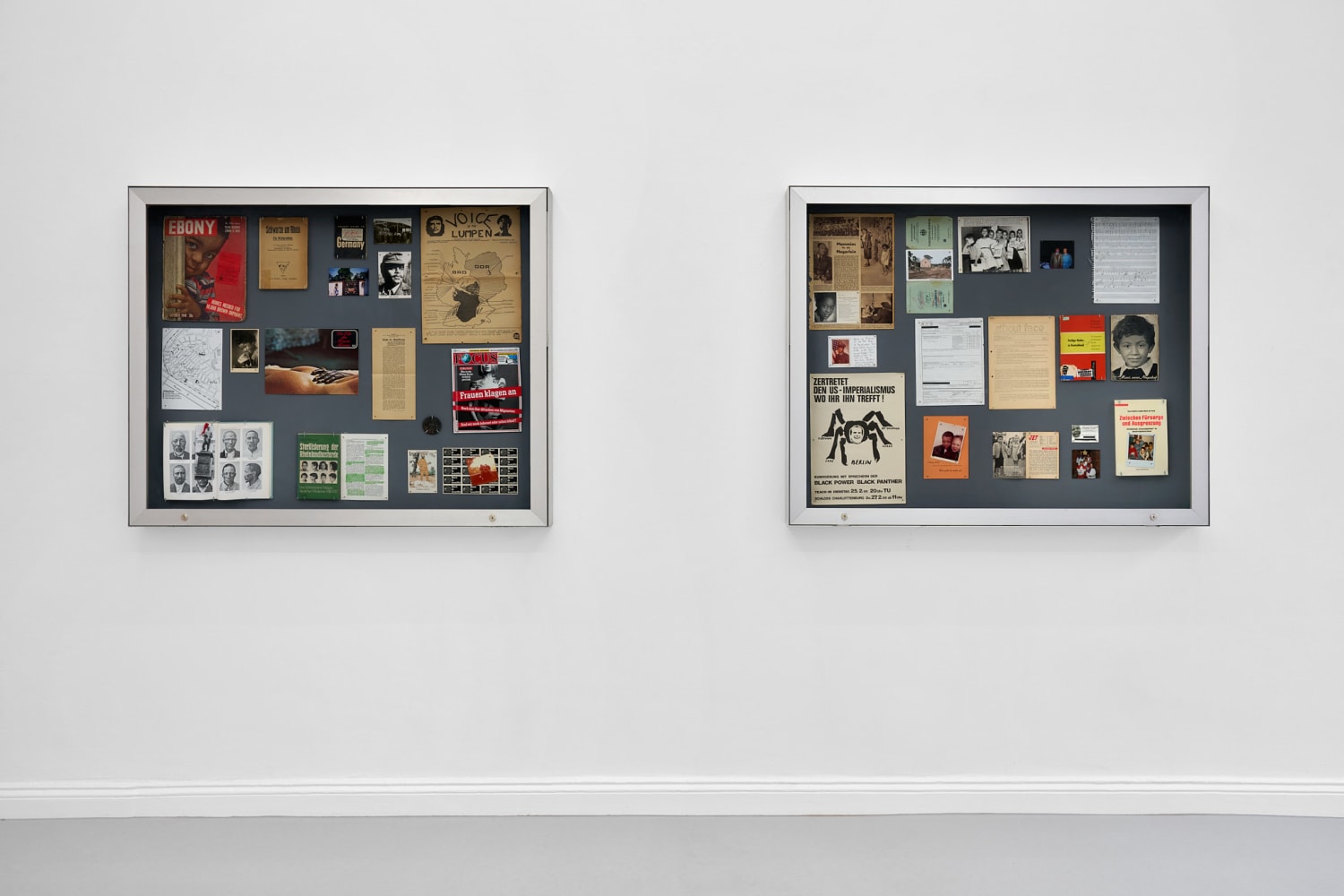
The exhibition title refers to Ebony, the influential post-war monthly magazine. The installation presents the October 1948 issue of Ebony inside an original wall display case from Ray Barracks in Friedberg, where the artist’s father was stationed in the 1960s. The cover headline “Homes Wanted for 10,000 Brown Orphans” sheds light on one of Germany’s darkest post-war chapters: the children born to African-American GIs and white German mothers. The German authorities systematically pressured these children into adoption or orphanages. By 1956, around 5,000 so-called “Brown Babies” had been born in West Germany.
The Institutional Language of Racism and Art’s Response
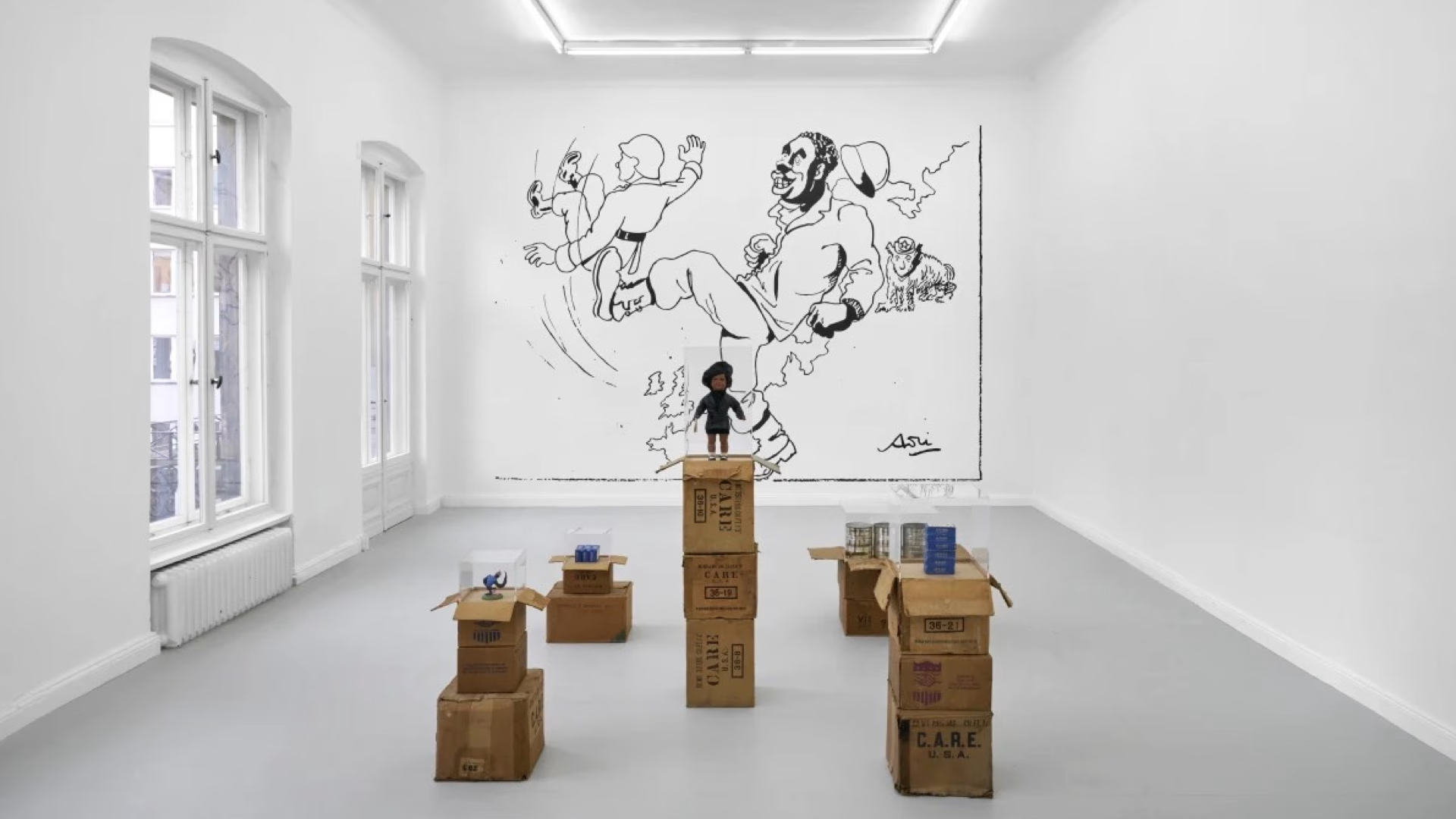
The exhibition documents how these children were initially regarded as a symbol of Germany’s defeat and how, in 1952, CDU politician Luise Rehling described them as “a special human and racial problem not even suited to our country’s climate conditions.” This political rhetoric led society to conclude that the children would be better off growing up elsewhere. Atkinson responds by re-staging a Toxi doll, inspired by the popular film Toxi (1952), dressed in a Black Panthers outfit, an intervention that is not mere nostalgia but a commentary on institutional racism and misleading media narratives.
Atkinson’s minimalist presentation brings together everyday objects such as CARE packages and Ivory Soap with personal memories of Nejar (such as scrubbing herself in the shower), making visible a history that has remained invisible. Through this non-linear archival excavation, the artist re-contextualises Germany’s post-war narrative while highlighting the scarcity of traces left in institutional archives.
Exhibition Information Summary
Artist: James Gregory Atkinson
Title: EBENHOLZ
Venue: Galerie Thomas Schulte, Potsdamer Strasse, Berlin
Dates: 22 November 2025 – 7 February 2026