

-
Hamburger Kunsthalle
-
Until 18 January 2026
-
Galerie der Gegenwart, 3rd Floor
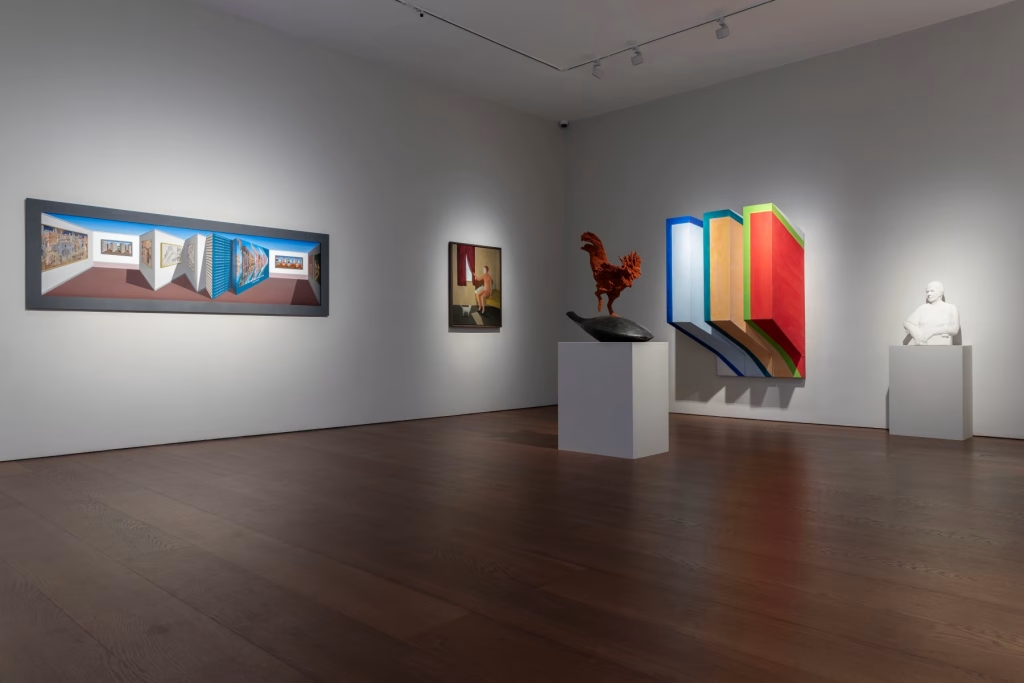
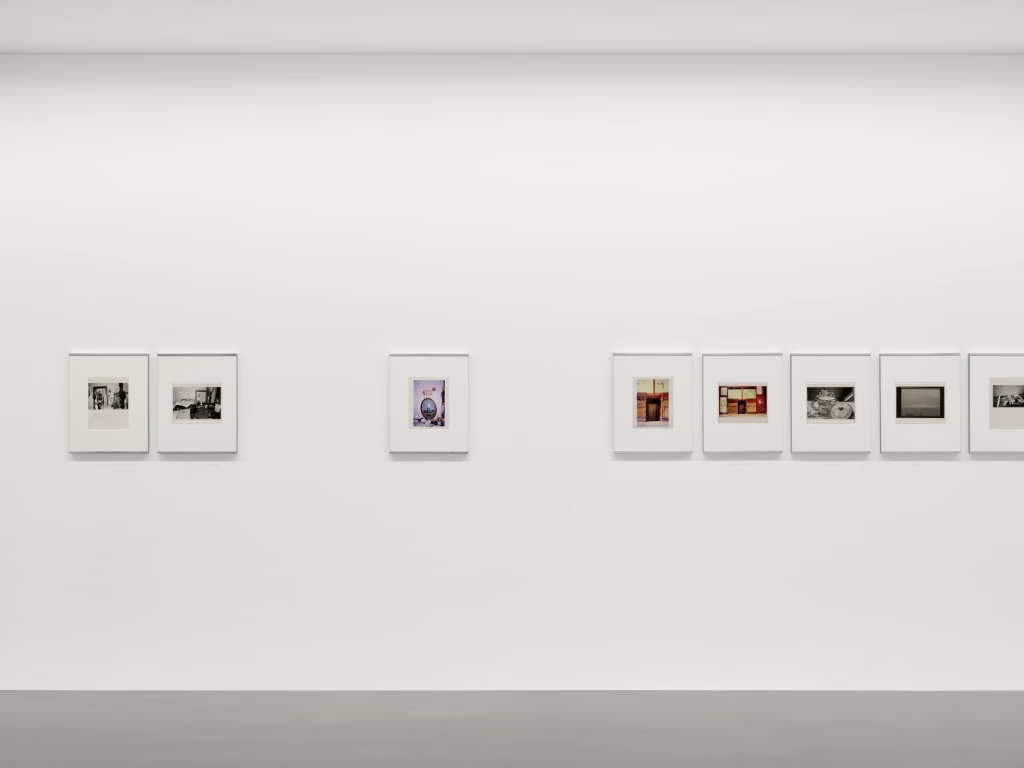
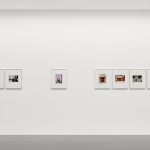
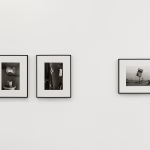
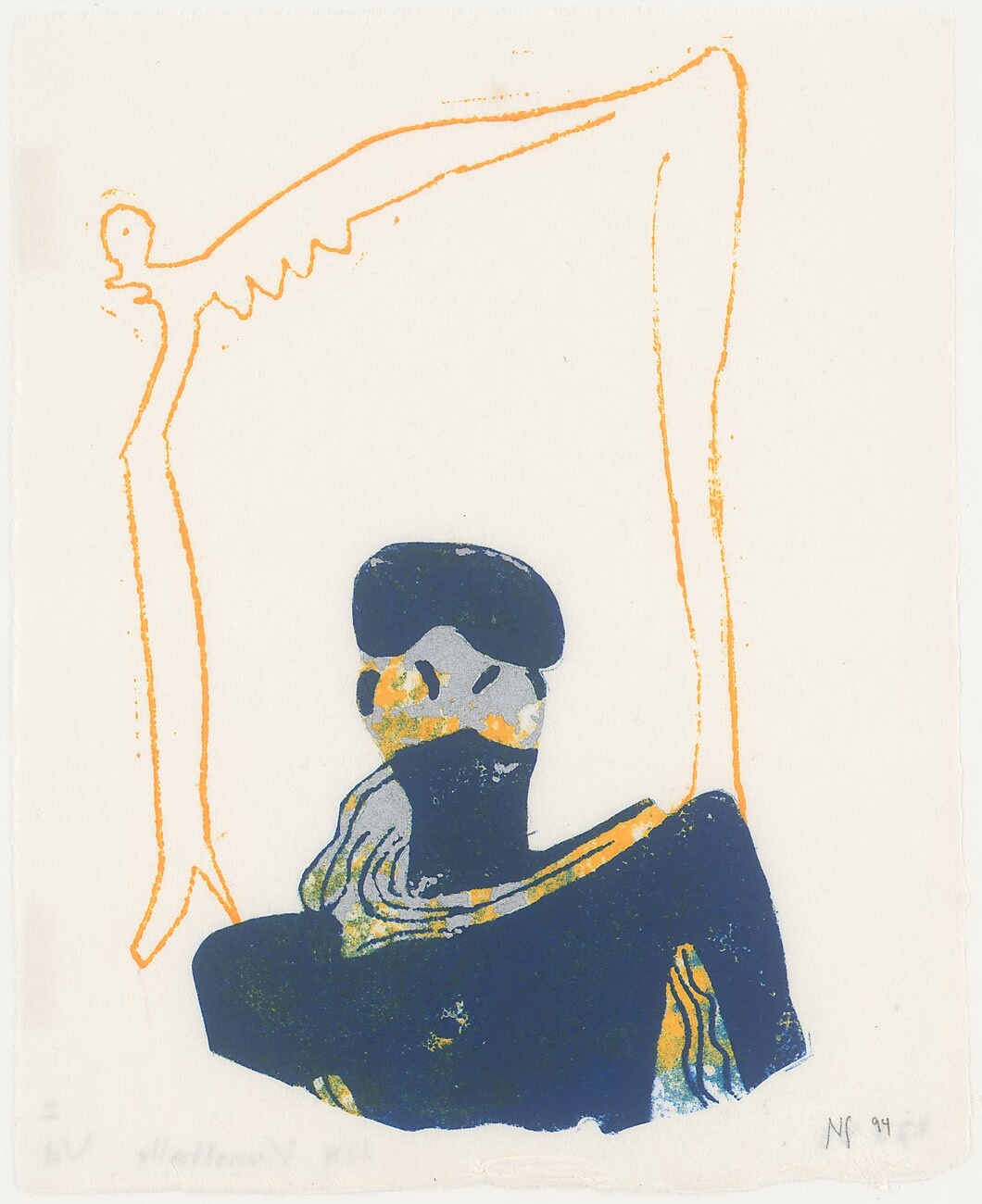
On the occasion of the centenary of the Griffelkunst-Vereinigung Hamburg e.V., the Hamburger Kunsthalle presents the exhibition And So On to Infinity, which comprehensively explores the production and circulation history of this Germany-based original printmaking association from 1925 to the present. The exhibition brings together various printmaking techniques such as lithography, screenprinting, engraving, woodcut, photography, and C-prints, while also making visible the institutional and ideological framework of griffelkunst through archival documents.
From its founding, the Griffelkunst-Vereinigung has operated with the aim of democratising original print editions; it has evaluated the graphic productions of selected artists based on their ability to represent the artist’s practice, rather than on thematic or formal unity. This approach allows the exhibition to offer a plural, artist-centred reading rather than a chronological narrative. Today, with approximately 4,500 members across Germany, this structure has ensured the continuity of graphic art both as a collecting and a production practice.
A Century of Graphic Art
The works in the exhibition reveal the transformation of the relationship that modern and contemporary art has established with graphic production. Gerhard Richter’s 1969 screenprint Schweizer Alpen 1 transfers the tension between photography and painting onto the print surface, reflecting Richter’s approach focused on visual ambiguity and problems of representation. In contrast, Sigmar Polke’s Fernsehbild (1971) places the visual language of mass media into a critical context through offset printing.
The griffelkunst editions also draw attention to the experimental potential of graphic production. Rosemarie Trockel’s heliogravure series links the idea of repetition and multiplication with feminist and institutional critiques; Ulla von Brandenburg’s woodcuts stage themes of theatre, ritual, and the body through the graphic medium. Artists such as Dieter Roth and Dan Graham position printmaking as a vehicle for conceptual art.
Collecting, Access, and Continuity
And So On to Infinity emphasises that graphic art is not merely a technique or a subsidiary discipline; rather, it is a central field of expression that accompanies the intellectual transformations of modern and contemporary art. The exhibition makes visible griffelkunst’s approach, which defines the idea of “collecting” not as a form of ownership but through access, circulation, and sharing. In this respect, the exhibition opens a broader field of discussion concerning both the institutional history of graphic art and the public circulation of art.
Shaped by the long-standing institutional support of the Hamburger Kunsthalle, this exhibition treats the hundred-year accumulation of printmaking not only as a retrospective looking to the past but as an open-ended process extending into the future.