





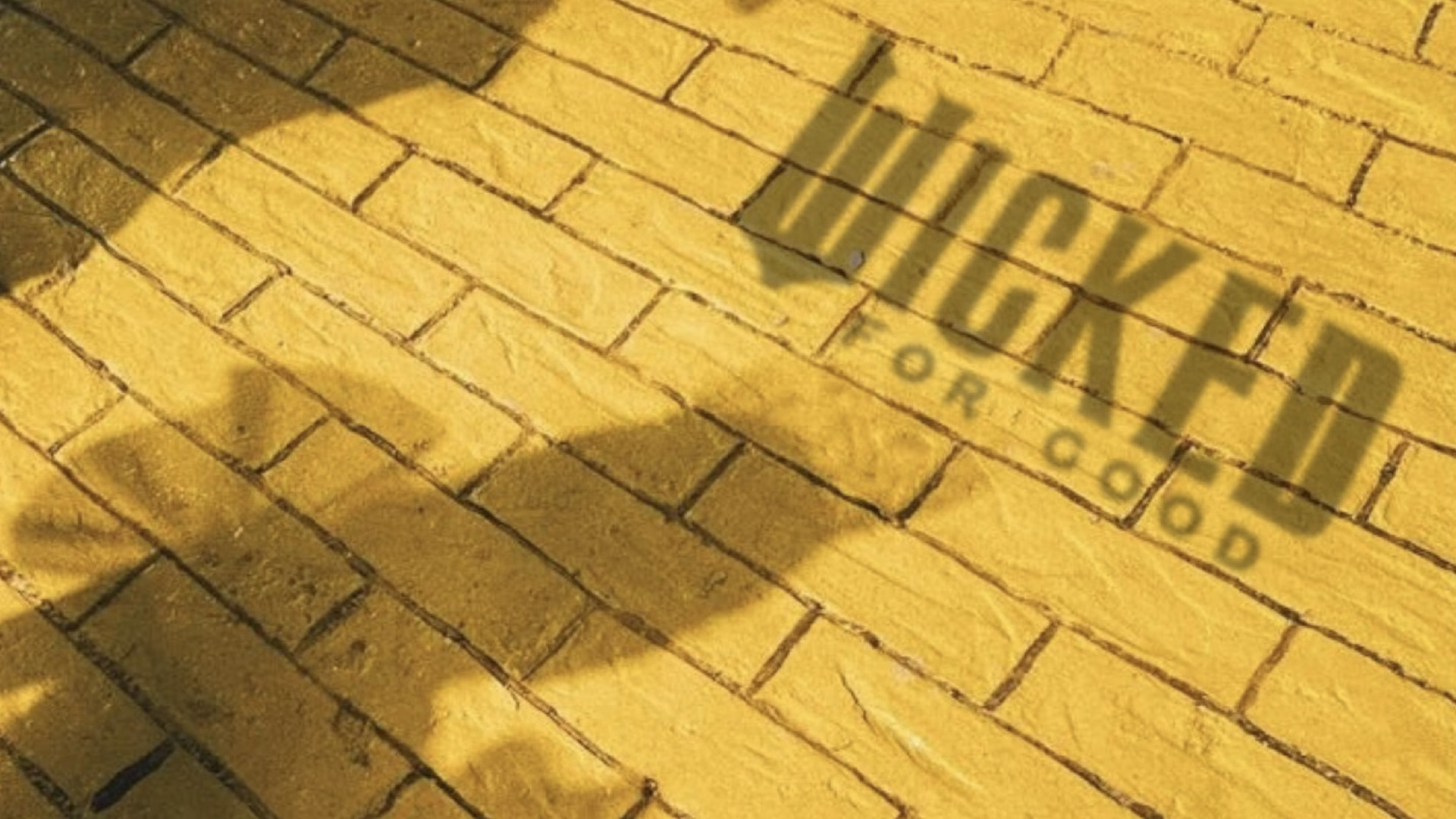

In the 1939 The Wizard of Oz, the Yellow Brick Road was the iconic pathway of Dorothy’s joyful Technicolor journey—a symbol of hope and the search for home. Yet in Wicked: For Good, the second installment of Jon M. Chu’s two-part film adaptation of the Broadway phenomenon Wicked, that very same iconic structure is stripped of its innocence and loaded with a terrifying new meaning: it becomes a vein of oppression.
If you haven’t yet seen Wicked: For Good, put down your broomstick and take the warnings seriously—spoilers lie ahead!
Bricks of Oppression and a Vanishing Rainbow
As production designer Nathan Crowley has pointed out, the Yellow Brick Road in Wicked: For Good is not a symbol of joy; on the contrary, it is the embodiment of forced labor and tyranny. This road is the tool the Wizard (Jeff Goldblum) uses to cut down Oz’s forests and cement his own power.
Enslaved Labor: In the film’s opening moments, we witness the creatures of Oz—animals whose ability to speak has been stripped away by the Wizard’s decree—being forced to build the road. When Elphaba Thropp (Cynthia Erivo), the future Wicked Witch of the West, intervenes and frees them, we are confronted with the bloody and grueling origin of the path. This treatment of animals and Munchkins sits at the very heart of Wicked’s allegory of totalitarianism and fascism.
A Monochrome Dictatorship: Oz’s true charm has always come from its fantastical palette of colors. Yet Crowley emphasizes that the road’s single yellow hue symbolizes the crushing of diversity and the oppression of Oz’s “lower” peoples—the Munchkins and the animals. The Munchkins, who once grew every color of the rainbow, are now forced to cultivate only yellow tulips; the dye from those flowers is worked into the bricks of the road. The disappearance of the rainbow becomes a striking metaphor for imposed uniformity and the suffocation of creativity.
From a design perspective, even Crowley’s struggle to find the “right” shade of yellow under natural and artificial light adds an ironic aesthetic layer to the heavy meaning the road carries.
A Devastating Love Becomes an Escape Hatch
The Yellow Brick Road is not only a symbol of oppression; it also becomes the stage for rebellion and flight.
Watching from the sky as the Wizard and Madame Morrible (Michelle Yeoh) spread fascist propaganda across Oz, Elphaba notices a conspicuous hole in the road. That hole serves as an underground passage used by the animals—including Elphaba’s beloved former nanny Dulcibear—for a mass exodus from Oz.
To the accompaniment of Stephen Schwartz’s new song “No Place Like Home,” and despite Elphaba’s pleas, the animals conclude that no hope remains in Oz and use the hole as an “Underground Railroad” to a safer, freer life.
In the end, after Elphaba fakes her own death and escapes, her former best friend Glinda (Ariana Grande-Butera) declares Oz belongs to everyone and calls the animals and Munchkins back. Yet even with this seemingly happy resolution, the fact that the road was built with blood and toil permanently alters its iconic meaning. By transforming the Yellow Brick Road from a cultural treasure into a tear-soaked infrastructure project of a totalitarian regime, Wicked: For Good adds a powerful and profoundly dark layer to the story.