

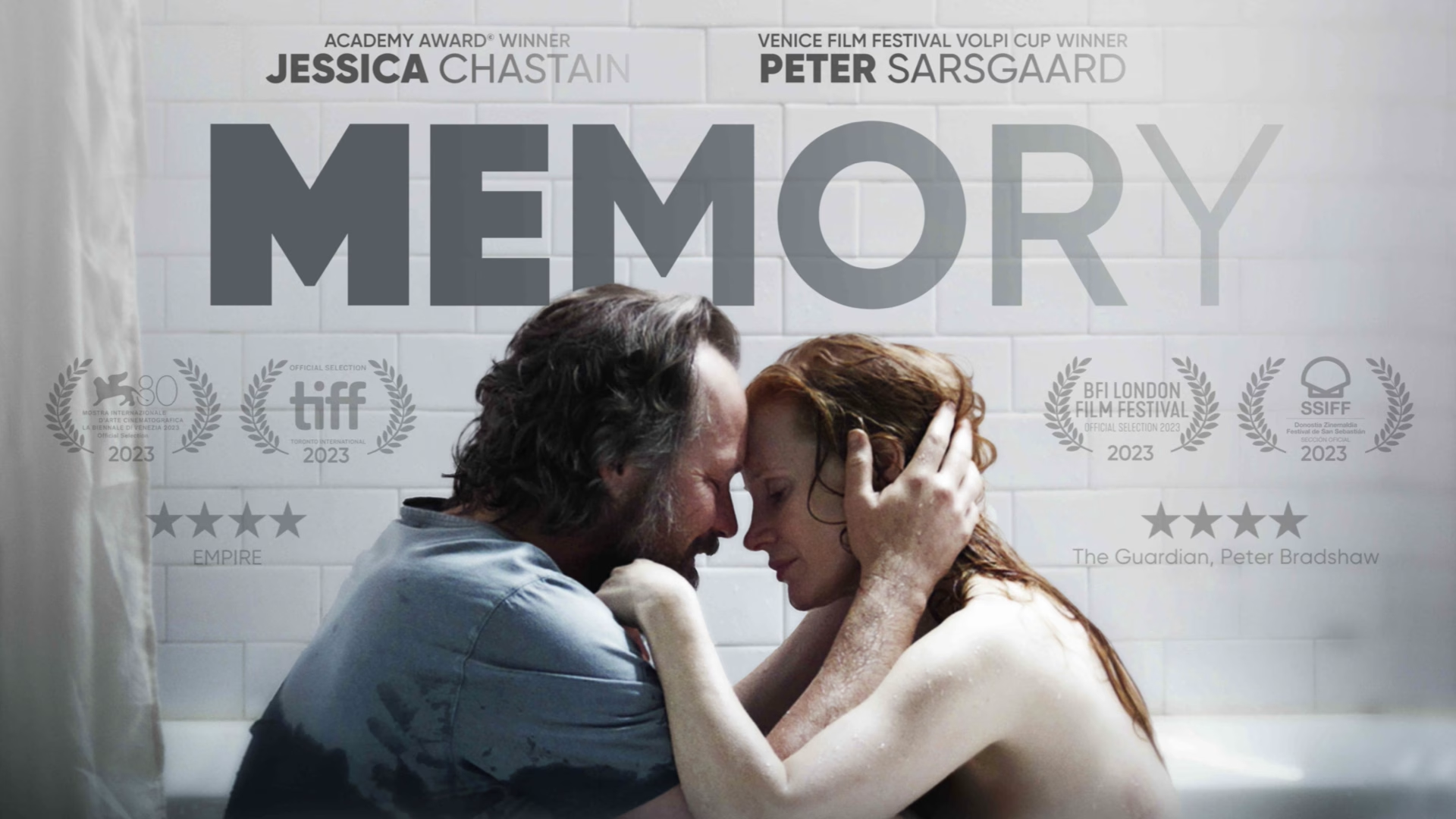
Can one person remain imprisoned because they cannot forget the past, while another finds freedom precisely because they have forgotten everything? In his latest work Memory, Mexican master director Michel Franco (After Lucia, New Order) explores this existential paradox through the unexpected bond between two wounded souls. The film brings together Sylvia (Jessica Chastain), who is battling childhood sexual abuse trauma, and Saul (Peter Sarsgaard), who is losing his identity to early-onset dementia.
Despite its modest $100,000 micro-budget, the film has grossed $2.1 million worldwide, carried by career-best performances from its two leads; proof to the industry that emotional truth can outweigh production spectacle.
Trauma, Oblivion and Philosophical Inquiry
Memory is more than a psychological drama; it is a philosophical investigation: Can identity exist independently of the continuity of memory? While Sylvia’s traumatic memories trap her behind walls of constant vigilance and mistrust, Saul’s cognitive erosion (his forgetting) inadvertently creates a space free from intentional malice. As Sylvia realises that Saul’s condition prevents him from deliberately harming her, their relationship becomes a source of healing built on complementary fragilities.
Natural Acting: The film prioritises raw dialogue; sentences left unfinished, uncomfortable silences endured. By moving away from Hollywood’s polished speech patterns, it achieves a vital authenticity that shows how damaged people truly communicate, amplifying the emotional impact of the trauma narrative.
Art and Accessibility
Jessica Chastain’s nuanced fragility as a trauma survivor and Peter Sarsgaard’s heart-wrenching portrayal of dementia have earned widespread critical acclaim (the chemistry is all the more remarkable given that Chastain personally recommended Sarsgaard for the role). Despite a limited theatrical release, the film is reaching mature audiences seeking psychological depth through prestigious streaming platforms like HBO Max. This demonstrates that adult-oriented character dramas, no longer sustainable solely through cinema releases, can still thrive.
With Memory, Franco acknowledges the permanence of trauma while refusing to rule out the possibility of hope through connection; he proposes that healing does not require wholeness, but rather begins with the acceptance of brokenness.