

As you walk through the corridors of IMMA, you can almost feel the spirit of “reverse migration” hanging in the air. Artist Cecilia Vicuña rejected the initial proposal of a touring retrospective and instead insisted on creating an entirely new work rooted in the Irish heritage she recently discovered through a genealogy test. What could have been a simple cataloguing of a career has transformed into an act of returning home and reclaiming collective memory.
Rebellion, Word-Weapons, and Lost Rituals
The exhibition opens with archival works that illuminate Vicuña’s personal and political history. Photographs documenting her protests against the Pinochet regime while in exile in London during the 1970s, along with a 1974 BBC interview, reveal the enduring poetic rebellion carried in her words.
Her textile political banners, titled “Palabrarmas” (Word-Weapons), function as a code of resistance. The dual dates on these pieces point to the sorrowful memory of how much of her early work had to be destroyed by her family in Chile out of fear of reprisal. Reconstructed here, these banners become loci of resilience, refusal, and metamorphosis.


Wool, Seaweed, and Knotted Writing
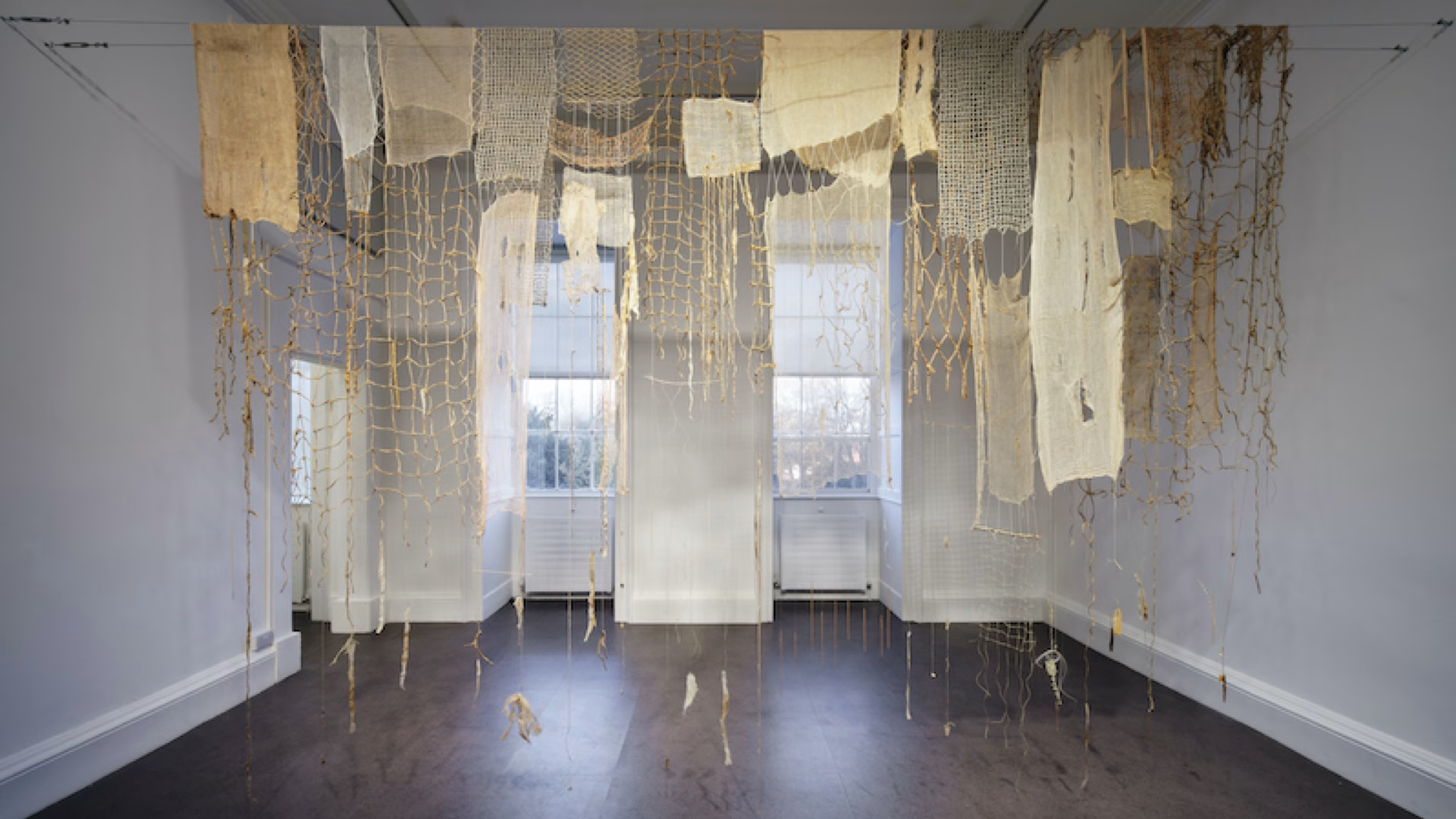
At the heart of the exhibition stands the monumental installation “Aran Quipu,” which takes over an entire long corridor. This 24-metre-long work consists of knotted and tasselled wool curtains hanging from ceiling to floor. Quipu is the ancient Andean system of writing with knots. Vicuña uses the technique with raw wool from native Galway sheep—gathered with the help of local craftspeople—to create a labyrinth that evokes an underwater forest of seaweed or the hanging roots of a banyan tree.
This theatre of craft revives an old Irish legend: the unique knitting patterns used by families on the Aran Islands so that the bodies of drowned fishermen could be identified. Through these stories embedded in the fibres of wool, the artist emphasises the slow pull of gravity and the inevitable drift of time.
Echoes of Ancestors and Ecological Lament
From the depths of “Aran Quipu” rise birdsong and incantatory words that draw the visitor into the next room. “Mourning Dialog” weaves field recordings by ornithologist Seán Ronayne—of the critically endangered curlew—with Vicuña’s own voice. By merging the Celtic tradition of keening (a core practice of mourning) with spiritual recordings from the Andes, the artist creates an ancestral resonance that spans continents.
Further rooms continue with surreal paintings. Spirals and psychedelic figures carrying the legacy of Louise Bourgeois and Ana Mendieta reflect a profound reverence for earth, climate, and indigenous knowledge.
[a multicolor textile banner with the word Abra visible in red]
Rather than cataloguing a retrospective, Vicuña has designed this exhibition as a space of participation—presenting knowledge as something remembered rather than learned. Her practice is a quiet radicalism that redefines the feminine as power, queerness as nature, and vulnerability as strength.
Exhibition Details
- Artist: Cecilia Vicuña
- Title: Reverse Migration: A Poetic Journey
- Venue: Irish Museum of Modern Art (IMMA), Dublin
- Dates: 7 November 2025 – 5 July 2026
- Key Note: An entirely new work created in response to the artist’s newly discovered Irish ancestry