

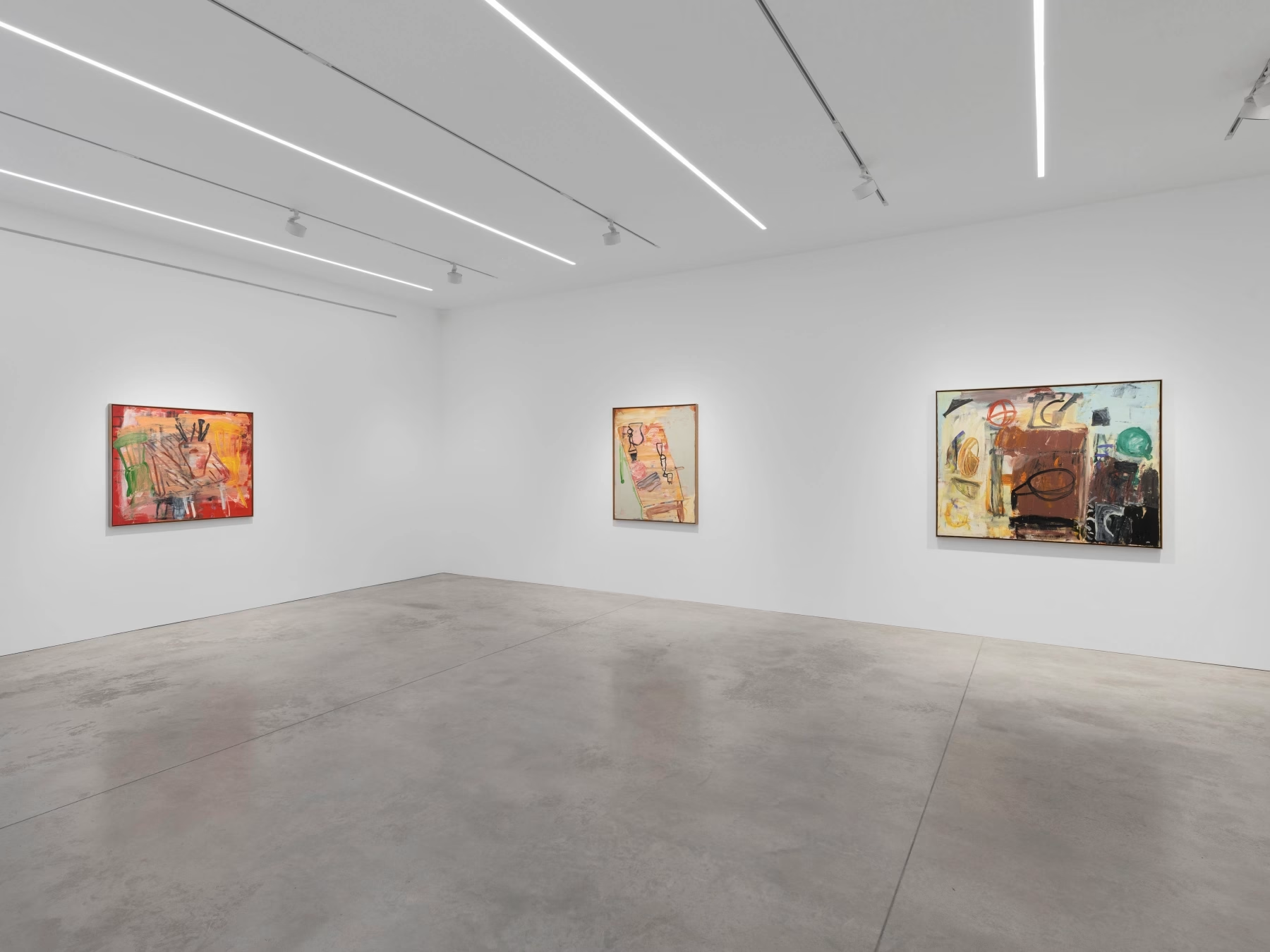
In the art world, being known as an “artist’s artist” is usually both a great honor and a peculiar curse. These figures—who often focus on the silence of the studio rather than the noise of the market, and the internal struggles of painting rather than fleeting trends—are almost always discovered by the masses a bit late. Roy Oxlade, one of the most consistent yet somehow overlooked geniuses in the history of British painting, is the perfect embodiment of this definition. This staggering exhibition at Alison Jacques’ London space, covering thirty years of the artist’s practice, both compensates for this historical forgetfulness and confronts us once again with painting in its purest, most physical form.
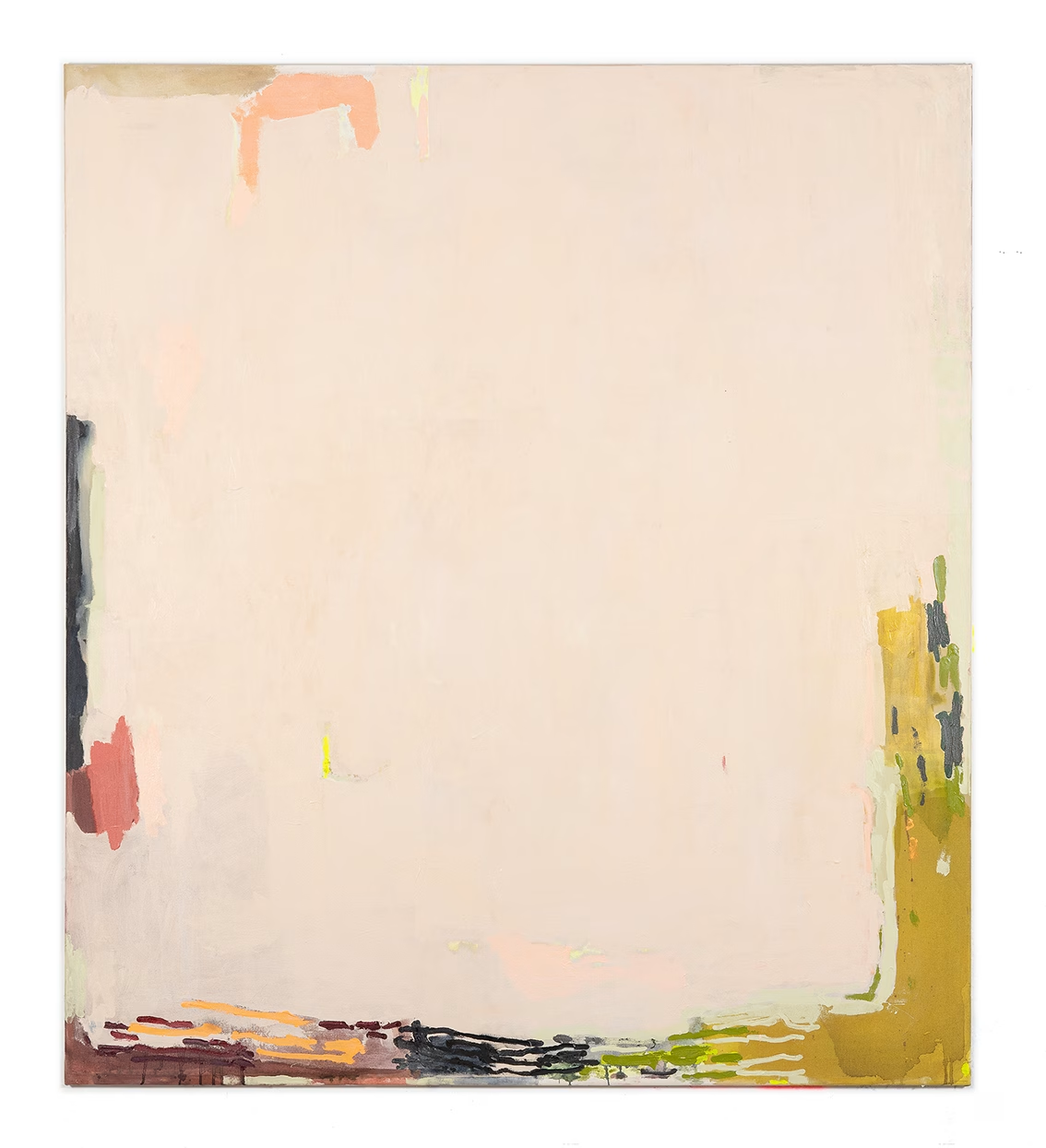
Emerging in the 1950s alongside names like Frank Auerbach and Leon Kossoff as part of the famous School of London, and having been a student of the legendary David Bomberg, Oxlade was deeply obsessed with the physical fate of painting. As you wander past the gallery walls, you trace the same persistent questions in those massive canvases and modest works on paper: Exactly how does the paint settle on the surface? When does a line draw a boundary, and when does it melt into form? And perhaps most importantly, how does a figure breathe and survive amidst so much abstraction and chaotic brushwork? Oxlade never answers these questions in a definitive or didactic way; instead, he chooses to work within that uncanny ambiguity.
Frankly, the true magic in his canvases lies in his ability to elevate the mundane to an almost mystical dimension. The long, ordinary life he shared with his wife of 57 years—his muse and a fellow artist—Rose Wylie, forms the fundamental vocabulary of his paintings. Coffee pots, scissors, lemon squeezers, kitchen knives, studio easels, and, of course, the everyday poses of Rose’s reclining or seated body… For Oxlade, art did not need to stand in a high, inaccessible, or arrogant place; he believed that art should be humble, ethically grounded, and tightly bound to daily life. As Jennifer Higgie brilliantly underscores in the exhibition catalogue, an ordinary room in his paintings can simultaneously feel like a vast cosmos and a suffocating prison.
This selection, featuring many works never before exhibited, is not only a tribute to the silent legacy of this master who passed away in 2014; it also heralds the publication of the first comprehensive monograph in his name. When you look at the deskilled, raw, yet profoundly intuitive brushstrokes on the canvases, you feel that everything possesses an aura that is both very familiar and strangely alien, belonging nowhere.
As we approach the middle of May, if you are weary of art’s flamboyant productions and wish to see only the honest, physical struggle within the act of painting itself, you must visit Alison Jacques on Cork Street by May 30. This is a branch of Britain’s painting heritage, long underheard, finally beginning to speak with its own loud voice.
Roy Oxlade’s solo exhibition is on view at Alison Jacques, London, until May 30, 2026.