

We are turning our art route away from Europe’s classical salons and toward the Far East, to Seoul — the beating heart of technology and the future. The undisputed father and visionary of video art, Nam June Paik, is making a magnificent return to his birthplace, Seoul, after a full 25 years with a major exhibition.
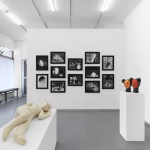
“Rewind / Repeat”, organised by Gagosian in collaboration with the Estate of Nam June Paik, opened its doors on 1 April at the APMA Cabinet project space on the ground floor of the magnificent building designed by David Chipperfield, which serves as the headquarters of the world-famous Korean beauty brand Amorepacific.
A Genius’s Journey from Classical Music to Television Tubes
Paik, who studied classical music and art at Tokyo University, introduced television technology into the realm of fine arts in the 1950s, presenting a radical aesthetic approach never seen before. After moving to West Germany in 1956 and joining the legendary Fluxus group, and then settling in New York eight years later (1964), the artist fused painting, sculpture, performance, music, and electronic media into a single pot.
Paik was not merely a video artist; he was a visionary who foresaw decades in advance how culture would be shaped by evolving technologies, almost like a prophet announcing developments in media and communication. His trip to Tokyo in 1963 to study television and robotics, and his meeting with engineer Shuya Abe, paved the way for him to establish those shattering connections between technology and the human body.
Iconic Works at the Heart of the Exhibition
This retrospective-style exhibition, which will run until 16 May, brings together previously unexhibited works alongside masterpieces etched into art history, such as For London and Abroad (Mailbox) (1982):
TV Bra for Living Sculpture (1969): A transparent vinyl undergarment containing two small black-and-white television sets placed inside plexiglass boxes! Specially designed for musician and performance artist Charlotte Moorman, this piece — when first exhibited at Howard Wise Gallery in New York — had Moorman’s cello sounds altering the images on the televisions. This work stands as one of the pinnacles of Paik’s mission to “humanise” the cold technology that surrounds us everywhere.
Bakelite Robot (2003): This work is composed of old radios collected from flea markets and second-hand shops. The dials of six radios have been replaced with TV monitors. On the screens flow fragments from science fiction films, old robot toys, and past video edits.
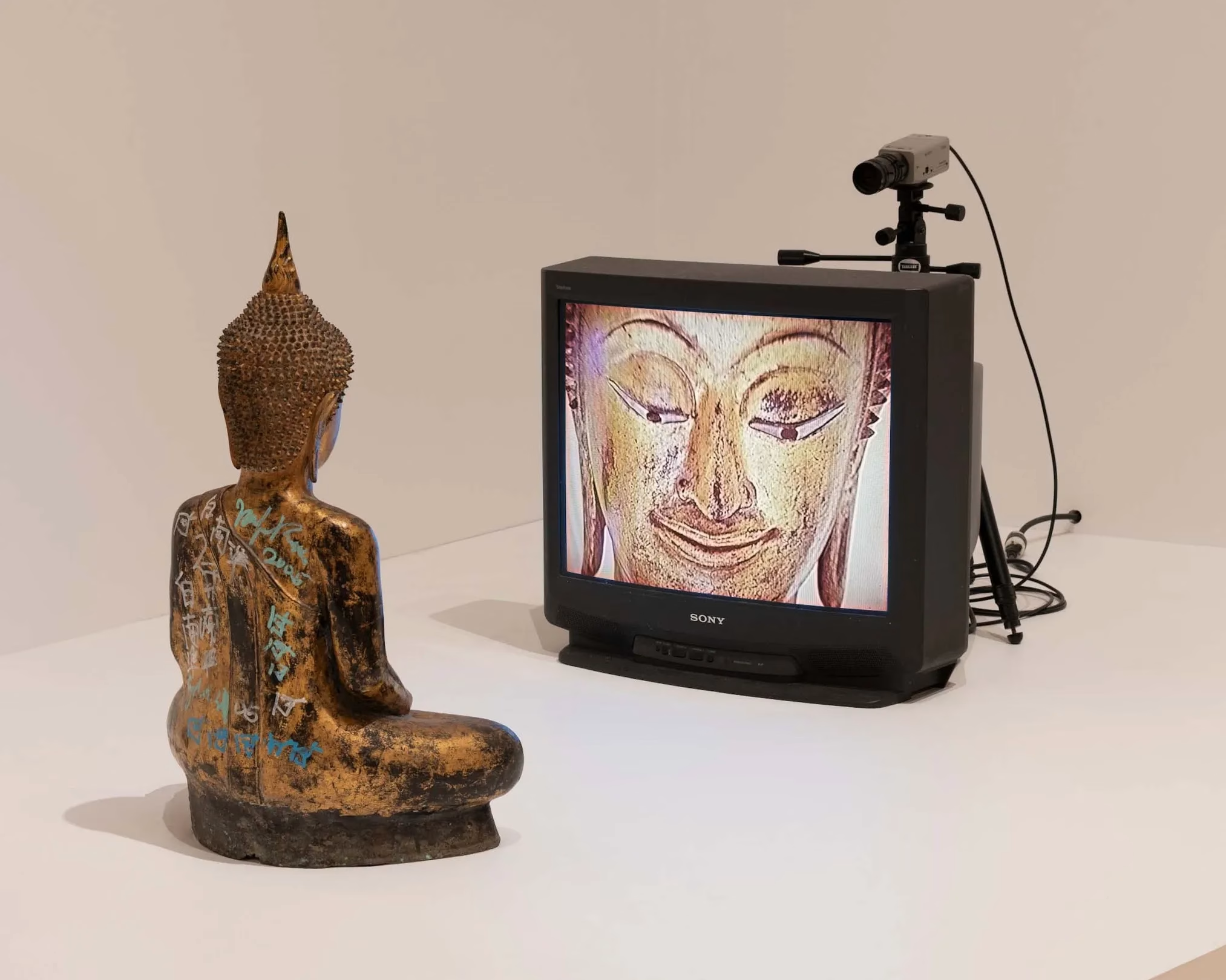
Gold TV Buddha (2005): In this late work from the legendary TV Buddha (1974–2005) series, a gold-gilded and painted bronze Buddha statue meditates in front of a closed-circuit video camera and monitor. The perfect and ironic collision of ancient spirituality with modern media, and of Eastern and Western thought, is etched into the mind.
Media Sandwich (1961–64): One of Paik’s earliest installations symbolising his transition from musical composition to the electronic world. It consists of eight German electronics magazines, eight Japanese records, and an antique 1832 engraving print of a man delivering a message to a child… Paik plays with time by engraving the year the work was made (1832) and his own birth year exactly one hundred years later onto the image.
The exhibition also includes the carved wooden painting Orchestra (1991) and Untitled Cage Composite, a tribute to John Cage and Merce Cunningham — with whom Paik collaborated and who had a major influence on Fluxus.
Add this historic encounter in Seoul to your calendar to witness how technology can merge with the human spirit and to delve into the roots of video art:
Dates: Wednesday, 1 April 2026 – Saturday, 16 May 2026
Venue: Gagosian, APMA Cabinet (Amorepacific Headquarters, Ground Floor)
City: Seoul, South Korea