

On Euston Road, one of London’s intellectual hubs, we find ourselves in that permanent sanctuary where humans confront their own nature, their bodies, and the planet: Wellcome Collection. Located on the museum’s first floor, the permanent exhibition “Being Human” (with no closing date) awaits us as an artistic panorama of endless evolution, our hopes, and our deepest fears.
Praised by The Times newspaper as “Visitors will find something enchanting at every corner,” this exhibition questions what the concepts of trust, identity, and health mean in a changing world.
The Anatomy of Humanity in Four Rooms
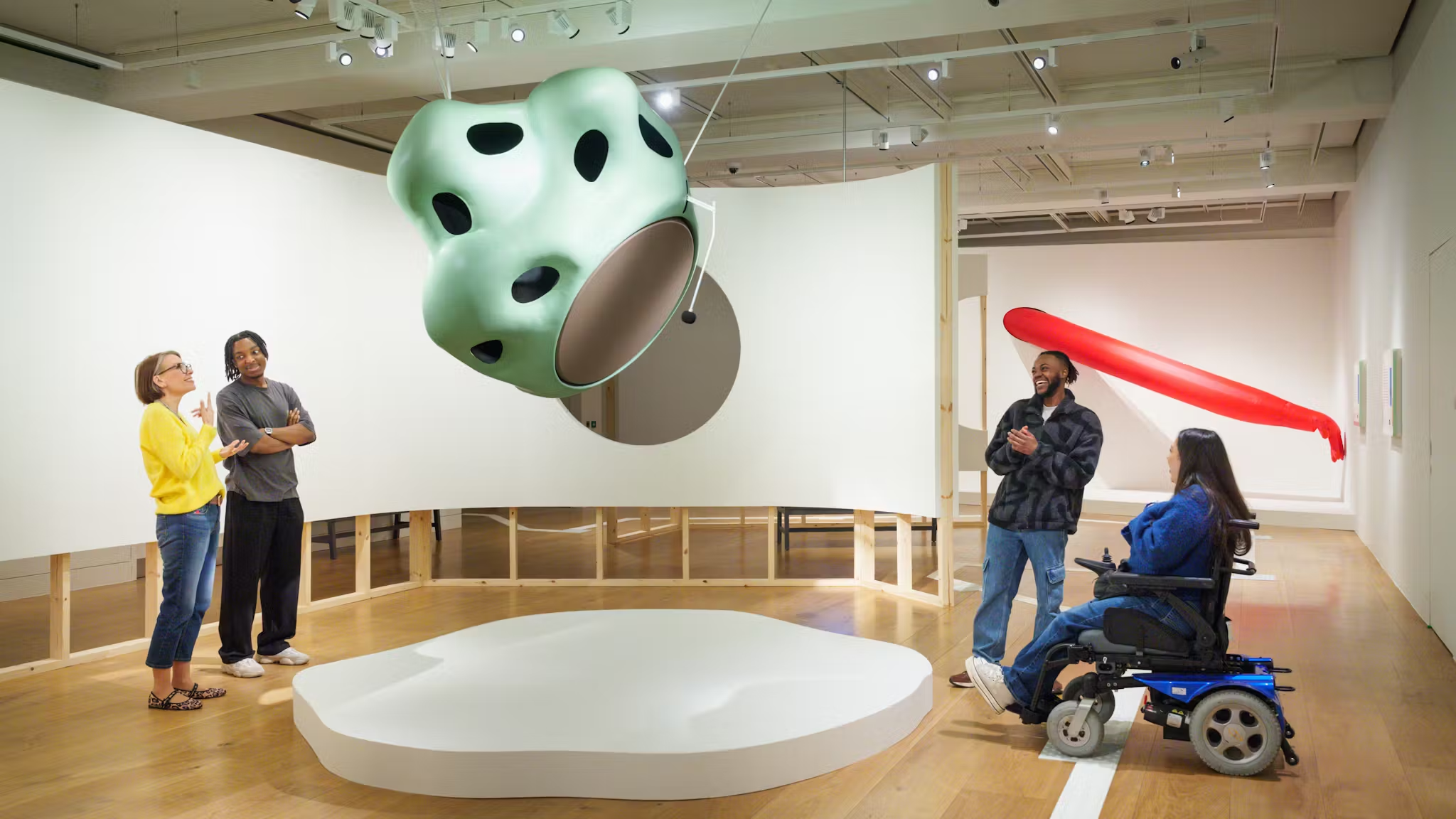
As soon as you step inside, you are drawn into a labyrinth divided into four main sections, guided by 50 striking artworks and objects: Genetics, Minds and Bodies, Infection, and Environmental Collapse. These sections, which explore what it means to be human in the 21st century, reveal our changing relationship with ourselves, with each other, and with the world in the light of brand-new medical knowledge.
The works are not there merely to be looked at, but to be fully “experienced.” Close your eyes and imagine these moments:
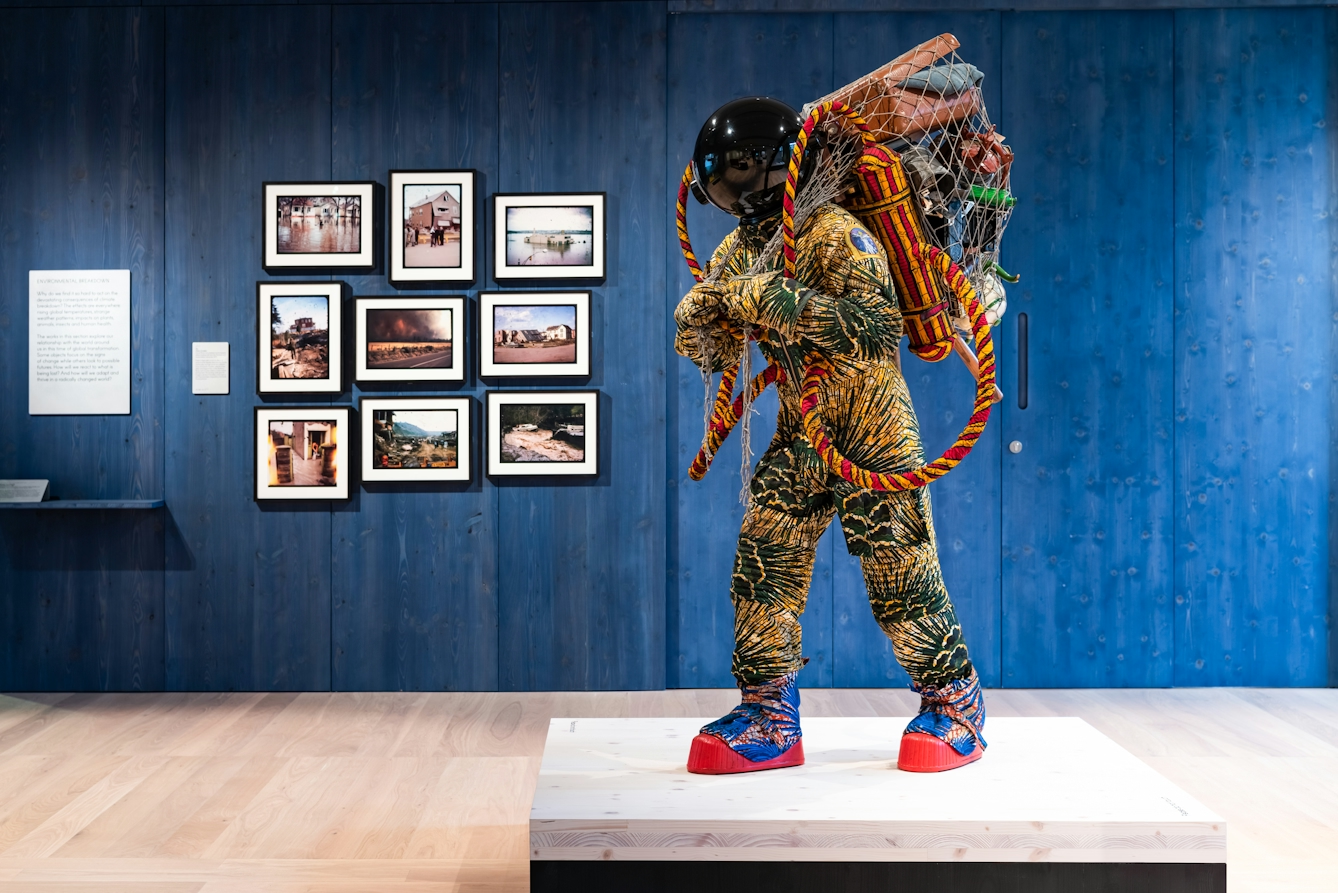
An Astronaut Walking into the Unknown: Before you stands Yinka Shonibare’s powerful “Refugee Astronaut” sculpture. Wearing a faceless astronaut suit, with a tattered string bag on his back filled with accumulated pots, pans, and earthly belongings, he walks towards an unknown destination. He carries on his shoulders the heavy, melancholic burden of the climate crisis and displacement.
The Memory of Scents: In another corner of the hall, you encounter a cold and hard bronze sculpture. But as you approach and inhale, instead of the expected metallic smell, your nose is filled with the familiar, warm, sweet, and life-filled scent of breast milk. This surreal collision of body and metal, tenderness and rigidity, shakes your mind.
The Melody of Epidemics: A little further on, an “Epidemic Jukebox” awaits you. When you press the buttons, you begin to listen to the invisible rhythm of diseases, healing, and the epidemics that have shaped humanity throughout history.
An Understanding of Access That Transcends Boundaries
While addressing the theme of what it means to be human, Wellcome Collection leaves no one behind. In addition to step-free access throughout the entire building, the exhibition space is designed with fully inclusive principles.
Detailed wall texts, British Sign Language (BSL) videos, and large-print guides are available for every single work. For visually impaired visitors, detailed audio descriptions of each object in the exhibition and a special highlights tour are offered via the VocalEyes website. For visitors with cognitive and sensory sensitivities, visual stories and sensory access supports have been carefully prepared.
As we try to learn how to look at ourselves and each other amid extraordinary cultural, social, and political changes, “Being Human” quietly whispers exactly where we stand.