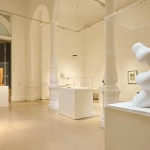


In the heart of Berlin, within Fotografiska’s dim and powerful halls, we step away from the artificial illusions of artificial intelligence and confront the rawest, most brutal, and at the same time most fragile truth of human nature. Before us stands the shattering exhibition by one of the greatest photojournalists of the last half-century: James Nachtwey’s “Memoria”.
This exhibition, which can be visited until 3 May 2026, leaves a heavy question in the viewer’s mind: How is it possible to witness the worst and most horrific things that people do to each other and still continue to believe in compassion?
Not a “War Photographer”, But a Man of Peace
The famous words of master director Wim Wenders, which also echo in the exhibition, perfectly summarise the spirit of Nachtwey’s 40-year career and this show in a single sentence:
“We should stop calling him a ‘war photographer’. Instead, look at him as a man of peace; a man whose longing for peace drives him to go to war and put himself in danger…”
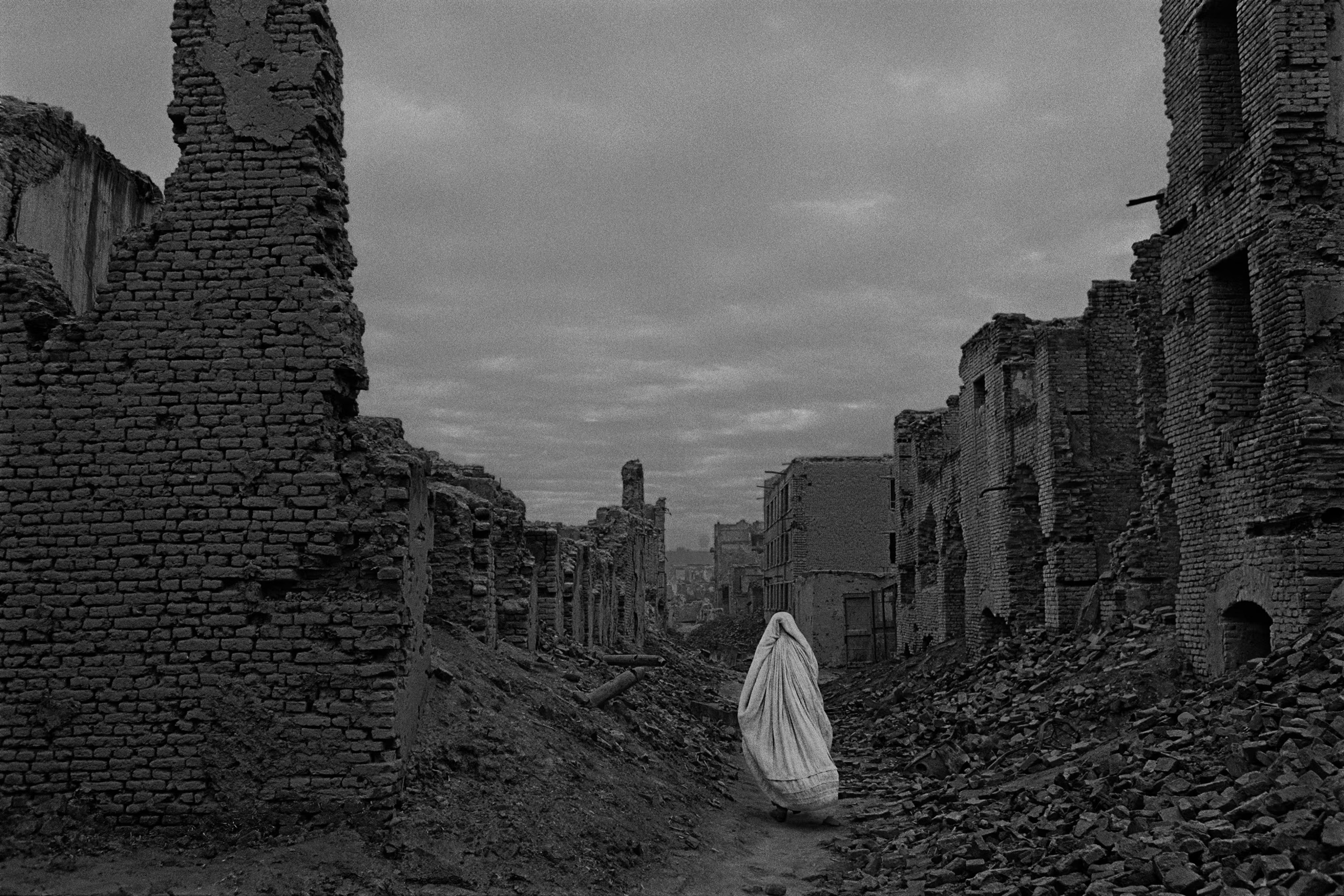
Nachtwey has documented nearly all the major devastations of the modern age — from the genocide in Rwanda to the famines in Somalia and Sudan, from the bullet-riddled streets of Mostar in 1993 to the bombed streets of Irpin in Ukraine in 2022. He chose to stand on that deadly frontline where others could not or would not stop.
Perfect Scenes Captured in Fractions of a Second
One of the most astonishing things when you stand in front of his works is how the photographs achieve such “perfect and formal” composition amid horror and chaos.
While bombs explode around him and the air is thick with dust and the smell of gunpowder, the frames he captures in fractions of a second relying only on his instinct freeze the viewer in place. The deep lines on a mother’s face as she mourns her loved ones among the ruins, the silent scream in the eyes of a dust-covered child, or the helpless wait in a makeshift hospital… Nachtwey portrays people without stripping them of their dignity and without exploiting their pain. Every face in his frame cries out that even in places turned to rubble, “human existence” is still the most important thing of all.
A Monument of Resistance Against Forgetting
“Memoria” (Memory) is not merely a dark archive of past catastrophes; it is an alarm bell designed to illuminate today’s urgent realities and to break the cycles of violence and destruction. These photographs were taken not primarily to note down history, but to awaken social consciousness against the suffering that is being ignored right now, in this very moment.
When you slow your steps in the exhibition, you begin to see the world through Nachtwey’s eyes. What stands before you is no longer an endless series of disasters, but a fragile and continuous “human experience”. Those frames do not only create sadness in us; they awaken empathy, compassion, and our sense of shared responsibility.