

Pera: What makes songs beautiful is what happens while they are being created

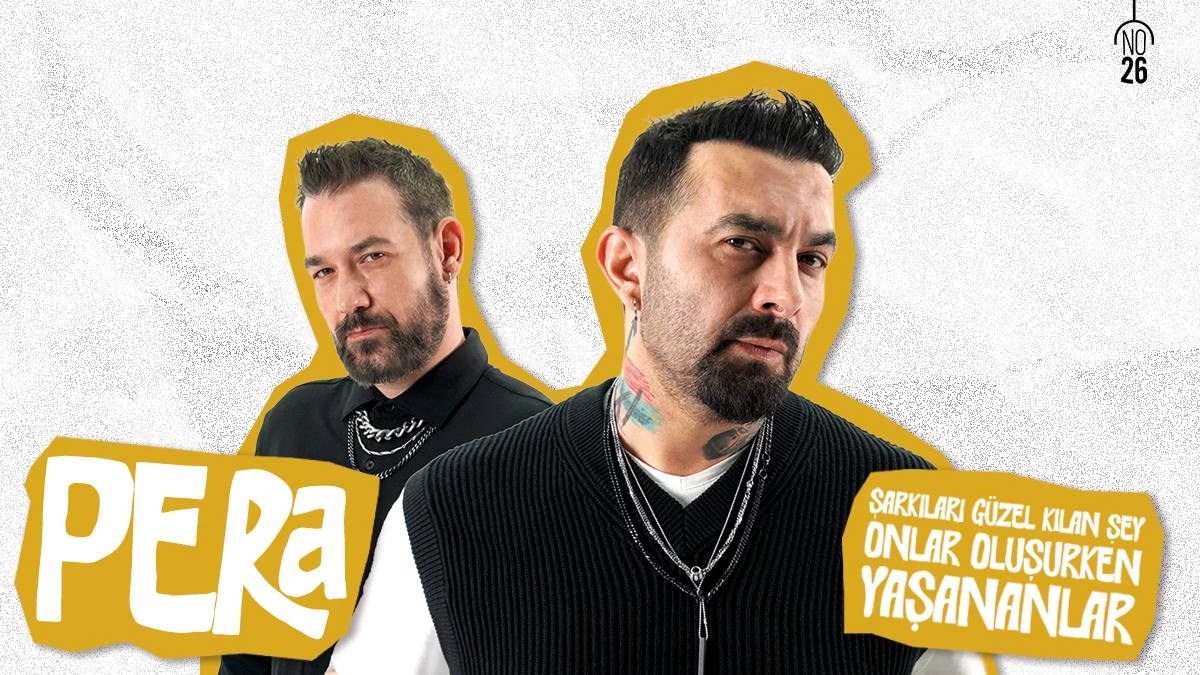
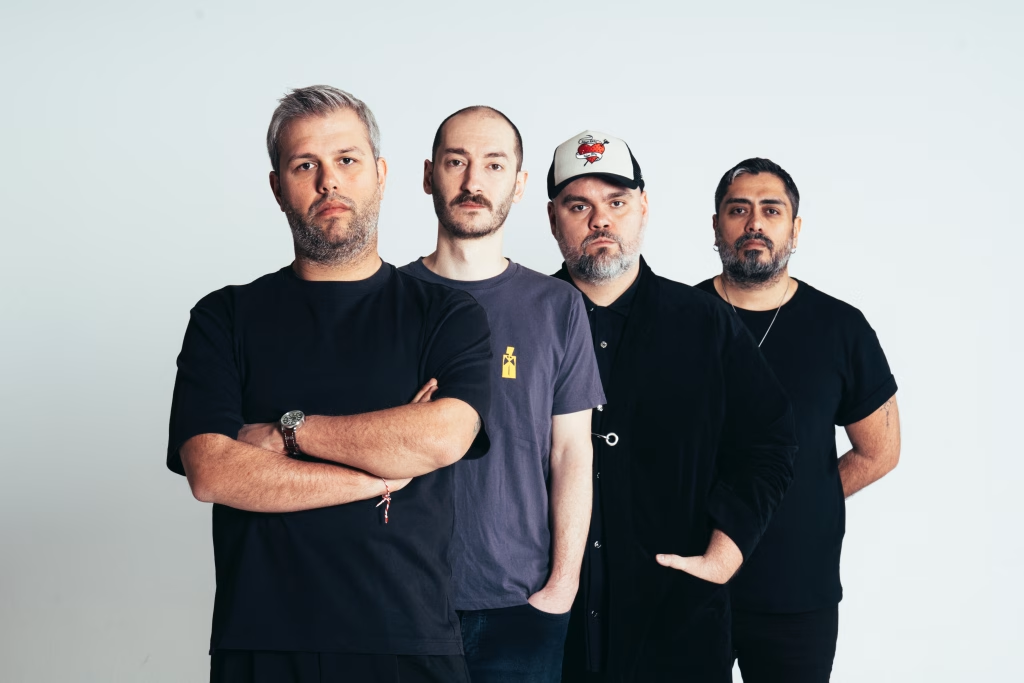
One of the established names of the Turkish rock scene, Pera, continues its journey by multiplying its successes. While their concert schedule and album processes are ongoing, we sat down with Gökhan Mandır and Hakan Ünalan to talk about the critical paths the band has taken, the excitement of creation, and their new album Reviva…
– Pera is today regarded as one of the rooted groups of the Turkish rock scene. When you look back from the day your musical journey began until today, how does the story unfold for you?
Gökhan Mandır: Our journey has been extremely enjoyable. When we remember the difficulties we went through while making our first album, the position we have reached today becomes even more meaningful. From the album recordings we entered without knowing how they would turn out, to the time we arrived in Istanbul with the first copy of the album in our hands and hoped to see “maybe a famous person” on İstiklal Avenue — we have come a very long and difficult way. But music is like that. The beautiful thing is the process of creation itself. What makes songs beautiful is what is experienced while they are being formed: the ordeals endured, the happy and unhappy moments. When we look back, what we see is a colourful journey with its ups and downs and a growing family.
– When you look back, what do you think was the most critical turning point that shaped Pera’s story, and what have you accumulated so far?
Hakan Ünalan: I can say that the first major breakthrough was undoubtedly dear Hilal Saral’s wish to use our first single Sensiz Olmaz in the series Kuzey Güney. Because until that day, the album had not received the attention we wanted. We were a group with only one video clip on YouTube. No one was listening. When the song was featured in one of the series’ most important scenes, it reached millions overnight and suddenly thousands of tweets poured in. I cannot describe the happiness we felt that night.
GM: Hilal Saral later featured us in many of her series. The value and meaning she holds for us is more than I can express. Kara Sevda was another turning point for us. Many of our songs were used there, but Ağla became the one that attracted the most attention. After that episode aired, we embarked on a two-year tour. At that time, we were probably the group whose songs appeared in the most TV series. Our songs were used in more than 40 series. This is an invaluable situation because it gives you the chance to reach an audience that would never have expected to hear your song. When I explain this, I generally use the expression “We entered homes without knocking on the door.” Nowadays there are very different ways to go viral on social media, but ten years ago this was the most effective method.
– You have performed in many cities across Turkey and at university festivals. Your songs have appeared in TV series and films, and you have received dozens of awards. How have these long years and the points you have reached shaped the relationship you have built with your audience?
HÜ: In every city we go to, our audience welcomes us magnificently. They embrace us with open arms. In that sense, I think we are a very lucky band. After concerts, we always try to create a space for our listeners to take photos with us. There we have the chance to see their approach and the love they feel for us more clearly. They tell us their memories and stories with us. How they met Pera, how they found the spouses they married thanks to us, or how we were by their side in their most difficult moments. In this sense, we really are one of the luckiest groups. We have a real and enduring bond with our audience. We see this everywhere we go, both at home and abroad. We love them all very much and try to express it as much as possible.
– You are a very productive group. You have both albums and plenty of singles. What do you draw the most inspiration from when making your music, or what increases your productivity?
GM: As I said earlier, making music is already like a reward in itself. That process, the excitement of finishing a song and sharing it with our audience, reading the comments when we get a good reaction, and learning the necessary lessons when a bad reaction comes… These already form the basis of our desire to create. I even compose songs while taking a shower. When I get out, I complete it with the guitar, record it on my phone and send it to Hakan.
HÜ: Gökhan has a brain that never stops. Some nights, before I can fully digest a song he sent me and while there are still many things to think about, he composes and sends a brand-new song. Of course, we don’t record and release all of them, but he has a very active structure in terms of productivity. We also have this understanding: we don’t release songs we don’t trust enough to make a video clip for. In other words, for an album we focus on the ones we like the most out of perhaps 50 or 60 songs.
– You are currently continuing to release singles from your album “Reviva”. What does Reviva mean?
HÜ: Reviva is actually a Latin-origin word. In Portuguese — and in many languages — it means “to be reborn”. This is actually a name directly related to us. In the recent period we had moved a little away from that careful selection process I mentioned earlier. We had gone through a phase where we got a bit lost in the cycle of recording and releasing songs, giving concerts and returning home. Everything had become somewhat monotonous for us. One day while talking about these things, we decided it was time to shake ourselves up. We decided we needed to make music with the same excitement we had on the first day, because it was that excitement that had brought us to our current position. I don’t know at which stage we started to lose that feeling, but when you do something continuously for a while, these kinds of monotonies probably occur in your understanding. But right now we are very good. We are being reborn and carrying that first-day excitement once again.
– Are you constructing the album within the framework of a story, or which emotions will you touch the most?
GM: We didn’t set a special concept for the album’s story, but fate seems to be forming its own concept by itself. Normally, not all the songs tell my own story. Sometimes I would be influenced by an event Hakan experienced and write a song from his mouth, or be influenced by a film and write for that. But all the songs on this album come from my own story. I am in a somewhat emotionally complicated period and the compositions come out under its influence; they are all about what I am experiencing right now. The album as a whole will tell the story of everyone who misses the lover they broke up with, who is aware of the mistakes they made, and who wants to return to them.
– On the song “Denize Baktım” from the album, you did a duet with Rana Türkyılmaz. How did this collaboration come about and will there be other duets on the album?
HÜ: When we first started making the song, we didn’t actually have a duet idea; we realised such a need while we were on the road. Gökhan said, “It could be Rana Türkyılmaz.” We didn’t say the first thing that came to mind wouldn’t work, of course; we went into the “Equal” list, which only includes female artists, and looked through the entire list. We said “Rana would be great” because her rock identity, energy and voice seemed like they would fit perfectly. That’s probably why she came to Gökhan’s mind first. We had met at a few concerts but we didn’t really know each other. We met up, our minds matched very well. We had a very enjoyable recording process and we think a very beautiful duet came out of it.
GM: Right now there are other artists who come to mind while recording the songs, but only time will tell how it will turn out. Because sometimes even if the idea is beautiful, it may not be possible to come together. Every artist has their own schedule and commitments. Timing is also very important. If the artist we want to work with already has all their songs for the next year scheduled, of course it becomes impossible to fit into that timetable and we say “maybe another spring”. But we will definitely see some surprise names.
– “Yarim Benden Gidiyordu” is a very emotional song that describes the deepest and most shattering state of separation. Can you tell us a bit about its story?
GM: Normally I don’t prefer to tell the stories of the songs. Let me briefly explain why. After a concert, one of our listeners asked for the story of our song “Sevdiğim Kadın”. I told it. The answer I gave did not satisfy her. She was probably expecting more. The song was connected in her mind to a very different story. My story was perhaps much simpler than hers. Once the songs leave us, they belong to the listener. Everyone connects with those songs through their own story. Actually, for this reason we also don’t find it right to make video clips. Video clips are somewhat a necessity imposed by the music industry, and its validity today seems a bit open to discussion. For that reason, although I don’t want to tell the story of the song clearly as “this is it”, I can say that it is a song I wrote with very sincere feelings at a moment when I felt at rock bottom. The rest of the arrangement was handled by Hakan together with our producer Samet Türksal. I think it will be one of the most special songs on the album and will be remembered.
– Lately in the music industry everything is increasingly starting to serve populism. Sounds, lyrics, styles… What do you do to filter these out?
HÜ: Actually, we are not making any special effort. We make the music that comes from within us. It was like this at the very beginning, and it still is. Pera is my favourite band because it makes the music I love. Different genres become popular from time to time and we have had a career long enough to experience these transformations. We know that if we try to lean towards what is popular, it won’t work for us. Our audience is with us precisely because they don’t want to listen to those kinds of music. We know this. Sometimes — slightly making fun of ourselves — we try new things. We get a nice lynching from our audience and continue on our way. (Laughs) These things are in our DNA and we will continue to do them from time to time. There have been moments since our first album when we deliberately went off the rails. But in summary, we are still doing what we know, and as long as we do it this way, we know we will continue to exist.
– What developments will there be in Pera for the rest of 2026, and what can listeners expect?
GM: This year is passing very excitedly for us. We are impatient to share the new songs. This is our first priority and excitement. We share the songs as we finish them. In that sense, I don’t know exactly when we will finish the rest of the album, but we want to release them as soon as the songs are ready. Besides that, concerts are already continuing. We also want to do concept acoustic concerts and we have started planning that as well. We have many plans and projects, but of course our first priority is the album. Until the end of the year, we intend to bombard our audience with new songs. We are in love with our audience; we love them all very much. We are eagerly looking forward to the day we will go wherever they are. We would also like to thank you very much for this beautiful interview and your lovely questions.