

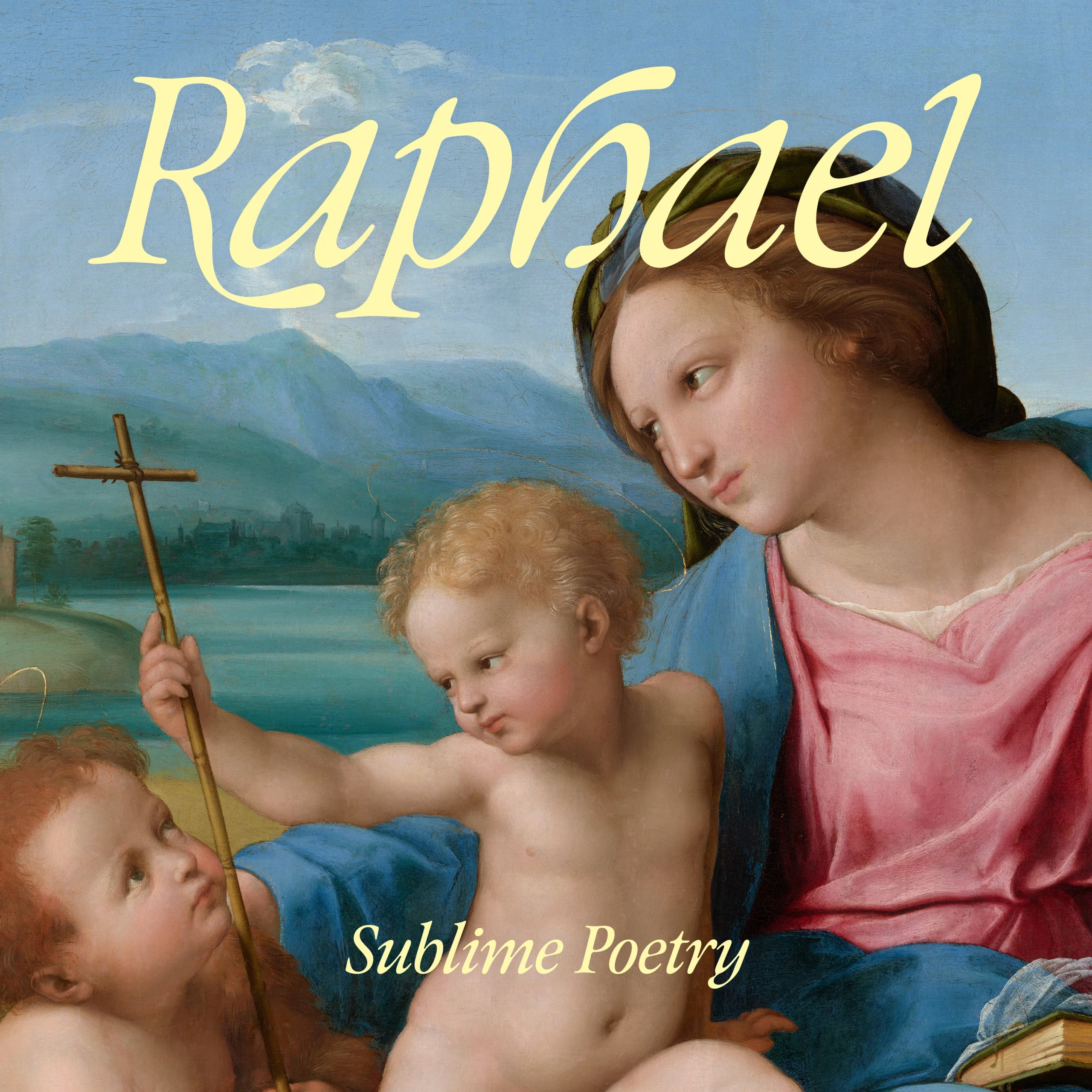
If conversations about Renaissance art always revolve around Leonardo da Vinci and Michelangelo, then we owe a massive apology to the third greatest genius in art history — the master of unparalleled harmony and grace, Raphael (Raffaello Sanzio). Fortunately, the Metropolitan Museum of Art in New York has rolled up its sleeves to correct this major omission in American art history.
The moment that American art lovers have been waiting for — literally for decades, or exactly 17 years in terms of the curators’ working timeline — has finally arrived: the exhibition “Raphael: Sublime Poetry” opens at The Met on 29 March 2026!
I’ve dug deep into the metmuseum.org data, the behind-the-scenes story of the exhibition, and the hottest critiques from the art world this week just for you. Here are the “must-know” details of this historic exhibition that will mark The Met’s spring of 2026:
A 17-Year Persuasion Campaign and Over 200 Masterpieces
The word “major” is not enough for this exhibition; this is a full-scale “tour de force.” Curator Carmen C. Bambach spent a full 17 years persuading museums and private collectors across Europe and America. The result? More than 200 works — paintings, drawings, and tapestries — spanning Raphael’s early years in Urbino, his rise in Florence, and his magnificent final decade at the Papal court in Rome, all gathered under one roof.
The Stars of the Exhibition: What Will We See?
What makes this exhibition truly special is not only the sheer volume of works, but the first-time reunion of pieces that have been separated for centuries:
The Resurrection of a Fragmented Masterpiece (Colonna Altarpiece): This monumental altarpiece, which was sold off piece by piece by nuns in the 17th century and scattered around the world, will be reunited for the first time in centuries in its complete form, according to Raphael’s original vision. A massive, specially climate-controlled vitrine was built just for this!
The Alba Madonna and Its Sketches: The jewel of the National Gallery of Art in Washington D.C., The Alba Madonna, will be displayed alongside preparatory drawings brought from Lille, France, for the very first time. This is exactly what stepping into the kitchen of genius looks like.
Guest from the Louvre: One of Raphael’s most perfect portraits, in which he engraved the human soul onto canvas — Baldassare Castiglione — is travelling from Paris to New York.
Breaking the “Sweet Madonnas” Stereotype
Raphael has been imitated so much over the centuries that his flawless and sweet depictions of the Madonna (Virgin Mary and Child Jesus) eventually started to feel a little too sugary for modern viewers. The Met curators are making a very bold move in this exhibition: they are placing these perfect depictions right in the middle of the brutal, dark historical reality of high child mortality and childbirth in the 16th century. They also highlight the revolutionary aspect of Raphael being one of the first artists in Western art to use female nude models.
So what stands before us is not just “an angel who painted beautiful pictures,” but a real flesh-and-blood genius who deeply understood anatomy, psychology, and human suffering!