

Paper Tiger Television Takes Over the Screen in London: “Is Your Brain Still There at 20:30?”

On the London floor of Apartment No:26 this week, we turn our windows toward the polyphonic and intellectual texture of New Cross, to Goldsmiths CCA. While London’s February chill roams the streets, a crackling yet mind-expanding voice rises from the screens inside the gallery—from 1980s New York: “It’s 20:30. Is your brain still there?” The US-based video collective Paper Tiger Television (PTTV) arrives in the United Kingdom with its first comprehensive exhibition, ready to dismantle the illusions of media giants. This week, the antennas of our apartment are tuned directly to the heart of “press freedom” and DIY culture. If you believe television is not merely an entertainment box but also a control mechanism, the atmosphere on this floor is exactly on your wavelength.
A “DIY” Scream Against Media Giants
Founded in 1981 at the exciting intersection of 1960s political optimism and emerging video technology, Paper Tiger Television was born as a radical alternative to corporate media control. Using the “public access channels” mandate on local cable TV networks in the US as a Trojan horse, the collective performed ideological critique directly within television’s own medium.
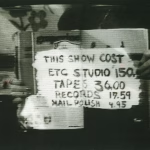
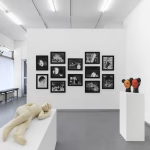
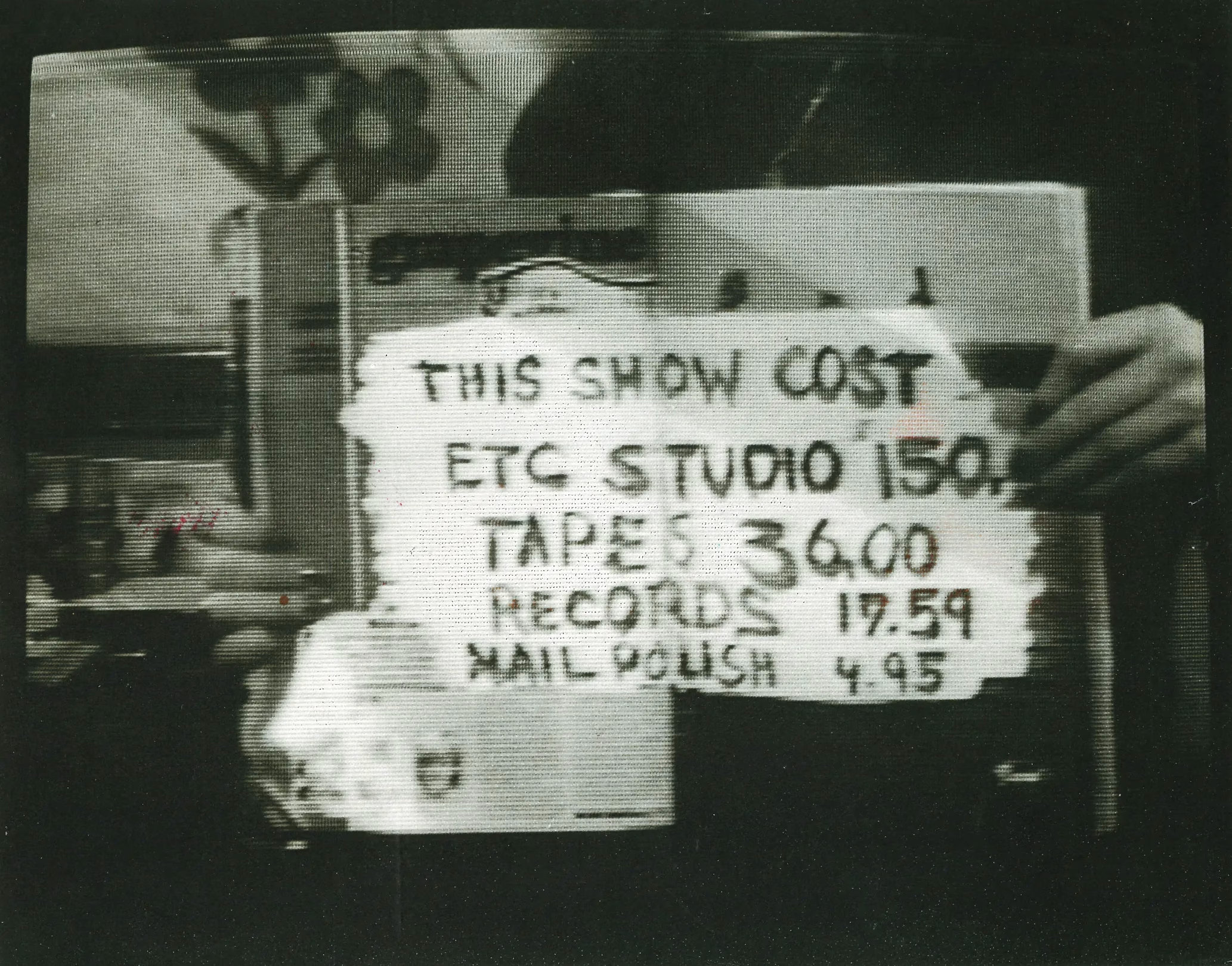
The exhibition at Goldsmiths CCA brings together around 40 programs spanning four decades, archival materials, and graphic elements used in production. Each program begins with that famous question: “Is your brain still there?” And each ends by revealing its (usually hilariously low) budget. This is not merely an act of transparency; it is also a defiant gesture against high-budget media manipulation.
The Strings Behind the Screen: Theorists and Activists
One of the most striking parts of the exhibition is the performances in which artists and theorists “read” popular magazines, newspapers, or films. Donna Haraway’s analysis of primate representations in National Geographic, or Martha Rosler’s decoding of advertising messages in Vogue, prove how intellectual depth can be blended with humor.
Joan Does Dynasty (1985): Joan Braderman’s feminist reading of the era’s cult series Dynasty is one of the exhibition’s most iconic works.
Rejection of Racist Representations: Richie Perez’s community-based critique of the depictions of Black and Puerto Rican characters in Fort Apache: The Bronx shows that PTTV is not merely a theoretical space but a site of resistance.
“Cheapness” as an Aesthetic Strategy
PTTV’s visual language shares deep affinities with punk culture and early video art. Felt-tip handwritten credits, collages, hand-painted backdrops on fabric, and manually cranked title sequences… This deliberate “homemade” feel shows the viewer how the glossy, flawless, and seductive world of media is actually constructed.
A note for our Boiler Room residents: this exhibition is like Brecht’s “alienation effect” applied to television. Instead of hiding the seams of media production, it proudly displays them. PTTV teaches us not only to criticize the media, but also to create our own.
Exhibition Information
Collective: Paper Tiger Television (PTTV)
Venue: Goldsmiths CCA, London
Dates: Until April 19, 2026
Don’t Miss: Herb Schiller’s New York Times readings and the extensive conversation series held in conjunction with the exhibition.
Before leaving this provocative exhibition on our London floor, why not take another look at your own “screen” habits?