

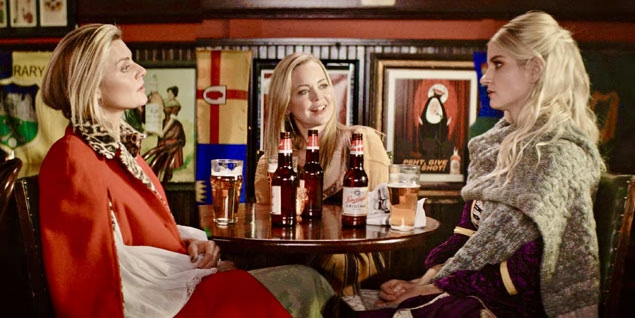
In the world of cinema, where massive-budget action films and endless visual effects have pushed “spectacle fatigue” to its peak, J. Mills Goodloe’s quiet yet profoundly resonant film Blue Eyed Girl arrives like an antidote. The movie reminds us that midlife is not a crisis, but a “spiritual audit” — a moment of reckoning amid life’s noise.
The story follows Jane, who is forced to return to her hometown due to her father’s declining health. But this is not a classic “find yourself” tale; it is about finding the courage to sit with the thin line between the life she carefully escaped, the person she became, and the person she almost could have been. Jane’s homecoming is actually the silent uprising of unfinished sentences and postponed desires that have been gathering dust on the shelves of the past.
Why Watch It? The Power of Silence
- Dramedy and Realism — The film allows humor to emerge in its most natural form — as a defense mechanism — rather than chasing forced laughter.
- Stillness as Authority — Goodloe uses stillness not as weakness but as authority. The power of subtext is far more effective than grand declarations.
- Outstanding Cast — Marisa Coughlan’s internalized performance combines beautifully with Beau Bridges’s grounded presence to create an utterly authentic world.
In the 2026 cinema landscape, “adult coming-of-age stories” have entered a new phase. We no longer want to watch heroes completely transform their lives; we want to see how they find peace within the life they already have.
Apartment No:26 Note
Acceptance Is the Ultimate Payoff
Blue Eyed Girl does not try to convince the audience to change anything. Instead, it validates the legitimacy of standing still, looking back, and saying, “My life isn’t bad, but I still want more.” The film’s strength lies in seeing midlife not as a turning point, but as a pause. Acceptance is reframed not as giving up, but as the most mature achievement of adulthood.