

Maoussi: A Mouse, a Refugee, and Shattered Prejudices in Paris’s Cramped Apartments

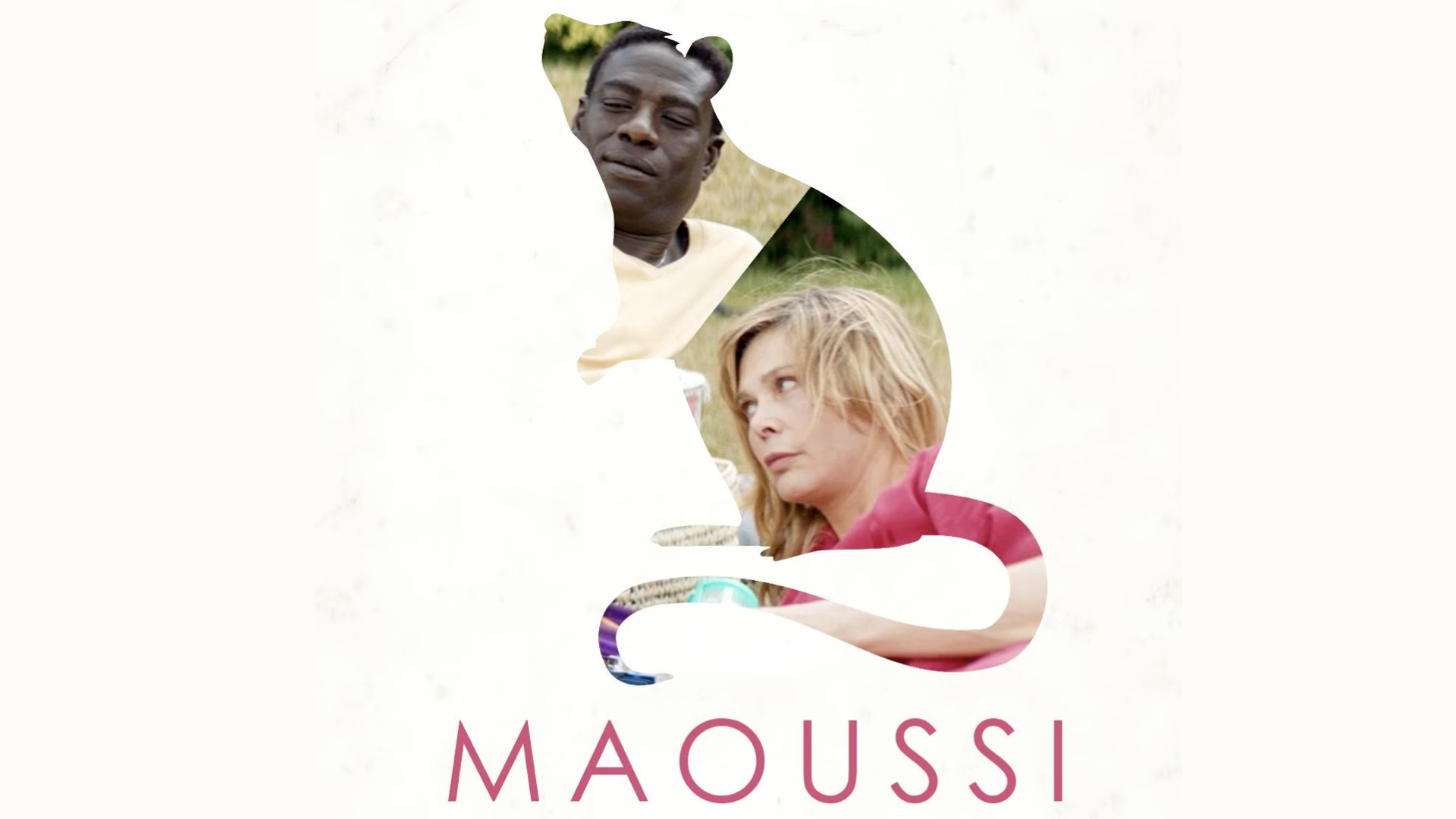
Imagine two different worlds trying to fit into a tiny apartment in Paris’s distinctive, somewhat gray but always romanticized narrow streets. On one side is the modern French woman Babette; on the other, Edo, a Congolese refugee struggling to hold on to life. What brings these two opposing characters under the same roof is neither love nor coincidence—but a mouse named Maoussi, who escaped from a laboratory and ignites the spark of massive chaos despite her small size.
Maoussi, written, directed, and starring Charlotte Schioler in a towering lead performance, is a quiet yet equally noisy “cultural clash” gem from the independent cinema wing of 2024. Crowned with 8 festival awards, this production looks at the refugee crisis and modern relationships from such a heartfelt and absurd angle that what lingers in your mind afterward is not just a mouse, but humanity’s strange—and sometimes comical—prejudices toward one another.
An Unexpected Guest and the Poetry of Chaos
The film’s story is built on a very simple foundation: an unexpected housemateship. What makes Babette and Edo’s tale special, however, is Charlotte Schioler’s sharp black humor built around the “assumptions of love and family.” That cramped apartment in the heart of Paris functions like a microcosm of contemporary France—and even Europe.
Edo is a man whose shoulders are weighed down by the invisible burdens of being a refugee; Babette is a woman living in her own cultural bubble, with stereotyped expectations about love and parenthood. When the fugitive lab mouse Maoussi bursts into the apartment, she forces the duo not only to catch the mouse but also to look into each other’s lives, fears, and dreams. The mouse here is not just an animal; she becomes a symbol of miscommunication, fears, and the silent prejudices we harbor toward one another.
Humanity and Refugee Reality Behind the Black Humor
What sets Maoussi apart from an ordinary comedy is that it “humanizes” the refugee experience rather than dramatizing it. The “refugee” figure, so often the subject of political debates, transforms through the character of Edo into a flesh-and-blood individual—flawed, capable of falling in love, and afraid.
While asking “What should love and parenthood look like in 2024?”, the film shows how people from different worlds are both so alien to and yet so similar to each other. Cultural misunderstandings sometimes make you burst into laughter, while in the next scene a detail about Edo’s past or Babette’s loneliness can pinch your heart. Schioler establishes this balance with such delicacy that the film never becomes didactic or “preachy.” On the contrary, it seats you on the couch next to the characters in that small apartment.
Charlotte Schioler: The Triumph of a Personal Vision
Charlotte Schioler, the name behind the film’s every aspect, delivers a true “auteur” performance. Writing the screenplay, sitting in the director’s chair, and taking the lead role ensures the cohesive vision felt in every second of the film. Schioler’s lightly “self-mocking” attitude through her character Babette nourishes the film’s dark yet intimate atmosphere.
This 73-minute short but intense film is actually a lesson in how powerful “less is more” storytelling can be in cinema. Free of unnecessary side stories, entirely character-focused and atmospheric, this production offers the sincerity that big-budget films cannot provide. Its triumphant return from 8 different festivals is no coincidence; juries rewarded the huge heart and honesty in this small film.
Why Watch It? A Jewel Trapped in Distribution Networks
Maoussi has so far reached only a very limited audience. Don’t let the sparse ratings on IMDb mislead you; this film is a “hidden gem” squeezed between the massive budgets of distribution networks, waiting to be discovered. If you:
Love the distinctive, slightly melancholic yet clever tone of French cinema,
Want to look at refugee stories from a completely human angle, free of politics,
And of course, want to witness how an absurd little mouse can change an entire life,
this film is just for you.
When Maoussi ends, you take with you not only the adventure of a tiny mouse but also a crumb of hope about how easily borders, walls, and prejudices can actually crumble.