

Located on Euston Road, one of London’s intellectual hubs, Wellcome Collection takes us to a dark, painful yet profoundly resistant corner of history. The powerful exhibition “1880 THAT: Christine Sun Kim and Thomas Mader”, which will close in just a few weeks on 6 April 2026, defines sign language not merely as a tool of communication, but as a vital refuge, a sense of belonging, and a “home”.
The word “THAT” in the exhibition title is an emphatic expression in American Sign Language (ASL) that adds weight and importance to the sentence that precedes it. But what happened in 1880 that required such a strong emphasis?
1880 Milan Conference: The Seizure of a Language
The works of artists Christine Sun Kim and Thomas Mader draw their roots from one of the most devastating turning points in Deaf education history: the 1880 Milan Conference. This conference, attended mostly by hearing people including Alexander Graham Bell, decided to ban sign language in Deaf schools and replace it with oralism (lip-reading and speech training).
Sign language was excluded, suppressed, and a long period of stigma and isolation began for Deaf communities that would last for generations. “1880 THAT” builds a space of resistance and remembrance against this great seizure, using humour, sculpture, and film.
Powerful Details from the Heart of the Exhibition
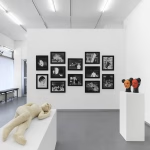
The works in this completely free exhibition, located in Gallery 2, carry deep activism beneath their subtle and cleverly crafted humour:
Missing Plaque and Commemorative Bricks: There is no plaque on the historic building in Milan marking the place where such a devastating decision was made for Deaf communities. In response to this erasure, the artists have produced their own commemorative bricks, redefining them as the building blocks of both cities and language.
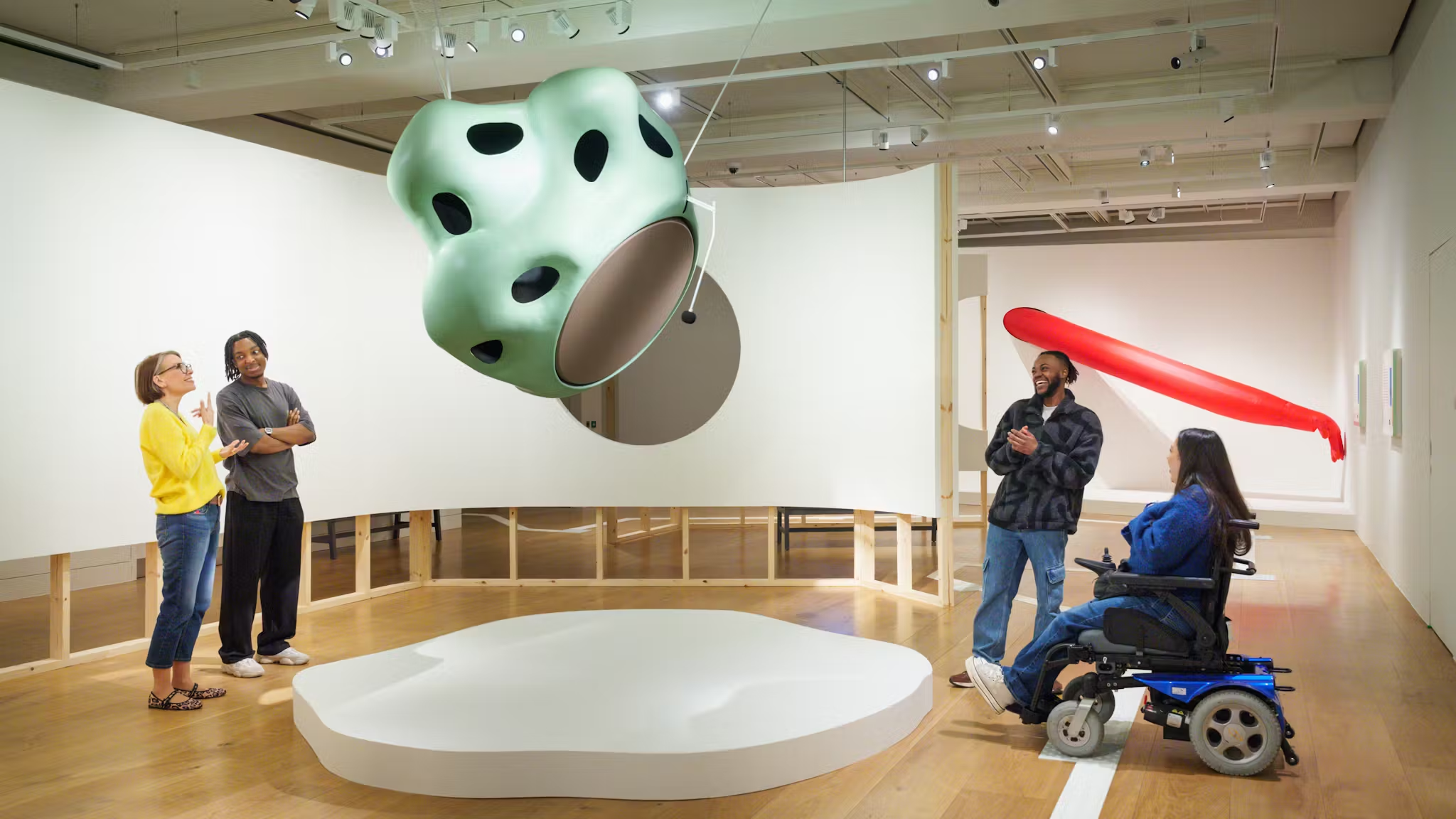
Giant Red Arms (“Attention”): These inflatable giant arms at either end of the gallery symbolise the primary ways of getting attention in ASL (waving downward and pointing). One arm points towards the Houses of Parliament to attract the attention of UK policymakers, while the other points to Milan, where the historic decision was made. The finger rubbing against the wall represents the continuity of the struggle for rights.
Looking Up Graham Bell’s Nose (“Look up my Nose”): This installation, modelled on the nose of Graham Bell — one of the greatest advocates of oralism — represents people who look down condescendingly on sign language users. Air blown from the nostrils and the low frequency created by the automatic baton can be both heard and felt as vibration throughout the gallery.
Sesame Street and Underground Language (“What’s Left”): This silent film featuring Lefty, the suspicious letter-selling character from the famous children’s programme Sesame Street, tells the absurdity of declaring sign language illegal and how Deaf communities were forced to keep their language alive underground or in secret after Milan.
The Passage of Eyes (“Eye Spy”): This animation, in which two transparent figures throw a pair of eyeballs to each other, is based on the ASL expression “I wish you could see things from my perspective.” If the decision-makers in 1880 had been able to see the world through the eyes of Deaf people, history might have been written very differently.
The Pinnacle of Accessibility
As with every exhibition at Wellcome Collection, “1880 THAT” offers a complete and flawless example of accessibility.
For every artwork in the exhibition space: British Sign Language (BSL) videos, audio descriptions, and detailed wall texts.
Induction loops for hearing aids and sensory access support.
If you want to experience what the right to communication, language, and belonging truly mean through a language that is both shattering and cleverly constructed, make sure to add this exhibition to your calendar before it closes on 6 April 2026.