

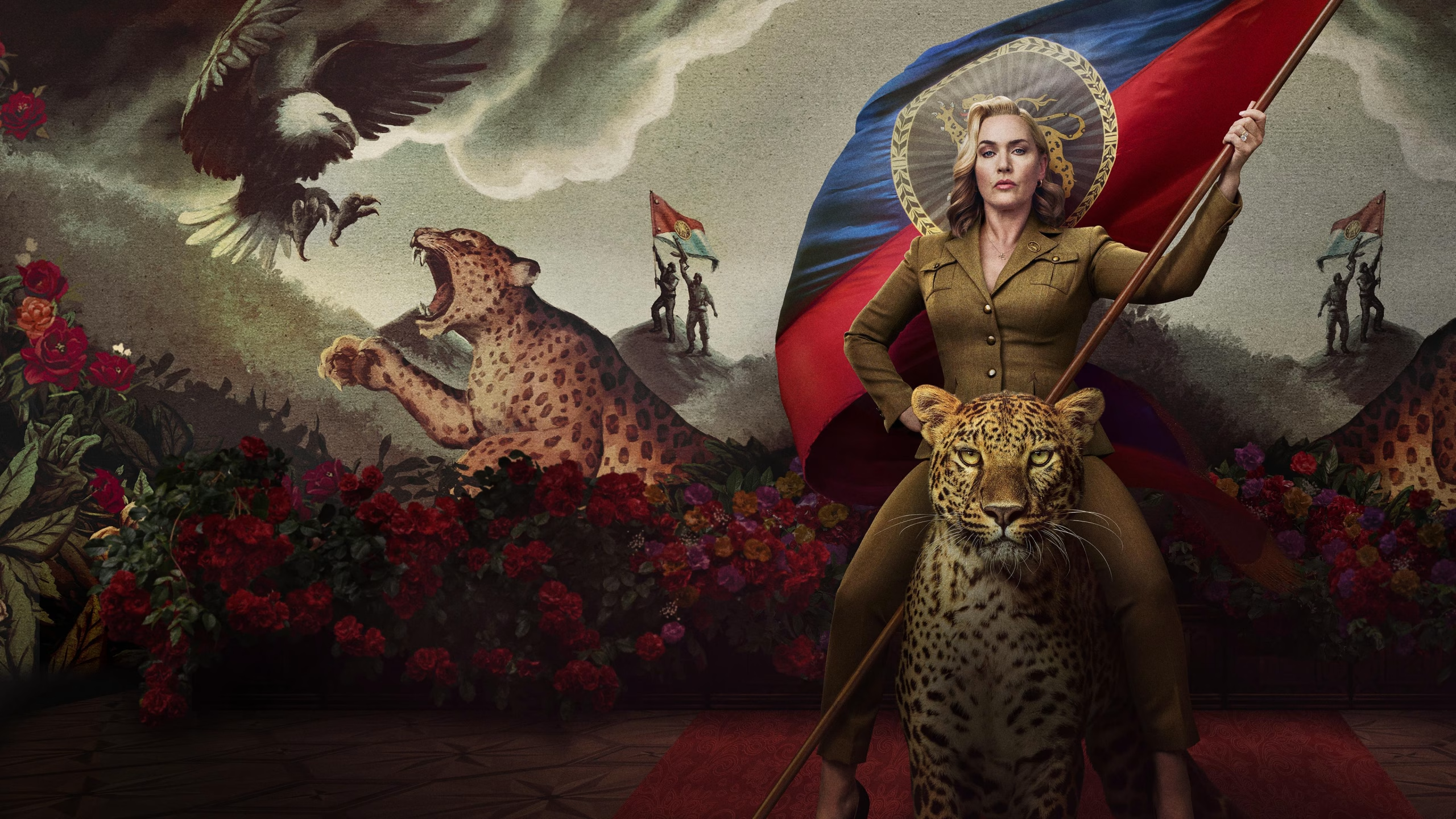
Political satire has never found a more receptive audience than it does today, yet HBO’s The Regime stands out as one of the rare works that caught the wave before it fully crashed ashore. Many scenes dismissed as overly exaggerated when the series premiered in 2024 have, one by one, turned eerily prophetic against the backdrop of 2026’s global authoritarian landscape — transforming the show from mere entertainment into a chilling documentary in hindsight. Will Tracy brings the surgical precision of power dissection he honed on Succession, this time moving it out of the corporate boardroom and into the gilded yet mold-scented corridors of Schönbrunn Palace. Kate Winslet’s performance as Chancellor Elena Vernham ranks among the peaks of her career: a flawless fusion of dangerous narcissism, fragile ego, and absurd comedy.
The single biggest engine keeping The Regime trending even now is undoubtedly the magnetic and terrifying portrait Winslet delivers. She doesn’t play Elena as a mere caricature, but as a flesh-and-blood human being possessed of an inner void that transcends any particular tyranny. Her terror of mold, her hypochondria, and the warped maternal tenderness she feels toward “her people” make the audience laugh even as they’re left deeply unsettled. Crowned with Golden Globe and Emmy nominations, this performance proves that power poisoning is not only a political outcome but also a profound psychological collapse. The strange dynamic she shares with Matthias Schoenaerts’s butcher-general character forms the emotional core of the series, while illustrating just how dangerous loneliness at the very top of power can become.
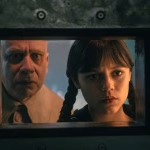
Will Tracy doesn’t stop at parodying dictatorship; he also dissects the complicity that sustains it. Andrea Riseborough, Martha Plimpton, and especially Hugh Grant — who towers in every scene he appears in — crystallize the circle of sycophancy and fear that keeps the regime running. The opulent Habsburg heritage of Vienna’s Schönbrunn Palace elevates the production quality far beyond standard political drama. This spatial grandeur clashes with the intellectual and moral decay inside the regime, offering viewers a visual feast of irony. Across its six episodes, the miniseries uses every minute to expose the absurdity of power and the real-world horror that absurdity unleashes.
Looking back from the vantage point of 2026, The Regime feels like a flare of warning. Elena’s Putin-like moments, her Trumpian rhetoric, and her populist theater now read like an artistic preview of the headlines we watch every day. For viewers, the series is no longer just a comedy; it has become an observation tower from which to make sense of the absurd political climate we’re living through. HBO’s bold and polarizing gamble either captivates or deliberately alienates its audience — and it is precisely this polarization that keeps the show alive in cultural memory. The Regime reveals how ridiculous power can be, while simultaneously reminding us how lethal that ridiculousness can turn out to be — making it one of the most important cinematic mirrors of our time.