

Hamburger Kunsthalle – Galerie der Gegenwart (Basement Level)
Until 18 October 2026
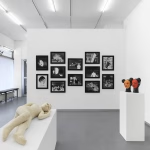
Some exhibitions close around a single theme; Isa Mona Lisa deliberately remains open. Spread across the basement level of the Hamburger Kunsthalle in Hamburg, this long-term installation chooses to make visible the inner logic of the collection rather than pinning contemporary art to a singular narrative. Taking its title from Wolfgang Tillmans’ photograph of his artist friend Isa Genzken, the exhibition addresses the concepts of portrait, icon, and image with ironic distance while simultaneously exposing the museum’s current display reflexes. What is offered to the viewer here is not “the newest” or “the most current”; it is works that produce meaning when placed side by side.
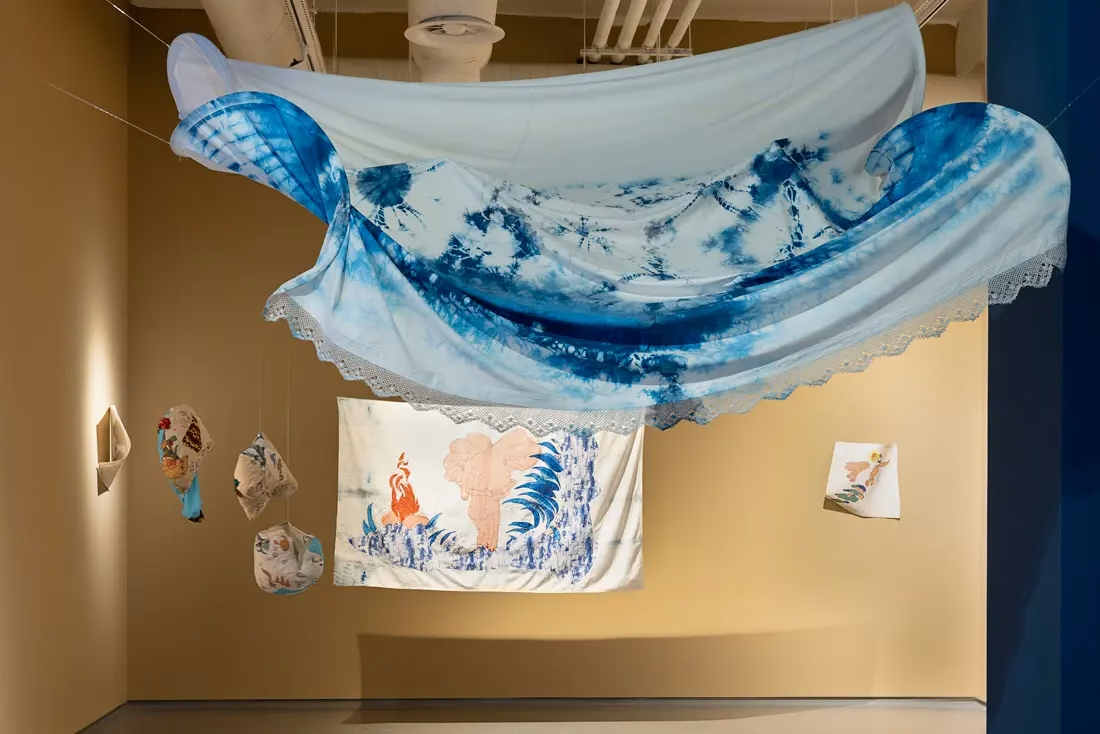
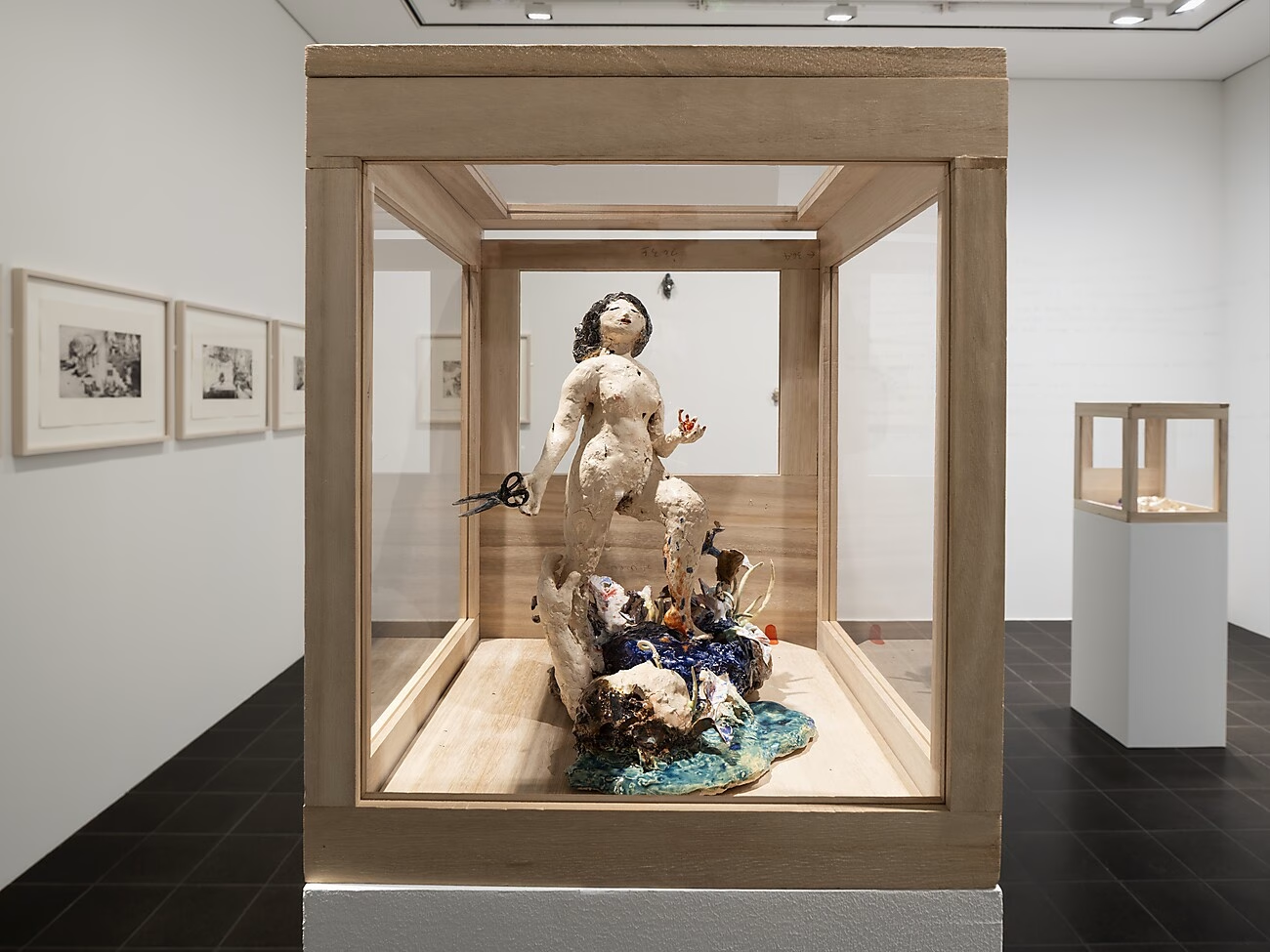
Isa Mona Lisa does not establish a classic “group exhibition” structure. Instead, it proposes a circulation through spaces designed as artist rooms. In these rooms, recent acquisitions by the Hamburger Kunsthalle (most shown for the first time), key works from the collection, and pieces made visible through a collaboration with an important Hamburg-based private collection are considered together. The result is a presentation read through affinities, overlaps, and frictions rather than chronology or movements.
The exhibition’s strength lies in its avoidance of a narrative that confines contemporary art to the “now.” The historical weight of figures such as Donald Judd, Robert Morris, Louise Bourgeois, and Paul Thek meets more recent practices by Tillmans, Genzken, Dan Lie, Thu Vân Trần, and Sung Tieu in the same space. This encounter makes visible inter-medial transitions across a broad spectrum—from minimalism to bodily installations, from photography to material-based works.
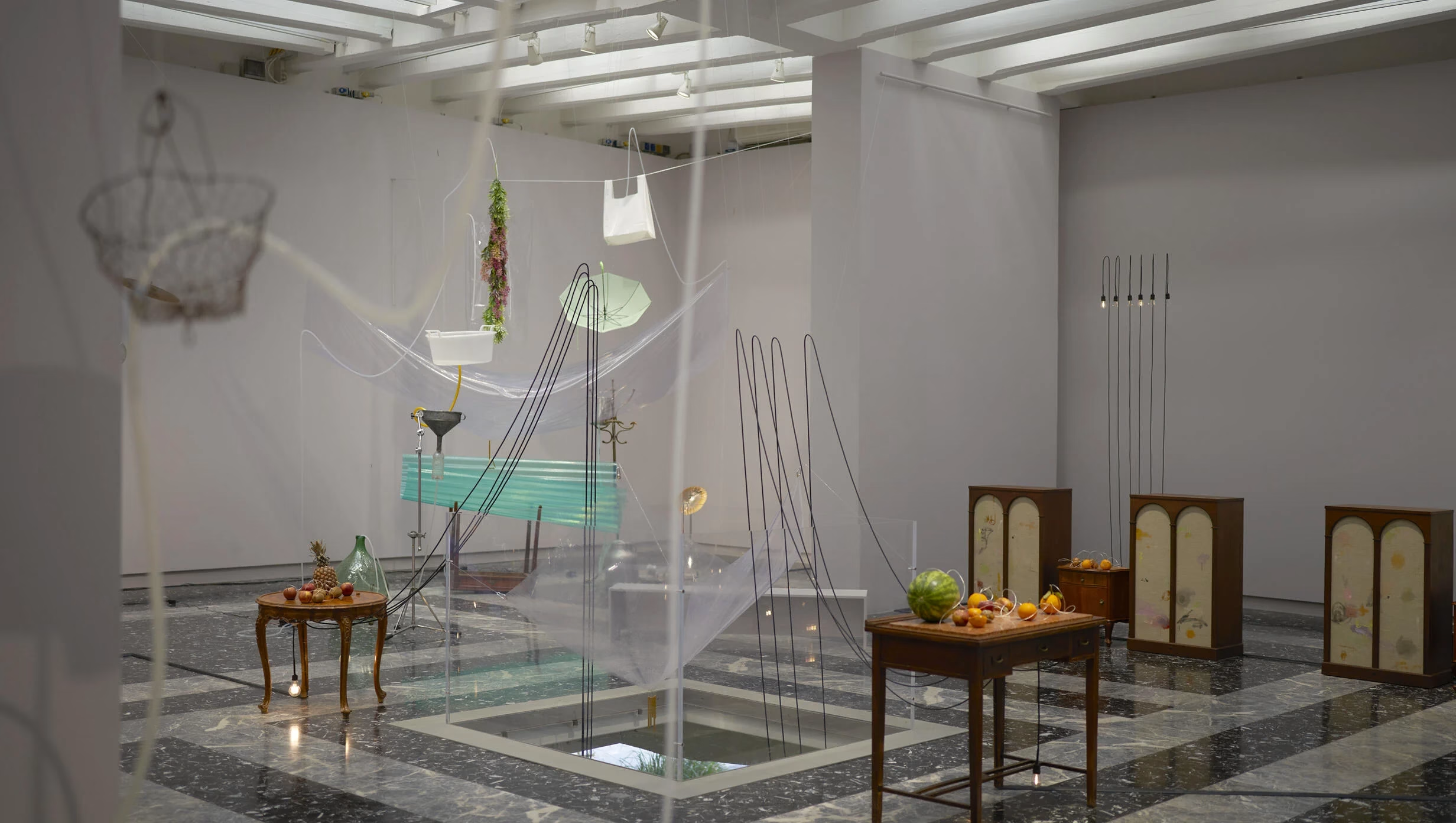
The architecture of the basement level in particular supports the conceptual backbone of the exhibition. Installations, photographs, and sculptures do not treat the space merely as a “carrier”; instead, they transform the space’s memory and weight into part of the work. Permanently displayed pieces by Bogomir Ecker, Jenny Holzer, Ilya Kabakov, Jannis Kounellis, and Richard Serra function like fixed reference points for the exhibition, while the new works added around them continually reinterpret these constants.
The exhibition’s two-year duration brings with it a significant curatorial choice: rotation. The fact that not all works can be shown uninterrupted for conservation reasons turns Isa Mona Lisa from a static arrangement into an exhibition that changes over time. Thus, each visit carries the possibility of encountering a different state of the exhibition; the viewer becomes a witness to this change.
In the end, Isa Mona Lisa proposes listening to contemporary art through the inner voices of an institutional collection rather than reading it through “grand claims” or singular concepts. The exhibition invites its audience not to definitive answers but to rethink ways of looking—and perhaps precisely for this reason, it lingers in the mind for a long time.