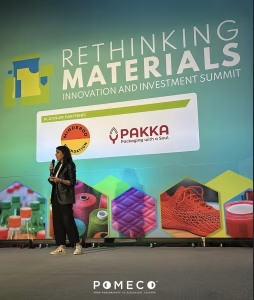


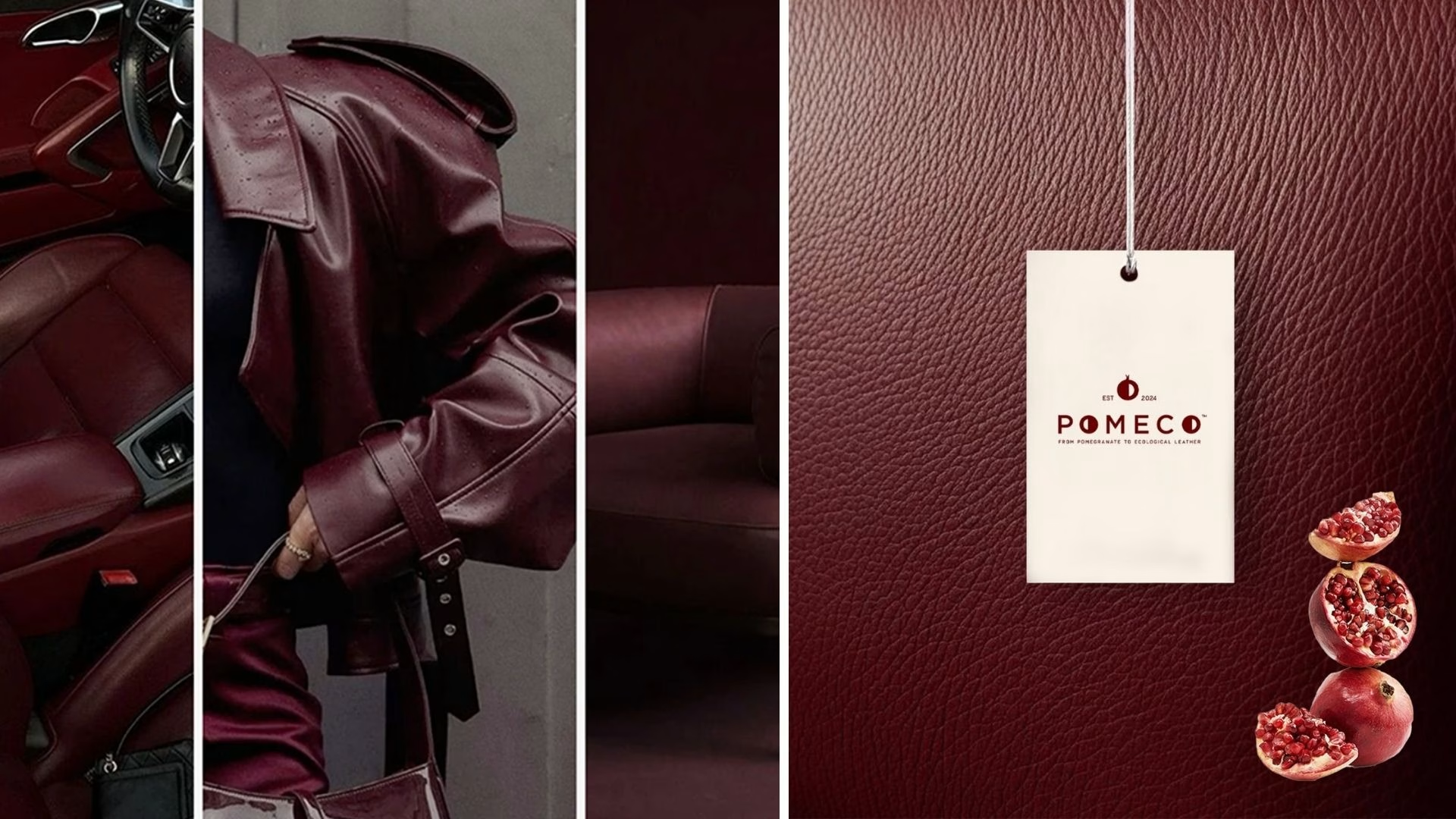
POMECO is a bio-leather alternative made from upcycled pomegranate peel waste -a by-product of juice production.
Click here to visit the website.
- 🌟 When did pomegranate peel, something so quiet and mundane, spark the idea of “new life” in you?
One day, I looked at the pomegranate peels that had fallen out of a market bag. Everyone just throws them away, but in that cracked, red surface, I sensed potential. It was quiet yet powerful. In that moment, the idea that waste could be reborn as something new touched my heart. New life is a cycle already present in nature; we just need to remember it.
- 🌟 What was it like the day the first prototype emerged?
I remember it vividly… In the lab, everyone held their breath. A faint fruity scent filled the air, a trace left by the pomegranate’s essence. The texture was much stronger than we expected, yet it carried a soft stubbornness. When I held it in my hands, I felt both a childlike joy and a deep sense of peace. In that moment, I thought, “This is it.”
- 🌟 What was the hardest thing you had to resist while turning waste into something valuable?
We heard “This isn’t worth investing in” countless times. In a world where peels are seen as worthless, proving their potential took time. The biggest resistance came from the unspoken weight of the question, “All this effort for waste?” But with every step, we felt more strongly that this waste was actually a treasure.
- 🌟 How do you connect the patient transformation of pomegranate peel to your own journey?
Pomegranate peel doesn’t yield immediately; it doesn’t take shape right away. You wait, you study, you understand it. I was the same on this journey. Every rejection, every delay transformed me. Like the material we created from the peel, I became more flexible yet more resilient over time. Patience was the key, both in our raw material and in our inner worlds.
- 🌟 Did you ever come close to giving up, thinking, “Someone else is probably already doing this”? What kept you going?
Many times. Sometimes it was during the announcement of a competition result, sometimes when a technical glitch ruined our day. But then I’d remember the spark in a teammate’s eyes or a simple “This is a great idea” in an email. What kept me going was knowing this idea resonated with someone.
- 🌟 If Pomeco were a fabric, would it be known only for its durability? Or what emotion would it carry?
Pomeco would be a fabric that speaks quietly when touched. Resilient yet soft; not fragile but full of feeling. It would carry a sense of stubbornness, a determination, and a deep respect for nature. Perhaps it would evoke “silent courage” most of all, telling the story of the power of things that transform unnoticed.
- 🌟 “Being ecological” has become a marketing buzzword. What sets Pomeco apart from this cliché?
Pomeco is different because it doesn’t just claim to be “eco”; it completes the cycle. We don’t just avoid harming nature—we think and live with it. Ours isn’t a superficial green; it’s an effort to hear the voice beneath the soil. It’s not about clichés but about real transformation.
- 🌟 In which industry was it hardest to be “understood” rather than just “consumed”?
Fashion. It’s all about fast production, fast consumption… Everything changes so quickly. But we were a slow idea. To last, to gain meaning, takes time. We could only move forward with those who saw us as an idea, not just a product. Transformation began where we were understood.
- 🌟 If Pomeco were a plate, what dish would it carry?
Artichokes in olive oil. It would carry the wisdom of its roots and a simple elegance. Modest at first glance, but rich once you know it. Respectful of nature’s essence, yet timelessly sophisticated in its presentation.
- 🌟 If Pomeco were a storybook, at what age would it be read? And which chapter would bring tears?
Pomeco would be a storybook read in one’s 30s, when you first feel the weight of things you couldn’t change in life. The tear-jerking chapter would be the one where something seen as waste transforms into someone else’s dream. Because that’s where real change begins.