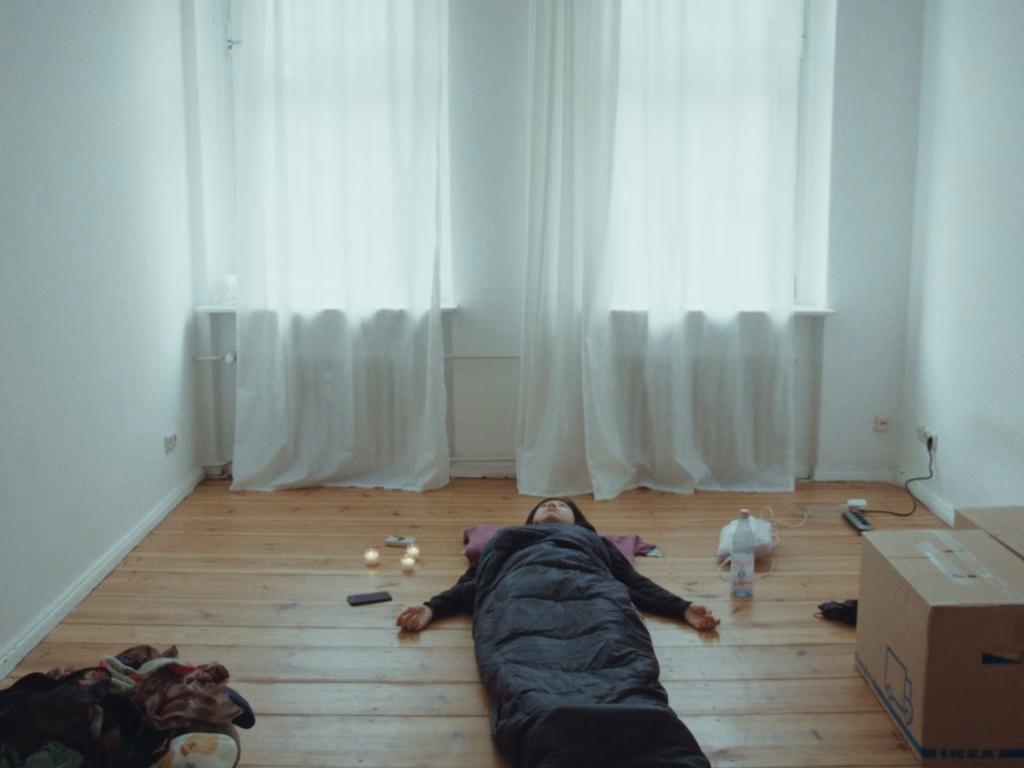


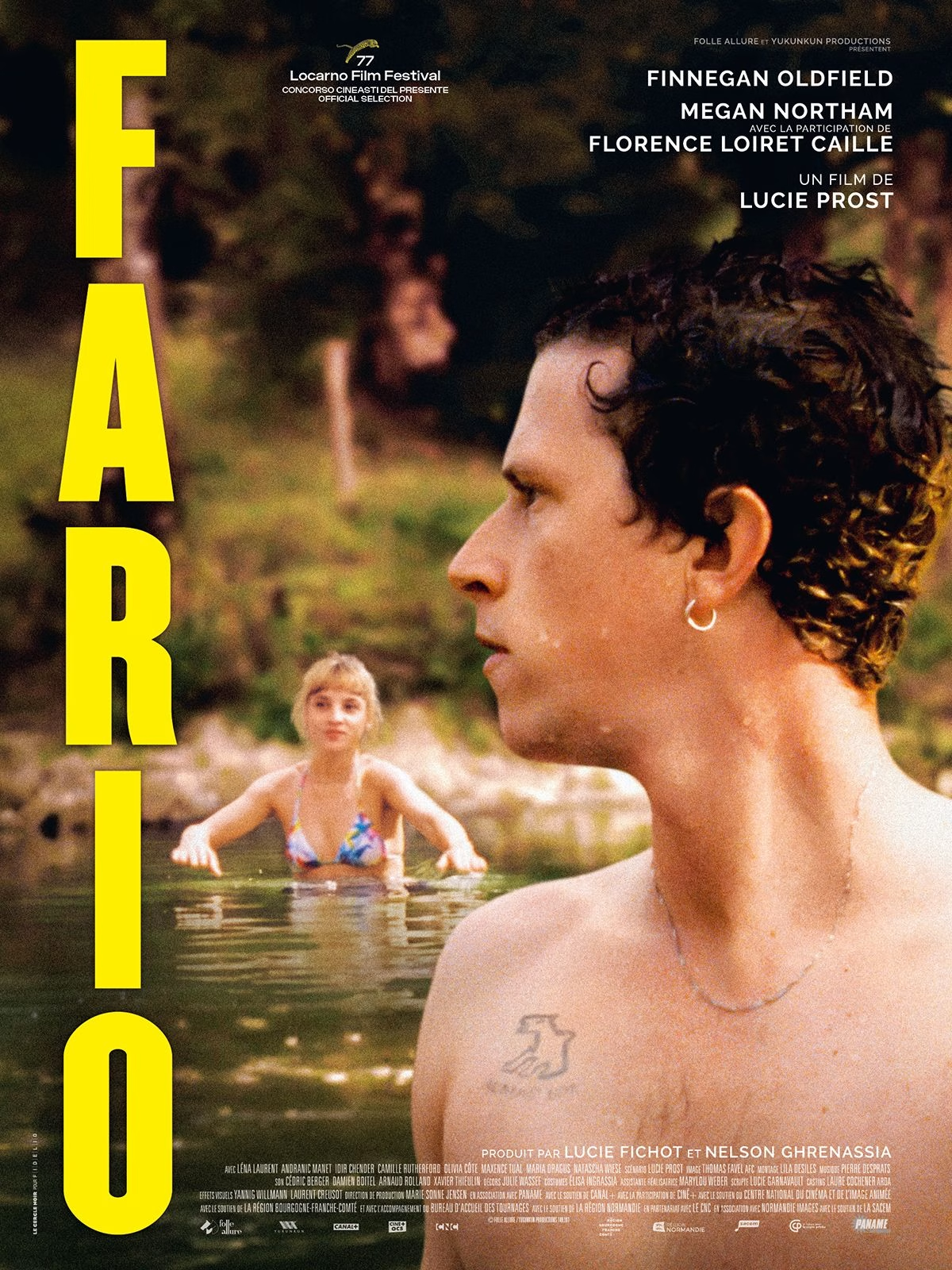
Lucie Prost’s debut feature Fario secures its place in cinema history as a shattering drama of mourning and ecology, carrying the viewer from the misty riverbeds of rural France to Berlin’s drowned techno clubs, and finally into the deepest recesses of a suppressed conscience. At its core is Léo, a 27-year-old engineer who returns to his village to sell the land left by his father, who took his own life three years earlier. But this is no simple real-estate transaction — it is the story of the collapse of the defensive walls Léo built in Berlin through drugs, parties, and workaholism.
Léo’s plan to sell his father’s inheritance to a giant mining company searching for rare earth metals spirals out of control when he notices strange natural phenomena in the river. Lucie Prost uses the possibility of an ecological disaster as a perfect metaphor for the inner decay of a soul that refuses to grieve. Throughout the film, the question of whether the pollution in the river is a real environmental catastrophe or a hallucination born of Léo’s inability to confront his father’s death keeps the viewer in a state of unsettling ambiguity.
The film’s international success and prestige are confirmed by its awards and nominations. Fario premiered in the “Cineasti del Presente” (Filmmakers of the Present) section at the 2024 Locarno Film Festival, where it attracted significant attention and returned with an award from this prestigious auteur-oriented platform. Supported by French government cultural funds, the film has proven to the world that it is not merely an environmental film, but also a profoundly introspective psychological study. Despite its limited box-office performance, critics have praised its aesthetic honesty and Finnegan Oldfield’s extraordinary performance.
Finnegan Oldfield embodies Léo as a man shattered by his father’s suicide, externalizing his silent scream with physical intensity. The oscillation between Léo’s engineering discipline and the hallucinatory attacks triggered by his repressed emotions forms the main source of the film’s tension. Megan Northam and Florence Loiret Caille, who accompany him, add a poetic resistance to the story. In particular, the mother’s processing of grief through theater supports the film’s deep structure around coping with trauma. These female characters do not remain in the shadow of the male protagonist, as in traditional narratives; instead, their independent and powerful presence allows Léo to look at his past from a different perspective. The slow rhythm that gives the characters breathing space also offers the viewer an opportunity to confront their own inner voids.
The film’s cinematographic language depicts rivers, forests, and dark abysses almost as living characters. The cinematography interweaves the peaceful beauty of nature with the uncanny quality created by pollution, producing a dreamlike atmosphere. Fario does not merely tell the story of an individual’s grief; it also points to the real and burning social issue of the epidemic of farmer suicides in France. Yet it does so not through statistics, but through the sincere testimony of a director who has experienced firsthand the hardships of working the land. The truth that the soil is not merely property but a space of memory becomes increasingly evident as the mining company’s drilling machines penetrate the earth. For Léo, investigating the river’s pollution is actually an investigation into why his father gave up, why he himself fled, and how the inherited pain can be cleansed.
In conclusion, Fario is a new-generation example of French auteur cinema that removes the ecological crisis from being an external problem and intertwines it with the inner wounds of the human being. Lucie Prost guides the viewer along the thin line between the rational and the emotional through hallucinatory storytelling. The story of a young man who flees the false glitter of Berlin to return to his roots is actually a representation of our inevitable appointment with our own past. This striking parallel between the poisoning of the soil and the poisoning of the soul creates an unease that does not fade until the very end of the film. If you wish to see the ecological crisis not merely as a political discourse, but as a human process of destruction and healing, Fario promises you that unforgettable riverbank where nature and grief intertwine. If the soil holds your father’s memory, selling it is actually sacrificing a part of yourself — and Lucie Prost lays bare the full naked cost of that sacrifice.