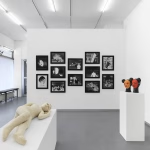


Berlin’s temple of photography, Fotografiska, invites us not only to a visual feast but to a grand mind game that will make us question our beliefs and perceptions. The exhibition “Edward Trevor: Never Seen the Light” by American artist Phillip Toledano, which opened its doors on 28 March and will run until 31 May 2026, walks the fine line between memory, fiction, and the credibility of what we call photographic evidence.
When does a photograph stop being merely an image and begin to reveal a truth? And what if that truth is entirely constructed?
The Fake Allure of a Lost Archive
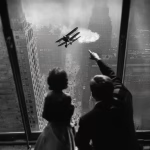
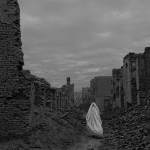
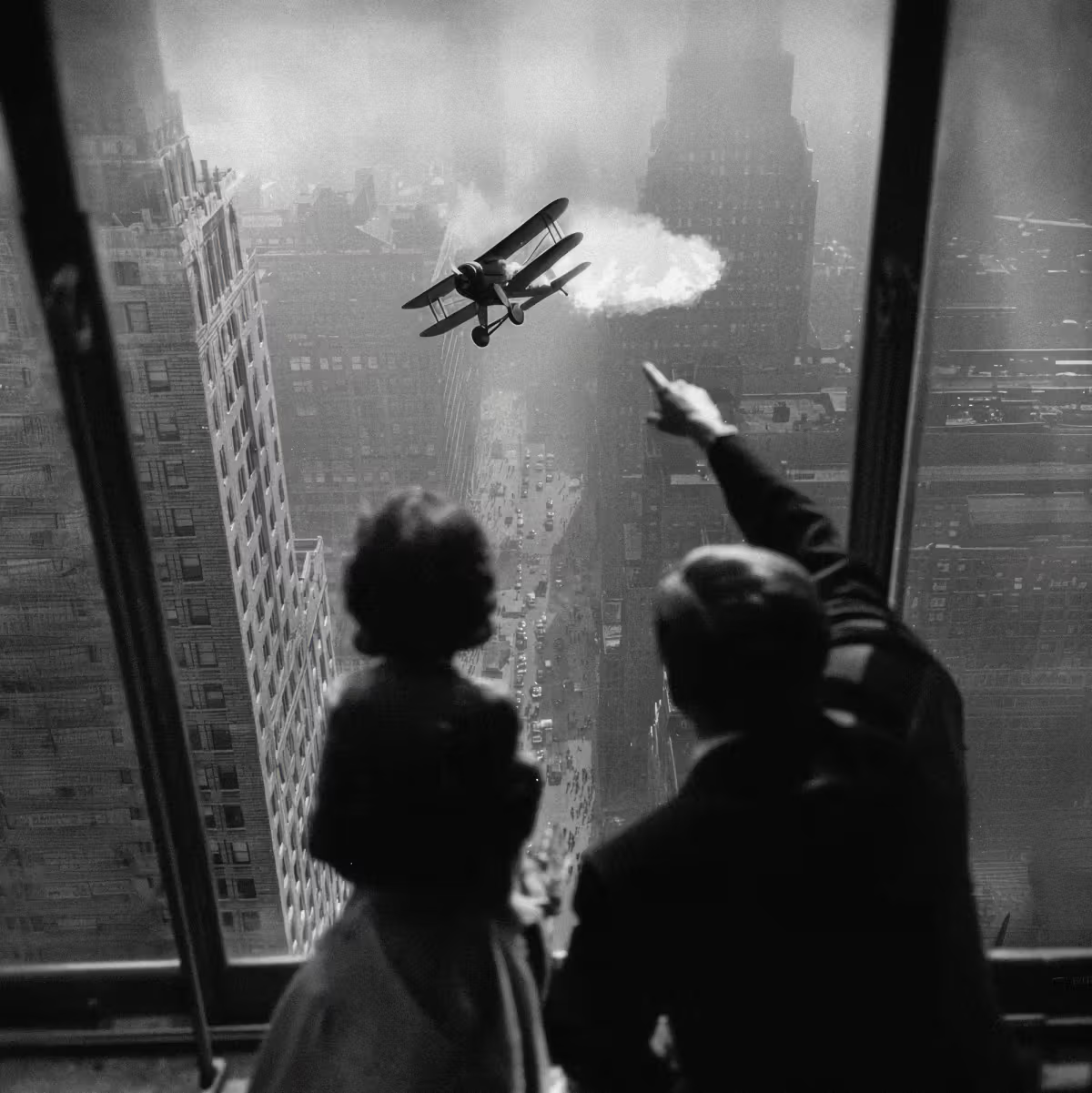
As soon as you step into the exhibition, you fall into a completely unknown but captivating story. A box of previously unseen negatives, supposedly discovered after the death of Toledano’s father — an actor, painter, and sculptor who went by the stage name “Edward Trevor”. Before you are extraordinary black-and-white frames that reflect 1930s and 1940s New York with cinematic precision and a subtle sensitivity to the strange. What at first appears to be a traditional, touching family archive gradually reveals a shocking secret in the second half of the exhibition.
The truth is this: Edward Trevor never once held a camera in his entire life.
Evidence Without Camera, Without Event, Without Witness
Toledano created all 20 of these works hanging on the wall — which appear to be perfect visual proofs of the past — using artificial intelligence (AI). There is no real event, no camera, and no witness. While visitors think they are walking through an ordinary photography exhibition, they slowly become aware of this artificial DNA.
The artist explains this major provocation with these striking words:
“Many people don’t realise how convincing artificial intelligence can be. Some say it has no soul. But that is exactly what was said about the invention of photography in the 1850s! I want visitors to immerse themselves in this imaginary story and be surprised to discover that, even though everything was created by AI, it still contains beauty and emotion.”
“Easter Eggs” for Careful Eyes
If you look at the works closely enough, you can catch the clever clues Toledano has placed in this fake world. A small child smoking a cigarette with a monkey? Or a horse wandering through the middle of the city in the middle of the night? Certain motifs and angles quietly whisper to attentive viewers just how surreal this world actually is.
So, do we question these images, or are we all too ready to trust them as evidence simply because they hang on the wall?