

Before Wonder Woman: The Extraordinary World of Fletcher Hanks, Overshadowed by Fantomah

When the foundations of superhero mythology were laid in the late 1930s, the industry took shape almost overnight. The new era that began with Superman’s debut in 1938 drew countless creators, publishers, and characters into the same melting pot.
Among the names that shone during those early years – known as the Golden Age – one remains an enigma that has yet to be fully unravelled: Fletcher Hanks.
A short, strange, brilliant, and dark career…
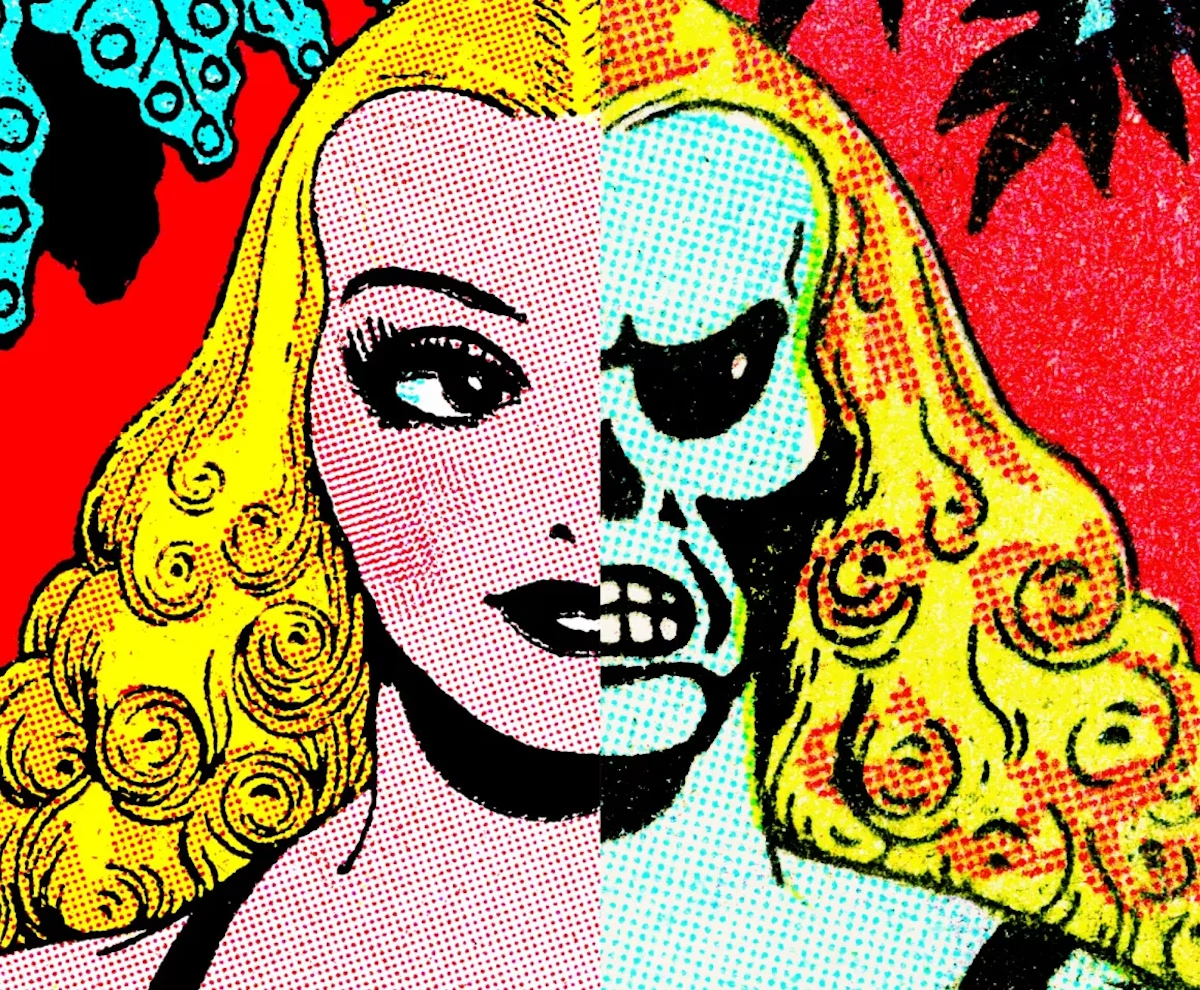
Hanks was active for only two years, from 1939 to 1941, yet his legacy is still regarded as “one of the most extraordinary visions in comic book history.” Stardust, Space Smith, and most importantly Fantomah, the Mystery Woman of the Jungle… In other words, the man who created a female superhero before even Wonder Woman.
The comprehensive collection Turn Loose Our Death Rays and Kill Them All!, published today by Fantagraphics, gathers all 51 of Hanks’s stories in a single volume and opens a fresh window onto the strange genius he left behind.
Fantomah: A Forgotten Superhero Archetype
Fantomah has long been trapped in what is often called “immortal oblivion” in comic book history.
A supernatural, independent, menacing, and at times terrifying female figure who appeared on the scene long before Amazon princesses…
Now being re-examined by feminist comic historians, Fantomah is more than just a character – she is a prime example of how experimental the Golden Age truly was. Hanks’s approach stood apart from the young, fast-producing comic creators of the era: he was older, angrier, more uncontrolled, and utterly determined to forge his own aesthetic.


Hanks’s Strange and Unsettling Aesthetic
At first glance, Hanks’s panels look “wrong”:
- Disproportionate bodies
- Oversized hands, tiny heads
- Figures that seem to float in mid-air
- Panels that abruptly halt the rhythm
- Strange, staccato dialogue filled with unnecessary commas
Far removed from the aesthetic today’s comic readers are accustomed to.
Amateurish on one hand, unforgettable on the other.
Ridiculous at times, deeply disturbing at others.
That quality beloved by No:26 – the feeling that the story is being rewritten the moment your eye gets stuck – is present in abundance in Hanks.
Panels suddenly freeze, the narrative stumbles, and the reader struggles to orient themselves.
That very strangeness has become his signature.
An Auteur Outside the Comic Industry’s Machine
At a time when comic book production was becoming industrialised, Hanks did everything himself – writing, drawing, inking, lettering – positioning him as an early auteur.
Working within the industry’s moulds yet never quite fitting any of them.
This is precisely why Hanks is compared to outsider art today.
Even though he worked entirely within the system, the logic and form of the worlds he created diverge radically from the comic industry average.
A Dark Biography, a Strange Legacy
Hanks’s life is almost as striking as his drawings:
- A history of violence
- Abandoning his family
- Alcohol dependency
- Years of disappearance
- Mysteriously walking away from the industry
- Being found frozen to death on a Manhattan park bench in 1976
His comic book past remained unknown even to his family for decades, only uncovered in the 2000s by researcher and editor Paul Karasik.
Karasik’s confrontation with Hanks’s son is one of the most shattering sections of the collection: far from forming an emotional bond with the father figure, the son looks at the drawings and reacts with indifference – “what’s the big deal?”
That very disconnect sums up the tragic tone of Hanks’s life.

Turn Loose Our Death Rays and Kill Them All! – Why It Matters
This new 2025 collection is far more than retro curiosity;
it is an academically and aesthetically vital resource for the Golden Age and early superhero culture.
Because the stories Hanks produced:
- Open the door to “another possibility” in comic book history
- Offer clues as to why superhero fiction developed the way it did
- Lay bare early forms of female representation in comics through figures like Fantomah
- And, most importantly, remind us how the flaws of comic storytelling can be turned into a creative advantage
Even today, looking at these stories makes the eye pause, the brain refocus, and reminds us just how far the boundaries of the comic medium can be stretched.
The Strange Pleasure of Reading Hanks
Fletcher Hanks is a figure in comic book history who fits no category completely.
Neither fully forgotten nor fully embraced.
But one thing is certain:
The world he created is unforgettable, even if it is not “good” in the classical sense.
Turn Loose Our Death Rays and Kill Them All!
brings Hanks, Fantomah, and the experimental energy of the Golden Age back into view.
It transforms reading comics from mere entertainment into an act of cultural archaeology.