

Until January 25, 2026 | Hamburger Kunsthalle
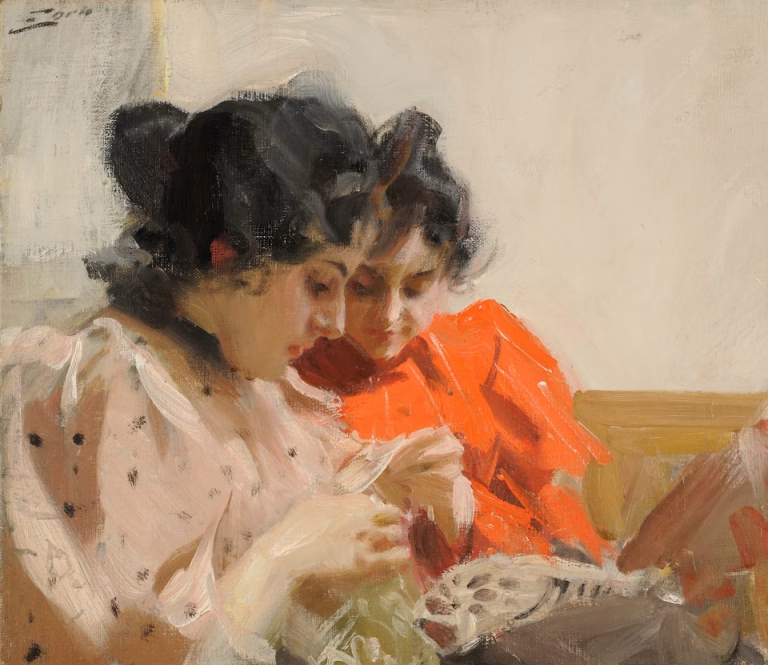
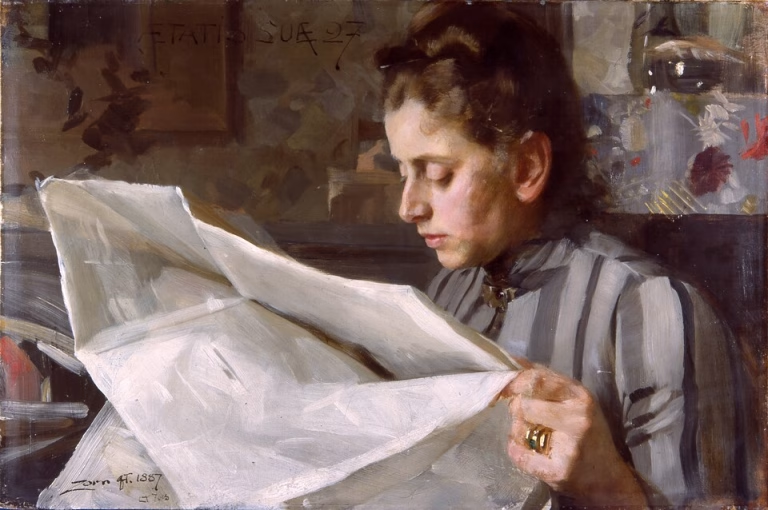
Hamburger Kunsthalle is hosting the first comprehensive retrospective examining the multifaceted production of Swedish artist Anders Zorn (1860–1920). Titled Sweden’s Superstar, the exhibition evaluates the artist’s practice spanning nearly forty years through painting, watercolor, etching, and sculpture in a holistic framework, while reopening discussion on Zorn’s unique position in the late 19th- and early 20th-century art scene.
The exhibition features over 150 works, including masterpieces. Zorn’s portrait paintings that solidified his international fame, rarely exhibited watercolors, powerful etchings, and small-scale sculptures reveal not only the artist’s technical mastery but also his multi-layered relationships with different artistic tendencies.
An International Career, a Local Identity
Growing up in modest conditions in Sweden’s Dalarna region, Zorn established an extensive travel network covering Europe and North Africa after his education at the Stockholm Art Academy at an early age. Integrating into the English art market in London during the 1880s, directly witnessing the rise of Impressionism in Paris, and achieving great success in the United States in the 1890s enabled him to develop a cosmopolitan artist identity. Painting portraits of two U.S. presidents and his relationships with elite circles of the era made Zorn not only a painter but also an active player in the visual representation economy of the modern age.
Technical Mastery and the Illusion of Spontaneity
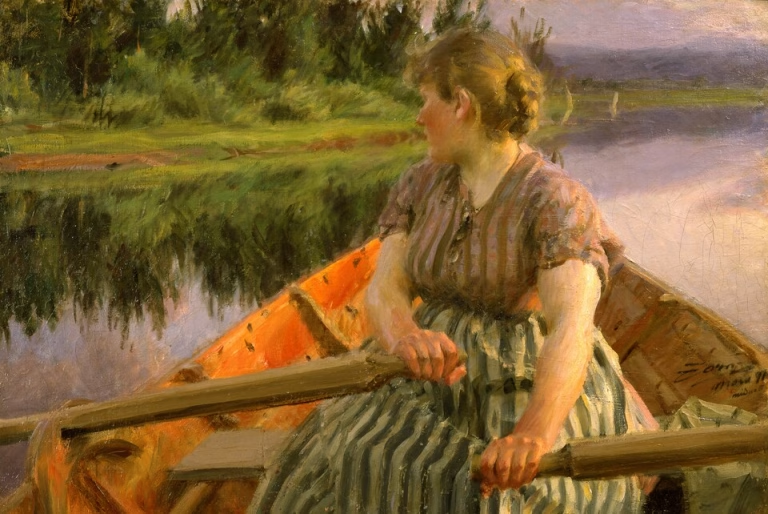
Zorn’s works, though giving the impression of improvisation and lightness at first glance, are often the result of a highly calculated and conscious production process. The artist worked predominantly with watercolor in the early phase of his career; after 1887, he turned to oil painting, achieving high technical intensity in figure, portrait, and landscape genres. The freedom in his brushwork and his approach to light and surface relations touch upon Impressionist aesthetics while overlapping with the compositional understanding specific to salon painting.
Return to Sweden and the Nature–Human Relationship
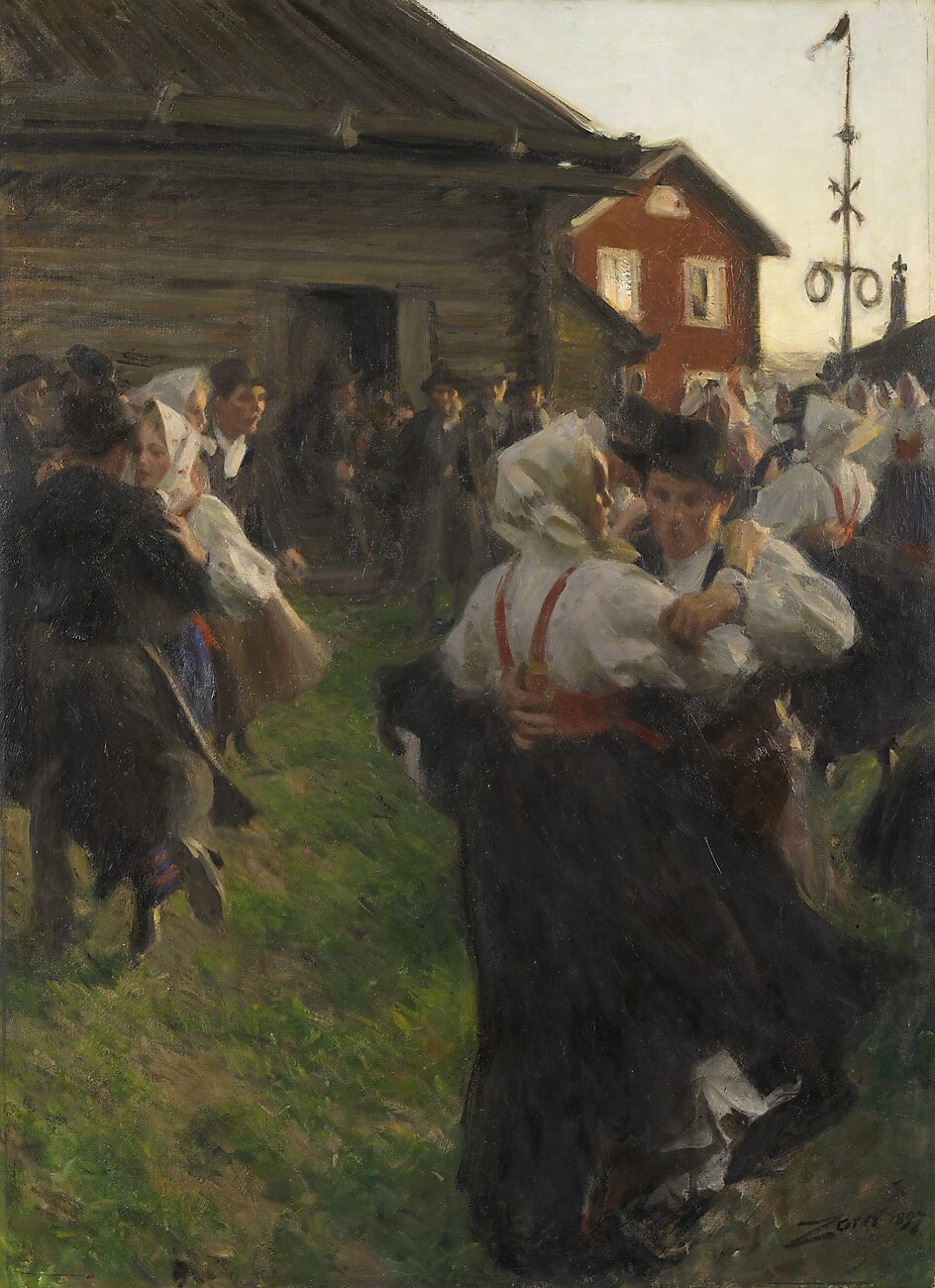
In Zorn’s late-period production after permanently settling in Dalarna in 1896, Swedish countryside, folkloric motifs, and the nature-human relationship become prominent. Works like Midsummer Dance (1897) can be read not only through national identity narratives but also through themes of body, ritual, and collective memory. In this respect, Zorn’s late works offer important clues about how the local is reconstructed in the process of modernization.
The Hamburg Context
One of the exhibition’s notable sections focuses on the harbor landscapes Zorn produced during his visit to Hamburg in the winter of 1891/92, at the invitation of Kunsthalle director Alfred Lichtwark. These works reveal the artist’s atmospheric sensitivity in handling industrial landscapes and how he conceptualized the urban view as an indicator of modern life.
Curatorial Framework
The exhibition, curated by Dr. Markus Bertsch with contributions from Jana Kunst and Michelle Adler, aims to offer an analytical reading beyond a chronological narrative, along axes of technique, theme, and geography.