

A Silent Awakening on the Edge of War: Fatih Akın’s “Amrum” and the Triumph of Human-Scale Cinema


Fatih Akın’s latest masterpiece, which left its mark on 2025 and continues to be debated in 2026, Amrum, examines the final days of World War II on a remote North Sea island—far from the roar of battle, yet deeply shadowed by destruction—at the sharp turning point where childhood innocence is lost. Seen as a departure from the director’s usual sharp and dynamic style, this lyrical drama envelops the viewer not in action, but in the emotional atmosphere of wind, sea, and silence. The wild nature of Amrum Island is not merely a backdrop; it stands as a silent witness that shapes the characters’ inner states. With this film, Akın redefines the rising trend of “human-scale war dramas”—seen in works like The Teachers’ Lounge—by filtering a historical trauma through an individual and intergenerational lens.
The narrative spine of the film rests on the daily struggle for survival of young Nanning, portrayed with astonishing maturity by Jasper Billerbeck. For Nanning, war is a limited reality confined to the fish he catches to help his family and the grueling work he endures—far removed from the front lines. Yet the end of the war brings not the expected peace to the island, but the exposure of deep moral fractures hidden within society and the distorted worldviews inherited from adults. Nanning’s transition from a simple survival instinct to an ethical awakening allows the viewer to deeply feel how ideologies are absorbed by children before they can understand them—and how they are later questioned. Billerbeck’s restrained, internalized performance carries the film’s emotional weight across every scene.
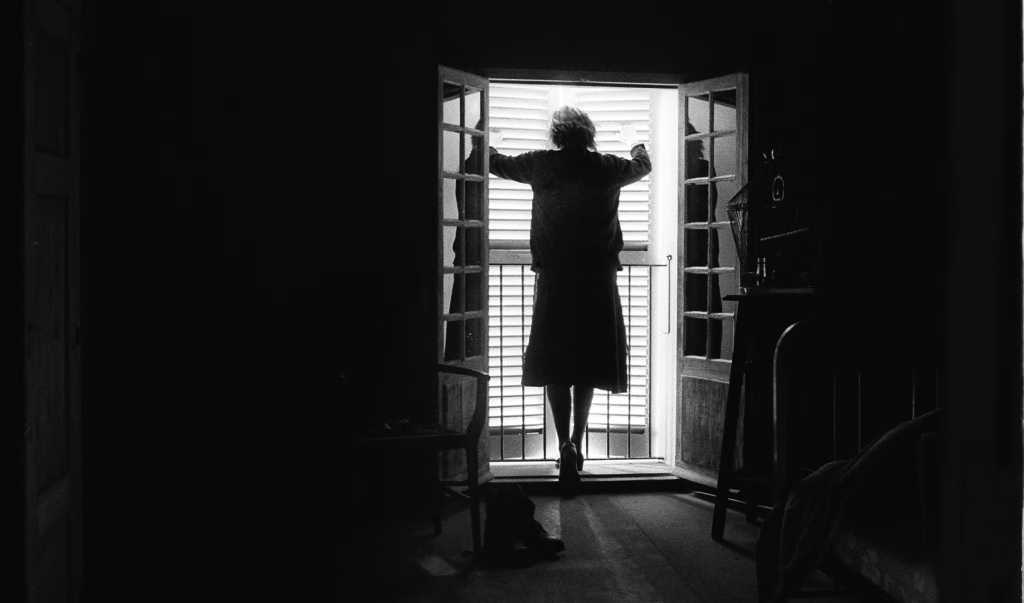
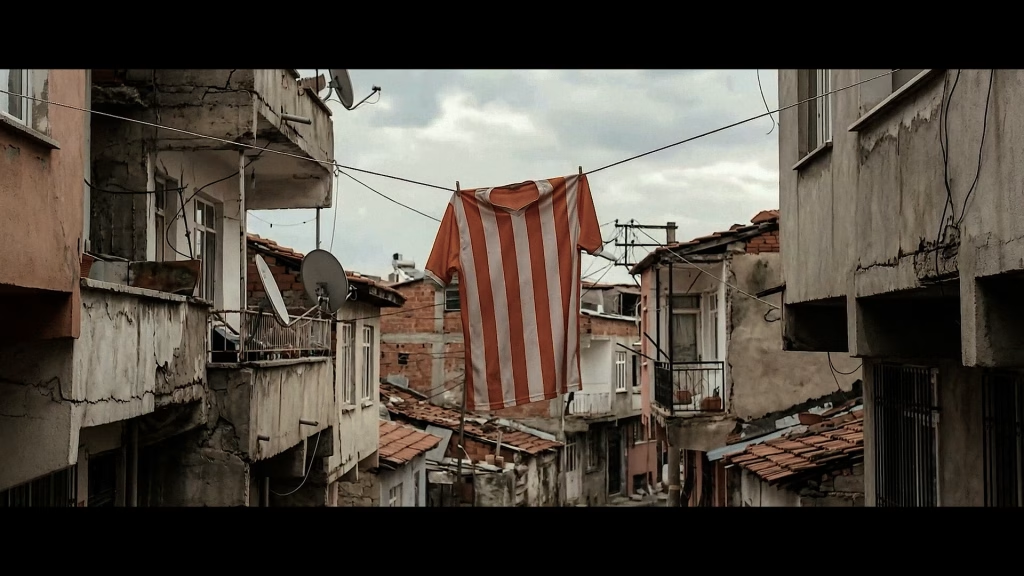
Visually, Amrum serves as a kind of antithesis to contemporary cinema saturated with digital perfectionism and CGI-supported war sequences. The cinematography uses the raw yet enchanting atmosphere provided by natural light to immerse the viewer in the island’s cold humidity, while the sound design deliberately strips away noise in favor of a purified tension. This aesthetic choice elevates the film beyond a mere war movie, turning it into an ethical excavation and a reckoning of conscience. Following in the footsteps of works like The Zone of Interest or The White Ribbon, Amrum—in contrast to big-budget productions—leaves a far more lasting impression through emotional intimacy and authentic sense of place. In the 2026 cinematic climate, the fact that “quiet cinema” creates such a stir is proof of the audience’s hunger for honest narratives far removed from artificiality.
Commercially, Amrum achieved a surprising success with approximately $8.7 million in global box office relative to its modest budget, demonstrating how auteur cinema can remain resilient at the box office when paired with the right festival strategy. Since its premiere at Cannes, the film has secured a prestigious position through consistently high critical scores, and strong word-of-mouth has allowed it to remain in theaters for an extended run. Akın’s vision once again reminds us that history is not merely numbers and battles—the true destruction and reconstruction take place in the human soul. With its use of silence as a weapon and its transformation of the viewer from mere observer into moral participant, Amrum has established itself as one of the reference points of modern European cinema.