

A Healing Bridge from Caribbean Gardens to Berlin: Spore Initiative and the “Welto and the Sacred Bush” Exhibition

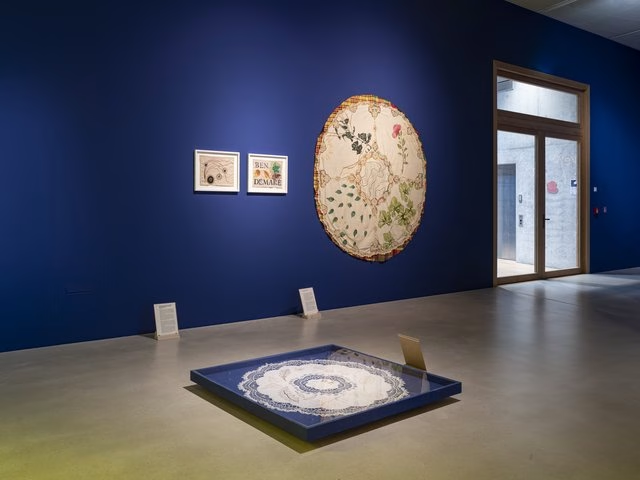
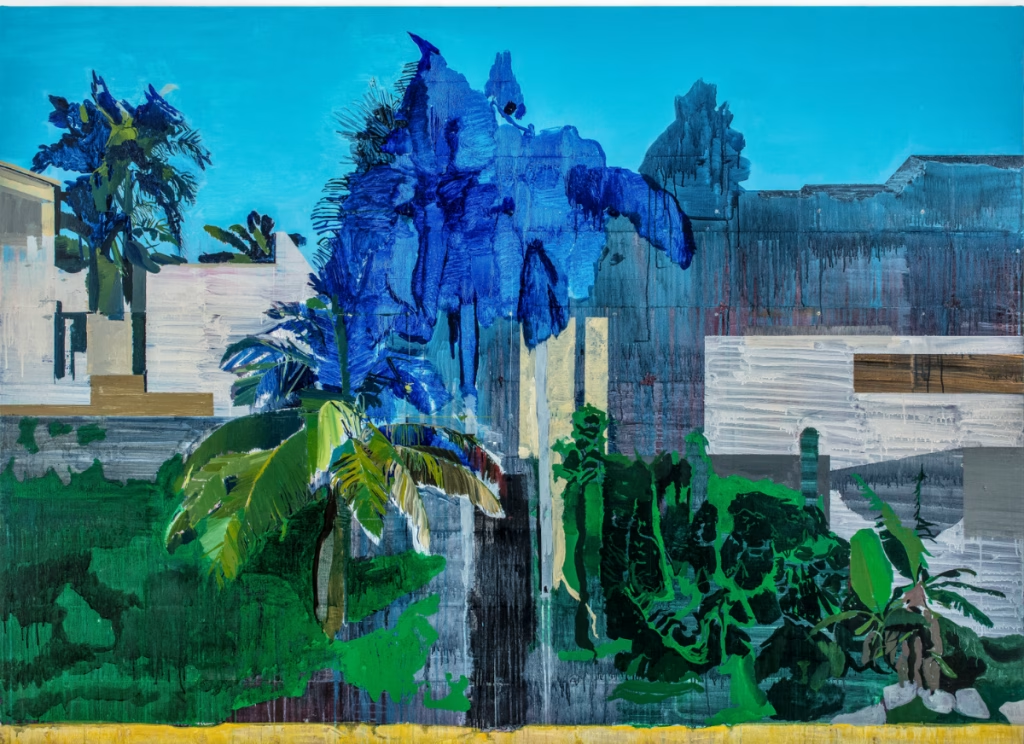
Amid ecological collapse, poisoned soils, and vanishing biodiversity, Berlin’s cultural landscape resonates in Neukölln under the roof of Spore Initiative with an ancient voice rising from the depths of Caribbean gardens. The exhibition “Welto and the Sacred Bush” centres the silent intelligence of plants and the millennia-old bond with the soil, inviting visitors beyond the visible into the world of roots and rhythms. Running until 21 January 2026, this process demonstrates that Caribbean gardens are not merely agricultural spaces, but living fortresses of resistance, collective memory, and repair.
The title draws inspiration from the Creole concept of “Welto,” which symbolizes overlooked life forms and the clandestine struggles for survival carried out in the shadows; “Sacred Bush” (Kutsal Çalı) represents healing cultures inherited from soil and ancestry. Caribbean gardens are tightly woven yet extraordinarily intelligent ecosystems where medicinal, ceremonial, and edible plants coexist. Having historically served as survival systems, they are now being reinterpreted within the exhibition as models for healing our own ecological wounds.
One of the most striking aspects of the project is the two-year rooted collaboration between Spore Initiative and the Martinique-based association Permactivie. As part of this partnership, 37 children from École Clémence Caristan in Martinique were trained as “guardians of the garden,” experiencing plant knowledge through drawings, rituals, and soil care. The pure and future-oriented contributions of these children stand side by side in the exhibition with powerful Caribbean diaspora artists such as Annalee Davis, Guy Gabon, and Florence Lazar, creating an intergenerational dialogue.
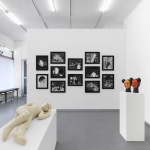
Inside the gallery, works shaped through sound, soil, textiles, and living materials compel the viewer to slow down and listen to the whisper of nature. Mycelial networks (fungal roots) in their cycles of growth and decay, modern interpretations of Martinique’s communal farming tradition Lasotè, and sound installations echoing bèlè rhythms transform the space into a sensory laboratory. While listening to a child’s recorded conversation with a tree, we find clues to how the vital bond between humans and nature—once broken—might be rebuilt.
This exhibition is not merely an art display to be observed from the outside; it is a living process enriched by the contributions of its visitors. Admission is free and open to all ages. Throughout January, Spore Initiative welcomes visitors Thursday through Sunday. Guests can leave their own drawings, messages, and reflections; the collective accumulation gathered here will ultimately return to the local community in Martinique at the end of the exhibition, completing a genuine cycle of knowledge and love exchange.