

ChertLüdde, Berlin
🗓️ On view through November 8, 2025
Making her solo debut in Berlin, Sandra Poulson transforms the invisibility of dust into a narrative tool in her installation Dust as an Accidental Gift. First presented at the 2023 Sharjah Architecture Triennial, this work reimagines Luanda—Angola’s capital, where the artist was born and raised—through the lens of a single speck of dust.
This time, Poulson focuses on Luanda’s Kikolo Market, a chaotic yet functional, transient yet enduring ecosystem on the city’s edge. Dust here is more than a residue; it’s an invisible force shaping the rhythm of social order, economic habits, and colonial history. With every step, dust rises, carrying traces of the past while guiding the movement of the present city.


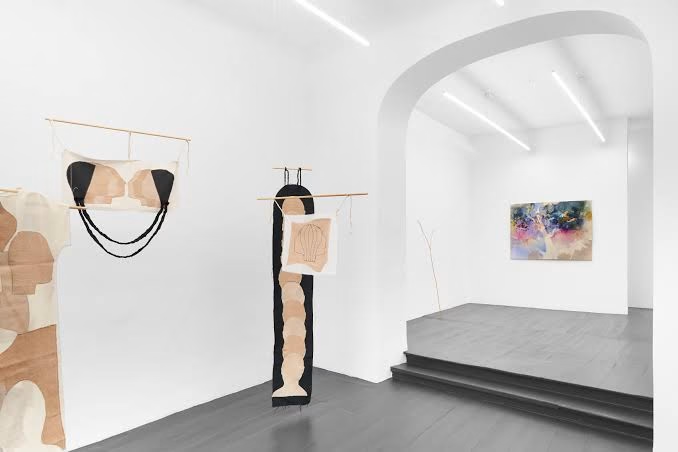
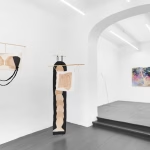
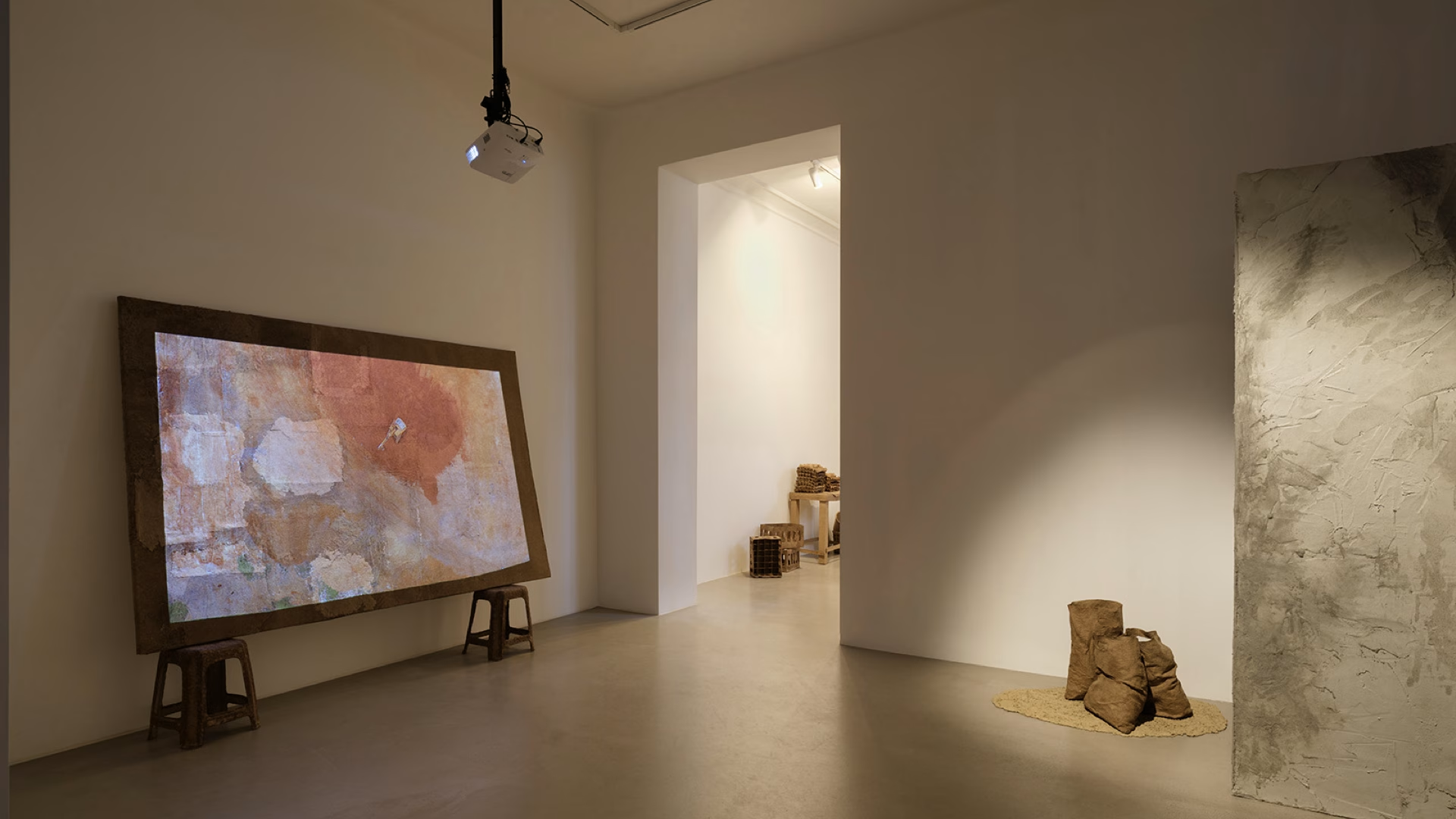
Poulson’s installation brings the market’s texture into the gallery: cardboard chairs, dried fish, shoes, clothing—all coated with starch and water, as if preserved archaeological objects frozen in time and dust. These materials—cardboard and cornstarch—symbolize both ephemerality and resilient life. The artist notes, “Luandans make life out of dust,” illuminating the creative energy within the city’s fragile order.
The exhibition’s most striking aspect is dust’s role not just as a physical substance but as a social boundary. During Angola’s colonial era, white Portuguese lived by the sea, while Black Angolans were relegated to the dusty interior. Thus, “cleansing oneself of dust” was not merely about hygiene but a ritual of existential transition—a symbol of appearing modern and belonging to the “pavement.” Poulson inverts this historical divide, turning dust into a metaphor for resistance—no longer suppressed but a defining presence.
Dust as an Accidental Gift also nods to AbdouMaliq Simone’s concept of the “Near South,” viewing the South not as a fixed geography but as a constantly shifting, reimagined way of life. In Poulson’s work, dust embodies this movement—an unseen yet all-determining rhythm.
Apartment No: 26 Note
Sandra Poulson’s Berlin exhibition unveils the invisible geography left behind by cities, like a quiet poem. Dust as an Accidental Gift weaves together layers of post-colonial memory, everyday production, and resilience. Here, dust is not a mark of destruction but a material of reconstruction, remembrance, and reclamation.