

Sometimes, the first thing you feel when walking into an exhibition hall is not a theoretical admiration, but directly the physical absence of a body. Between Bridges on Adalbertstraße in Berlin leaves the viewer alone with precisely this dense and heavy void in this first retrospective taking place nearly thirty years after Jochen Klein’s early death in 1997. Running until July 26, 2026, this encounter tells the story of an artist seeking refuge in paint, canvas, and consequently, the most vulnerable human emotion, amidst the rigid, distant conceptual art hegemony of the 1990s, which viewed painting as almost reactionary. Yet, this return is not a conservative longing for the past; on the contrary, it is an insistence on crying out the scream of the body through painting where theory ends.
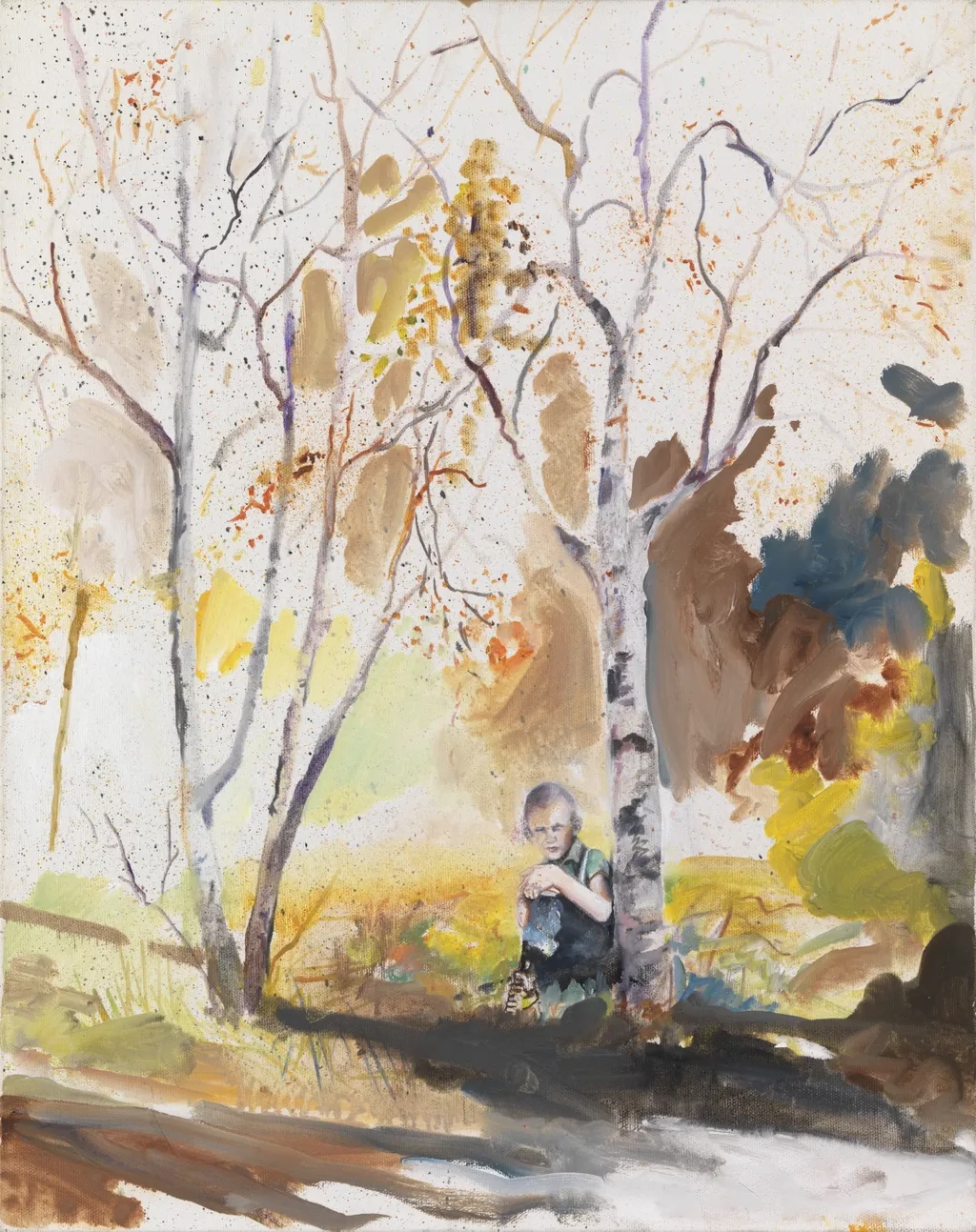
Those final canvases produced during Klein’s last months in London, which form the center of gravity of the exhibition, evoke a strange sense of familiarity at first glance. Drawing from cheap tourism posters, advertisements, tabloid magazines, and pornographic film stills, these landscapes resemble rough surfaces from which commercial promises have been scraped off. The artist takes those sterile fantasies of security and happiness that consumer society relentlessly sells us, hollows them out, and leaves behind only a suspended residue of desire. The figures in these paintings are so naked, so unprotected, and so precarious within nature that, as a viewer, you feel both a deep tenderness and an inevitable unease while looking at them. This defenselessness is the aesthetic ache on the canvas of the HIV/AIDS crisis and the cold breath of impending death—the heaviest burden on the back of the ’90s generation.
The stones of the path leading to this intense emotional atmosphere were actually laid with a rigid conceptual discipline. During his student years in Munich, Klein examined how power forces bodies into alignment, and together with his friend Thomas Eggerer, investigated how sterile parks and Baroque landscape architecture were sabotaged by gay cruising culture. In works like the “IKEA” project, which he produced with the Group Material collective when he moved to New York, he declared that flat-pack furniture and domestic layout templates were actually class-based and political control mechanisms. Therefore, his picking up the brush again at the end of his career is not an escape from theory; on the contrary, it is the very act of demanding, through the flawed nature of paint itself, that innocence promised but never delivered to us by sterile catalogs and perfect landscapes.
The non-chronological layout of the exhibition places even the artist’s earliest experiments at the Academy of Fine Arts Munich into this context. Dating back to 1990, small wax animal sculptures dressed in muslin dresses stand in the room as the first tangible harbingers of the theme of vulnerability that Klein pursued throughout his life. Exposing the fragility and fantasies of power, these early works converse directly with the melancholy under the open skies of the London canvases. Rather than merely commemorating Jochen Klein as a tragic loss, Between Bridges repositions his aesthetic legacy as a sharp mirror aimed directly at today’s plasticized visual world. Waiting there to remind us why painting can still be the most political medium, this quiet yet striking rebellion can be viewed in Berlin as the end of July approaches.