

A Genius Outgrowing Western Molds: A. Ramachandran and the “A Singular Modernist” Exhibition in London

No.9 Cork Street, London • June 3 – July 4, 2026
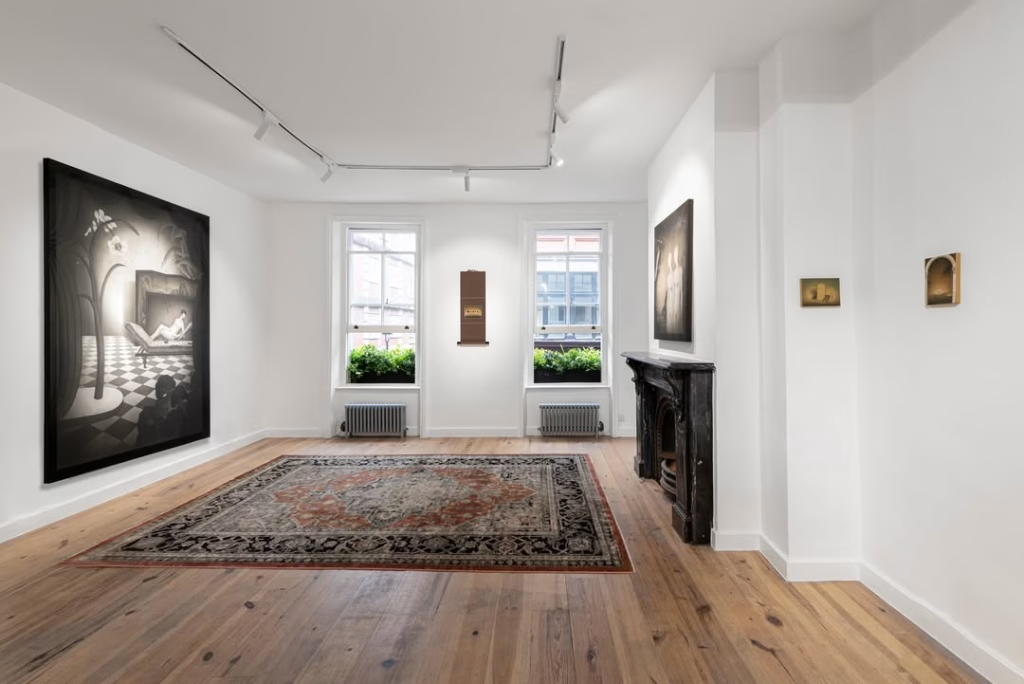
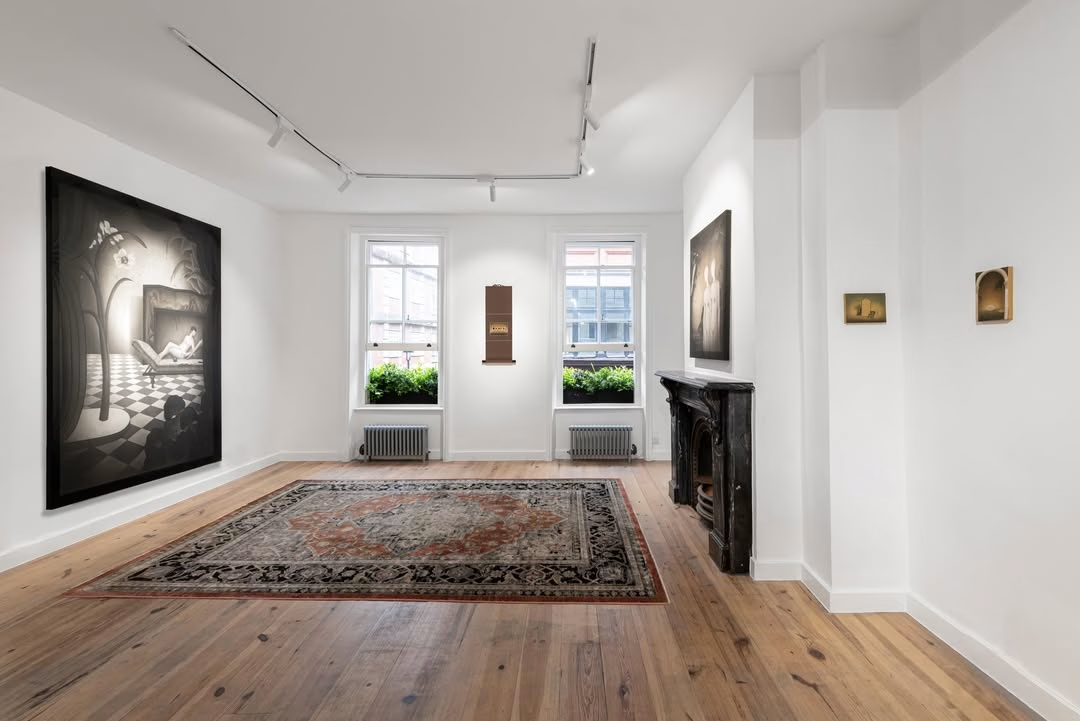
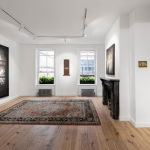
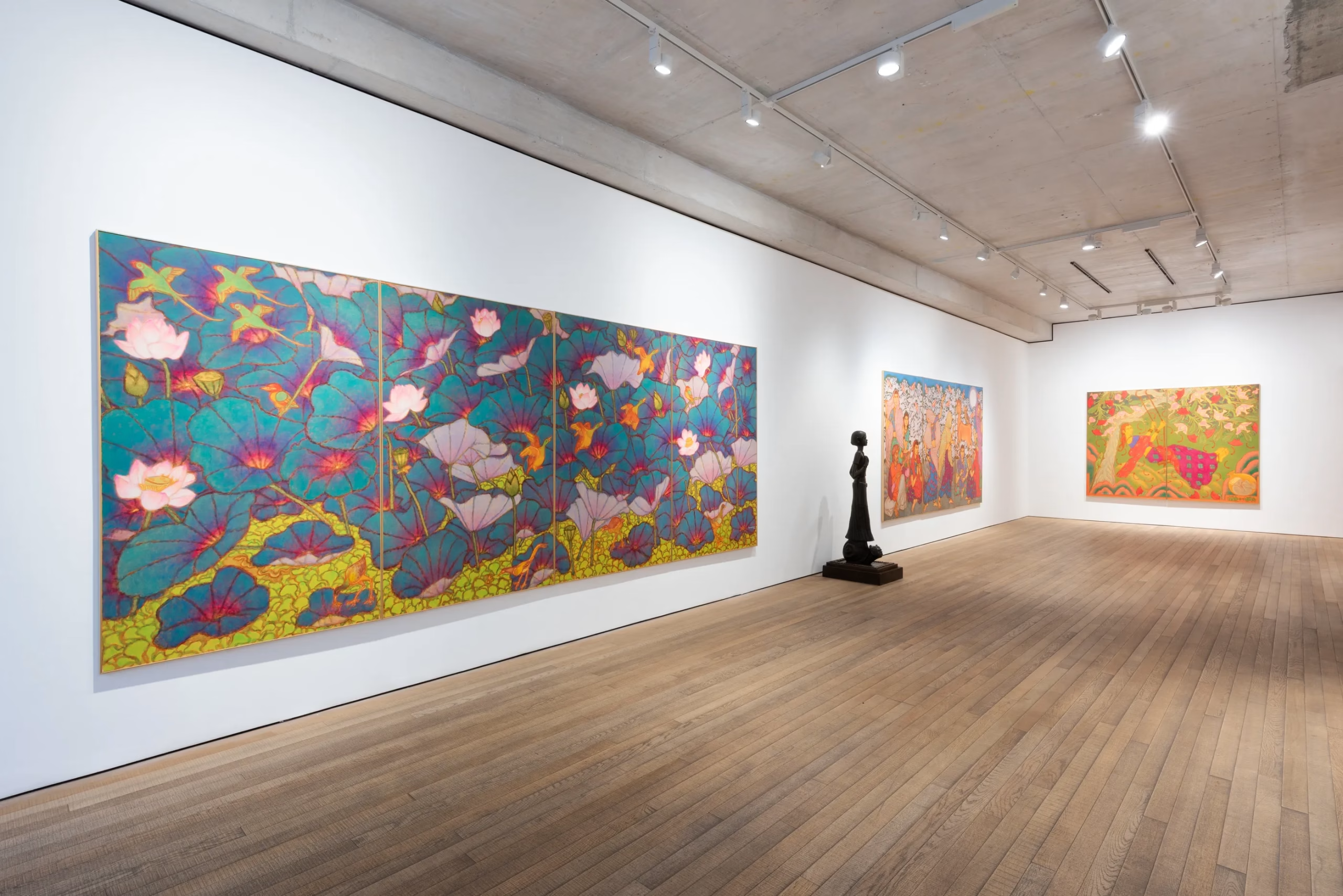
Born in Kerala in 1935 and passing away in New Delhi in 2024, A. Ramachandran constructed one of the most unique and inimitable voices in Indian art history over his ninety-year life. New Delhi-based Vadehra Art Gallery brings the master’s unique legacy to the heart of London, to No.9 Cork Street. However, this selection is not just an exhibition; it is, in the truest sense of the word, a magnificent artistic testament.
A Modernism That Refuses to Mimic Europe
Ramachandran began his artistic journey by studying Malayalam literature and engaged with the Progressive Writers’ movement of the period before shifting his path toward painting. Instead of blindly absorbing the European modernism produced in the Western world and reselling it to the local market, his paintings blended the ancient Kerala temple mural tradition of South India and the tribal culture of Rajasthan into a modern plastic language.
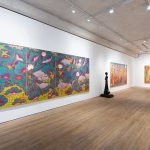
The artist’s famous 1986 Yayati series combined a segment of the Indian epic Mahabharata with 13 bronze sculptures and massive three-faceted murals, effectively transforming the gallery space into the interior of a Kerala temple. These works, in which myth and mural melt into one another, demonstrate how vast Ramachandran’s artistic scale truly was. He was a master who commanded both monumental murals and delicate, pocket-sized miniatures with the exact same technical flawlessness. This genius earned him the Padma Bhushan, one of India’s highest civilian honors, in 2005; last year (2025), a museum directly bearing his name opened in the country’s city of Kollam.
The Raga of Sunset: Late-Period Works
Vadehra Art Gallery prepared this special presentation, occurring after the artist’s passing, in meticulous collaboration with Ramachandran’s immediate family. The artist’s late works, which he titled “Sandhya Rāga”, carry the entire aesthetic and philosophical accumulation of a grand lifetime on their shoulders.
This exhibition in London serves as a striking reminder of how little the Western-centric art world still knows today about Indian modernism and its deep-rooted past. As emphasized in the title, Ramachandran was certainly “a singular modernist”; however, this singularity was not an inadequacy lagging behind the mainstream, but a conscious, proud, and powerful artistic choice that completely rejected Western molds.
Exhibition Details:
- Venue: No.9 Cork Street, London (Hosted by Vadehra Art Gallery)
- Artist: A. Ramachandran (1935–2024)
- Exhibition Title: A Singular Modernist
- Dates: June 3 – July 4, 2026
Admission: Open to the public and free of charge