

One of Madrid’s most refined art destinations, the Museo Nacional Thyssen-Bornemisza, leaves us in the company of Spain’s first major retrospective dedicated to Vilhelm Hammershøi (1864–1916). The title of the exhibition is like a poem in itself: The Eye that Listens. Even though more than a century has passed since his death, the Danish master’s famous cold, gray, and monochromatic interior scenes continue to draw the modern viewer in an uncanny and enchanting way.
Painting the Silence: “An Eye that Listens”
The exhibition’s curator, Clara Marcellán, summarizes Hammershøi’s brush with a very elegant metaphor:
“Vilhelm Hammershøi painted as if listening, as if waiting for things to make a sound; even if we, the viewers, sometimes do not know exactly what that sound is…”
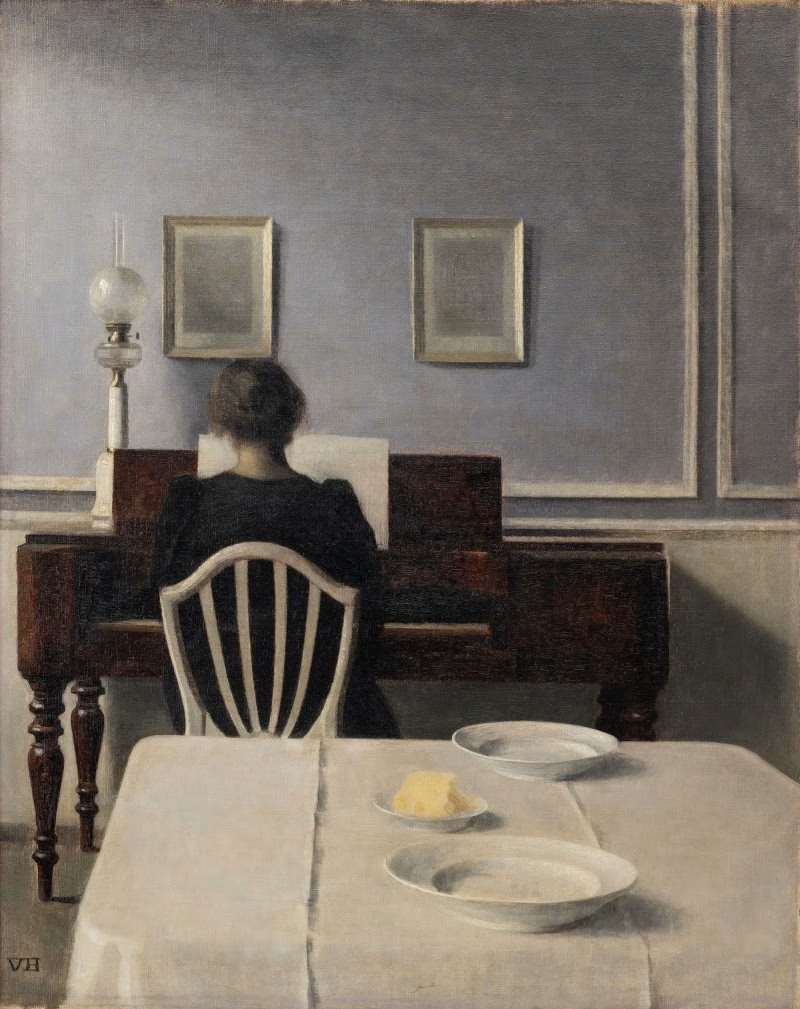
The absolute calm and sense of emptiness in his paintings draw sustenance from the artist’s deep interest in music and his melancholic introspection. Rooms with doorframes lacking handles, closed windows, bare walls, and the pale Scandinavian light filtering through those gaps detach the viewer from the noise of the outside world, forcing them to listen to their own inner voice.
The Hidden Subject of the Interiors: Ida Ilsted
Bringing together approximately one hundred works, this comprehensive selection was organized in collaboration with the Kunsthaus Zürich and places a microscope on the most vital figure in Hammershøi’s creative process: his wife and sole muse, Ida Ilsted.
The mysterious female figure we frequently see in the artist’s canvases—usually with her back turned, her hair tied in a bun, and the nape of her neck exposed—is almost always Ida. While demonstrating how the interior spaces were gradually simplified over the years and how architectural lines and pale landscapes transformed into sanctuaries of melancholy, the exhibition reaches a perfect finale with the honest self-portraits the artist painted during the final years of his life.
Time is Running Out: Before Saying Goodbye to Madrid
Viewing Hammershøi’s works within the Thyssen’s collection means allowing him to engage in a silent dialogue with 17th-century Dutch Old Masters like Vermeer or with the 19th-century Impressionists. For minds weary of the overstimulating, fast, and bright imagery of the digital age, this exhibition will feel like a literal remedy.
However, it is best to hurry; this silent oasis will say goodbye to Madrid at the end of May and head toward Switzerland.
- Venue: Museo Nacional Thyssen-Bornemisza, Madrid
- Exhibition Dates: February 17 – May 31, 2026 (Closing soon!)
- Collaboration: Kunsthaus Zürich
- Key Themes: Introspection, Scandinavian light, quietude, and the mystery of the domestic sphere.