

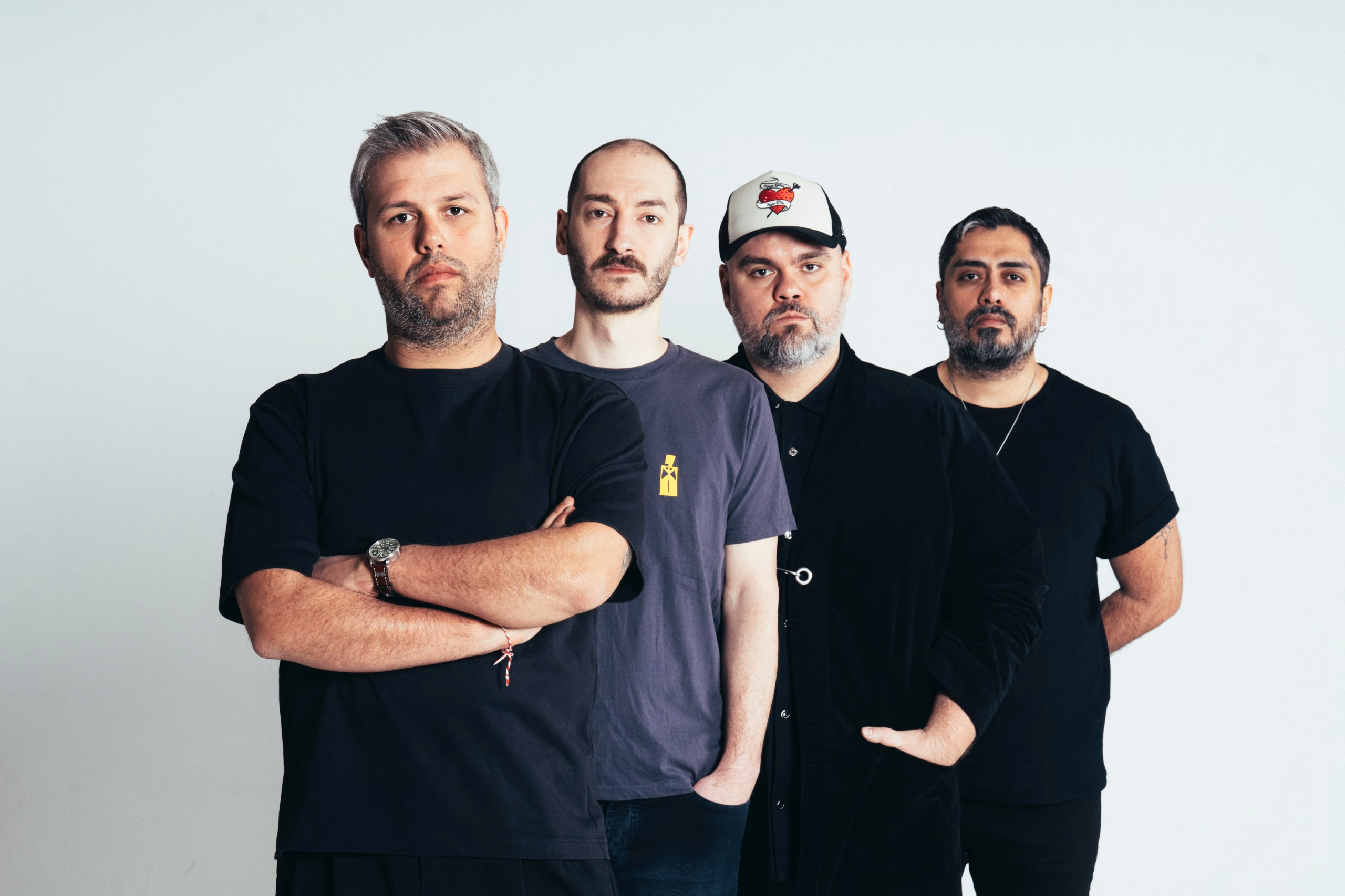
Having introduced themselves to listeners with “Bu Bizim Nazik İsyanımız” (This is Our Gentle Rebellion), Dalgakıran is crossing a point of no return with their new album, Olay Ufku (Event Horizon). Having already released two singles from the project, the band—drawing inspiration from urban chaos and the confinement of modern man—transforms the thin line between control and loss of control into a musical mirror. We sat down with the members of Dalgakıran, whose signature is etched into every piece: Tunca Baran Bütün (vocals/electric guitar), Canberk Alıcı (electric guitar), Deniz Gezgin (bass guitar), and Ozan Görgülü (drums).
You come to us with a powerful metaphor like “Event Horizon.” Exactly what “point of no return” did this album emerge from for you?
Canberk: As a group, we feed off the impact the city has on the modern individual—the constructive and destructive relationships humans have with themselves, their surroundings, and the world. There is a state of entropy; disorder and clutter are in a constant state of increase. We are transforming too, and “Event Horizon” is a strong metaphor for that transformation. As we release more songs from the album, this metaphor will only grow stronger.
Compared to your first album, what was the biggest emotional and musical break in this project?
Deniz: Our first album was a distillation of songs accumulated over many years. This new album, however, was created in a very focused six-month period. This short duration strengthened the bond between the songs and made the narrative and emotional state more consistent and distinct.
Looking at “Hesap” and “Deli Dans,” there’s a felt tension between control and loss of control. Was this a conscious construction?
Ozan: Yes, it was intentional. We shape our songs not just for rhyme or infrastructural harmony, but by considering the themes we want to convey. Since we all have professional careers, we don’t feel comfortable unless we construct even this line between control and loss of control in a “controlled” manner.
Your relationship with the city seems darker in this album. How has modern urban life transformed your sound?
Baran: We have to exert more effort every day just to be happy; over time, this becomes an emotional reaction. Our reaction is our music. We haven’t had a massive breakdown like Goya yet, but we hope not to reach that point.
Is “Olay Ufku” progressing as a concept album?
Canberk: We position it as an album where every song speaks to one another. As the city pushed us, we turned our eyes to the universe; when the pieces come together, listeners will find clues that converse with each other.
In terms of production, we hear a harder, more direct sound. Was this an aesthetic decision?
Deniz: Because we followed a more focused process, we were able to establish a more direct link between the feelings of the songs and their musical phrasing. Additionally, spending more time together as band members and talking more frequently about our music contributed to this direct language.
The rhythmic structures feel more “physical.” Was there an intention to draw the listener into a physical experience?
Ozan: That’s a great question. When we started playing the new songs at concerts, we experienced firsthand how the feeling created by the drums and guitars transformed into a more physical energy.
What was the most difficult or surprising moment during the writing process?
Baran: When we retreated to a summer house to put the finishing touches on the songs, the building’s electrical infrastructure couldn’t handle our music. We got a shock from every object we touched; it was an interesting omen for the feeling the album would create in us. However, we were positively surprised by how naturally and quickly the songs took shape. This album grounded us.
Is “Olay Ufku” an end or a beginning?
Baran: This album is the milestone of our transition to a more decisive Dalgakıran—one that knows what it wants to say and how to say it. Although the name suggests an end, we are nurturing a timeless hope. For us, it is not an end; it is the place where we are reborn at every moment and where new stories begin.
What should the listener feel when they hear this album?
Ozan: Excitement, happiness, confrontation, escape, and anxiety… all at once. We aren’t creating a dystopian universe, but we’re not sure if it would be The Little Prince’s favorite album.
If you had to summarize the album in a single sentence?
Baran: Olay Ufku is that jarring and sincere mirror where we manage to stand in the middle of life cycles unfolding beyond our control and look at ourselves from the outside.
Dalgakıran “Olay Ufku” is available now on all digital platforms.