


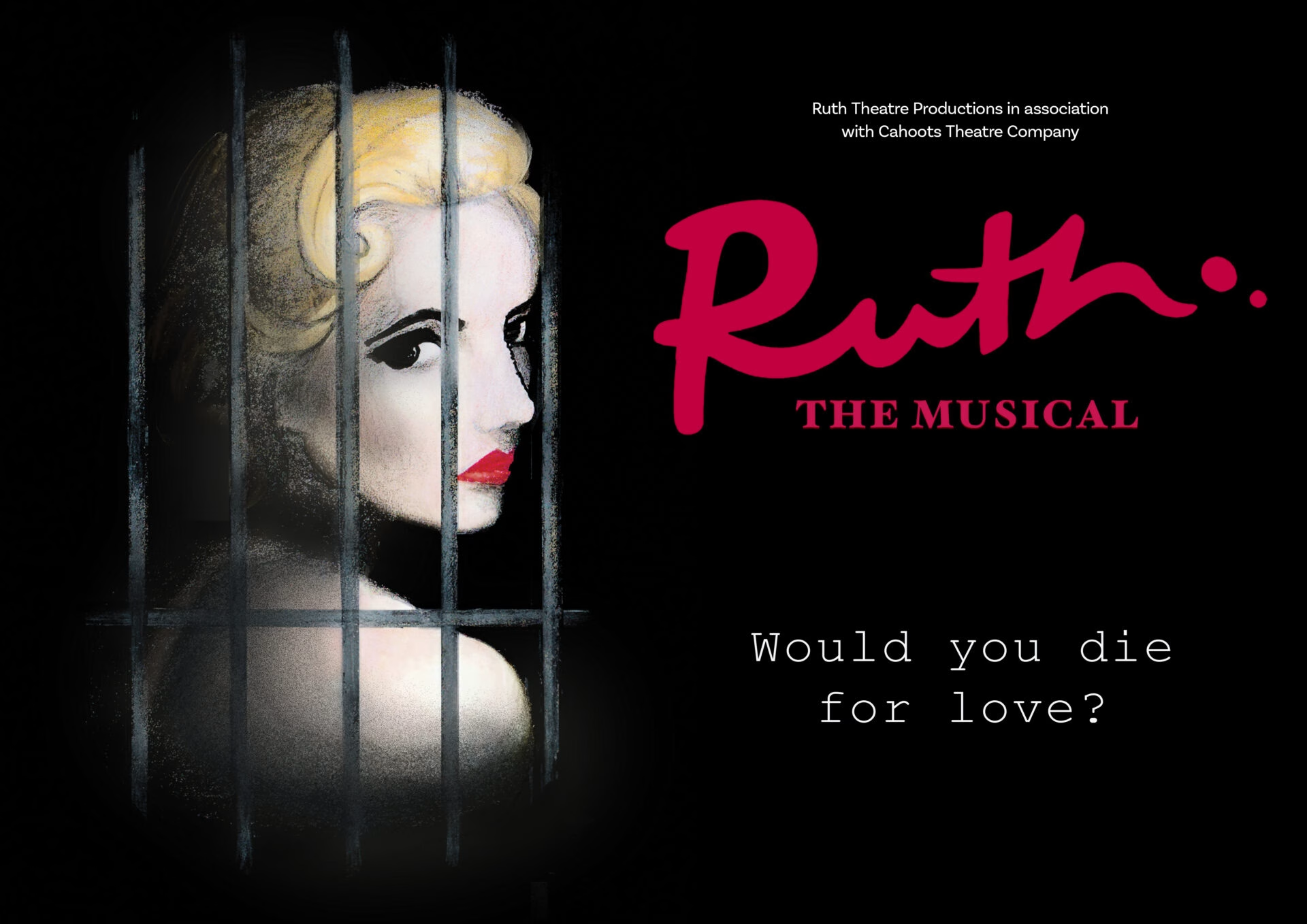
One of London’s venues that preserves the city’s historic fabric in its purest form, Wilton’s Music Hall, opens its curtains in March for a shattering confrontation. The air on this floor today feels heavy with the scent of gunpowder drifting from the misty streets of 1955 London and the melancholic melody of a quest for justice. The story of Ruth Ellis—the last woman to be executed in the United Kingdom—is being reinterpreted with a modern perspective in the musical “Ruth,” written by Caroline Slocock. The deep emotional layers behind that fateful night when Ellis shot her abusive lover David Blakely come alive in the mesmerising atmosphere of the stage.
Why should we watch this tragic story as a musical? Caroline Slocock describes Ruth’s tale as operatic: a drama in which love, death, and obsession are intertwined, requiring the emotional power of music where words alone fall short. “Ruth” does not merely recount a murder; it places at its centre the spiral of violence a woman endured from childhood onward and the hypocrisy of society. Running from 18 to 28 March 2026, this production opens a door—through the lens of today’s #MeToo movement and evolving legal norms—to understanding how a woman branded a “monster” was in reality a victim. The first notes you hear as you climb the stairs will carry you from the courtroom of seventy years ago straight into today’s reckoning of conscience.
An Operatic Tragedy: Love, Death, and Obsession
Caroline Slocock describes this project as a moment of revelation, bringing the drama and chaos of Ruth Ellis’s life together through the universal language of music. According to Slocock, Ruth was not born evil; rather, she was a damaged soul, exploited by men from her upbringing onward. The cycle of violence in her relationship with David Blakely reached an irreversible point when someone handed her a gun and taught her how to use it.
The musical meticulously follows Ruth’s steps—from the ill-fated pub in Hampstead to the nightclubs of Knightsbridge—tracing the real locations and lived experiences. Slocock incorporates Ruth’s own words into the text, ensuring the story never drifts from reality. Yet at the heart of the narrative lies a bold leap of imagination that will surprise the audience.
A Rebellion in the Courtroom: The Song of Hypocrisy
One of the production’s most striking moments occurs in the courtroom scene. A song in which the other hostesses from the club where Ruth worked fiercely criticise the hypocrisy of the era’s judges and lawyers also delivers a sharp commentary on today’s corruption of power and societal masks. This scene confronts us with the truth that Ellis was not judged solely as a killer, but as a victim of a male-dominated system.
The concept of diminished responsibility—introduced into the legal system two years after Ruth Ellis’s execution—is in many ways part of her legacy. If Ruth Ellis committed the same crime today, society’s and the justice system’s view of her would likely be very different. The musical leaves the audience with one piercing question: Should justice concern itself only with what happened, or also with why it happened?
Wilton’s Music Hall, one of London’s oldest surviving music halls, provides the perfect backdrop for this dark and profound story. With its Victorian-era atmosphere, the venue makes you feel the spirit of Ruth’s time deep in your bones.
Venue: Wilton’s Music Hall, London
Date Range: 18–28 March 2026