

Yellow Letters (Sarı Zarflar): The Most Human Manifesto of Resistance in 2026 Cinema

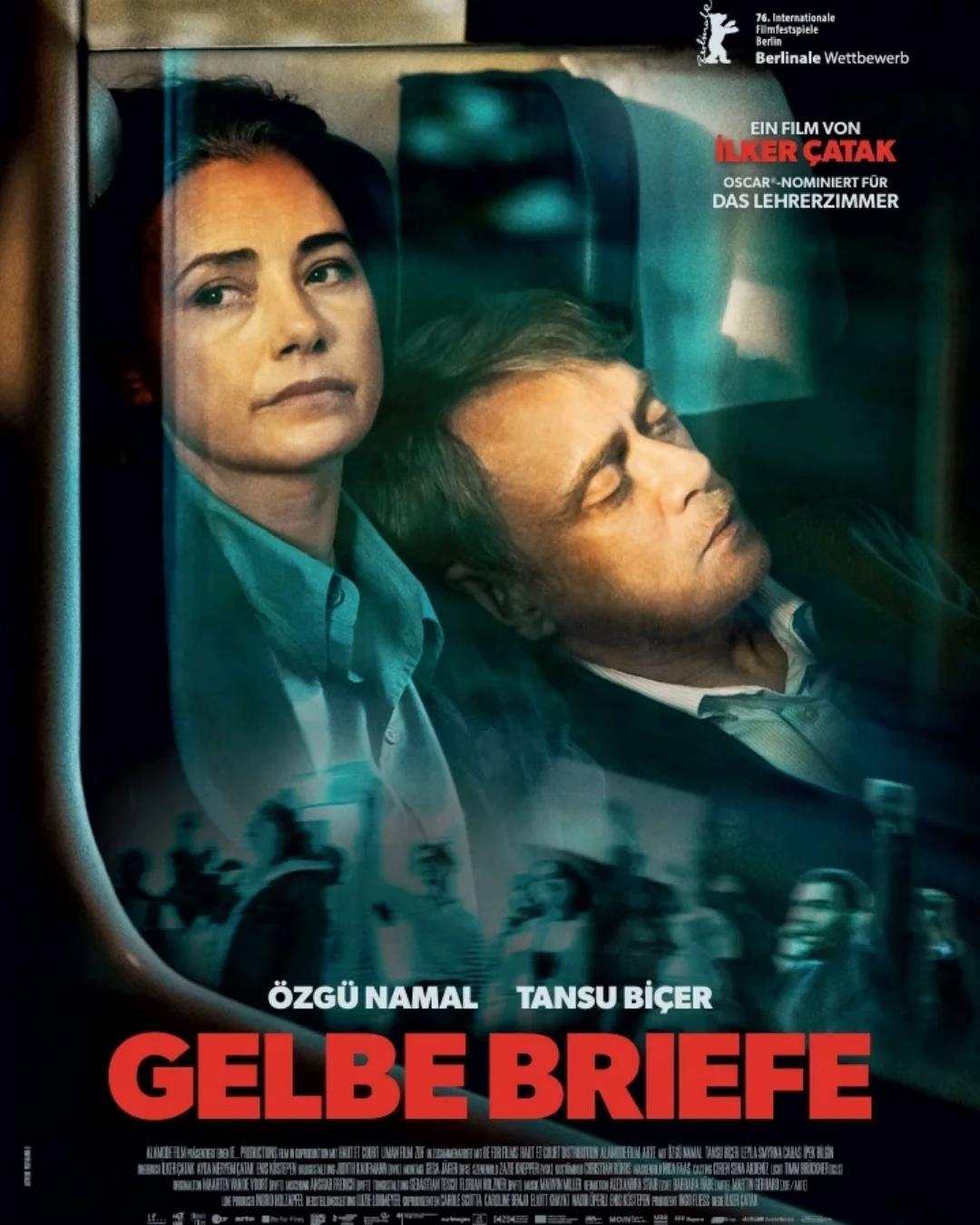
Following İlker Çatak’s Oscar-nominated The Teachers’ Lounge, his highly anticipated new masterpiece Yellow Letters (Gelbe Briefe) shifts macro-politics from the streets and squares to the kitchen table, the bedroom, and the silence of dinner time. Derya (Özgü Namal) and Aziz (Tansu Biçer), well-known artists in Ankara, lose their jobs and home overnight due to an arbitrary state decision.
These yellow letters are not merely termination notices; they are symbols of the dismantling of the characters’ identities, dignity, and autonomy. The couple is forced to take refuge in Istanbul with Aziz’s family, together with their 13-year-old daughter Ezgi. Yet this move is not only a geographical change—it is an existential battle waged in the shadow of intergenerational conflicts and political trauma.
Why This Film Matters So Much to Us
Yellow Letters strikes directly at the heart of the viewer in the 2026 climate of institutional distrust and economic uncertainty. What makes the film truly unique includes:
- The Personalisation of Politics: The film tells ideology not through slogans but through the fragile ecosystem of a marriage. Injustice takes physical form in the tension of a dinner table or in a child’s gaze toward a parent.
- Economic Destruction and Identity: Job loss is not background noise—it is the main catalyst for identity fracture. The question “Who am I?” becomes inseparable from the fear “Will we have enough money?”
- Intergenerational Collision: Living under the same roof with Aziz’s family crystallises the tragedy of the modern middle class caught between dignity and cultural expectations.
Performances and Direction: İlker Çatak’s Surgical Precision
Just as he did in The Teachers’ Lounge, İlker Çatak builds tension not in big explosions but in quiet moments.
Özgü Namal and Tansu Biçer deliver extremely controlled and layered performances without ever slipping into emotional hysteria. Their chemistry is the film’s greatest source of credibility.
The spirit of place is rendered with technical brilliance: Ankara scenes shot in Hamburg and Istanbul scenes filmed in Berlin visually translate the characters’ profound sense of alienation.
The Silent Scream of Dignity
Yellow Letters does not offer grand catharsis or miraculous resolution; instead, it documents how dignity bends under pressure yet is never entirely destroyed. This film is not merely a cinematic work—it is a mirror for anyone trying to preserve their identity in an age of uncertainty.
Why You Should Watch It
Because İlker Çatak does not show us the storm created by the system; he shows us the small candle flame that refuses to go out in that storm. With one major award already and strong festival momentum, the film is poised to become one of the most significant cultural events in European cinema throughout March and April.