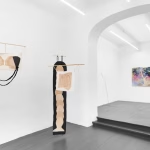


An unusual noise, the scent of ouzo, and a smoky energy are seeping into the aristocratic silence of Bury Street on the London floor of Apartment No:26 this week. Sadie Coles HQ opens its doors to one of the hidden heroes of modern Greek art: Alexandra Christou. Running until April 11, 2026, the exhibition “Taverna” takes us far beyond tourist postcards—into the back streets of Athens, the noisy butcher markets of Psyrri, and the claustrophobic yet tender texture of the island of Astypalaia.
Christou lived her entire life as a bohemian rebel, and her works only reached the world stage in 2023 after being discovered by artist Paulina Olowska following her death. If you are in pursuit of those marginal characters overlooked by “official history,” the spilled drinks on taverna tables, and the silent yet powerful laughter of women, the spirit of this floor will catch you with the very first brushstroke.
The Taverna as a Stage: Social Choreography
Throughout art history, bars and tavernas have been the rawest stages for observing social interaction—from Manet, Degas, and Toulouse-Lautrec onward. Christou inherits this tradition but infuses it with a modern, fierce, and deeply authentic Greek interpretation.
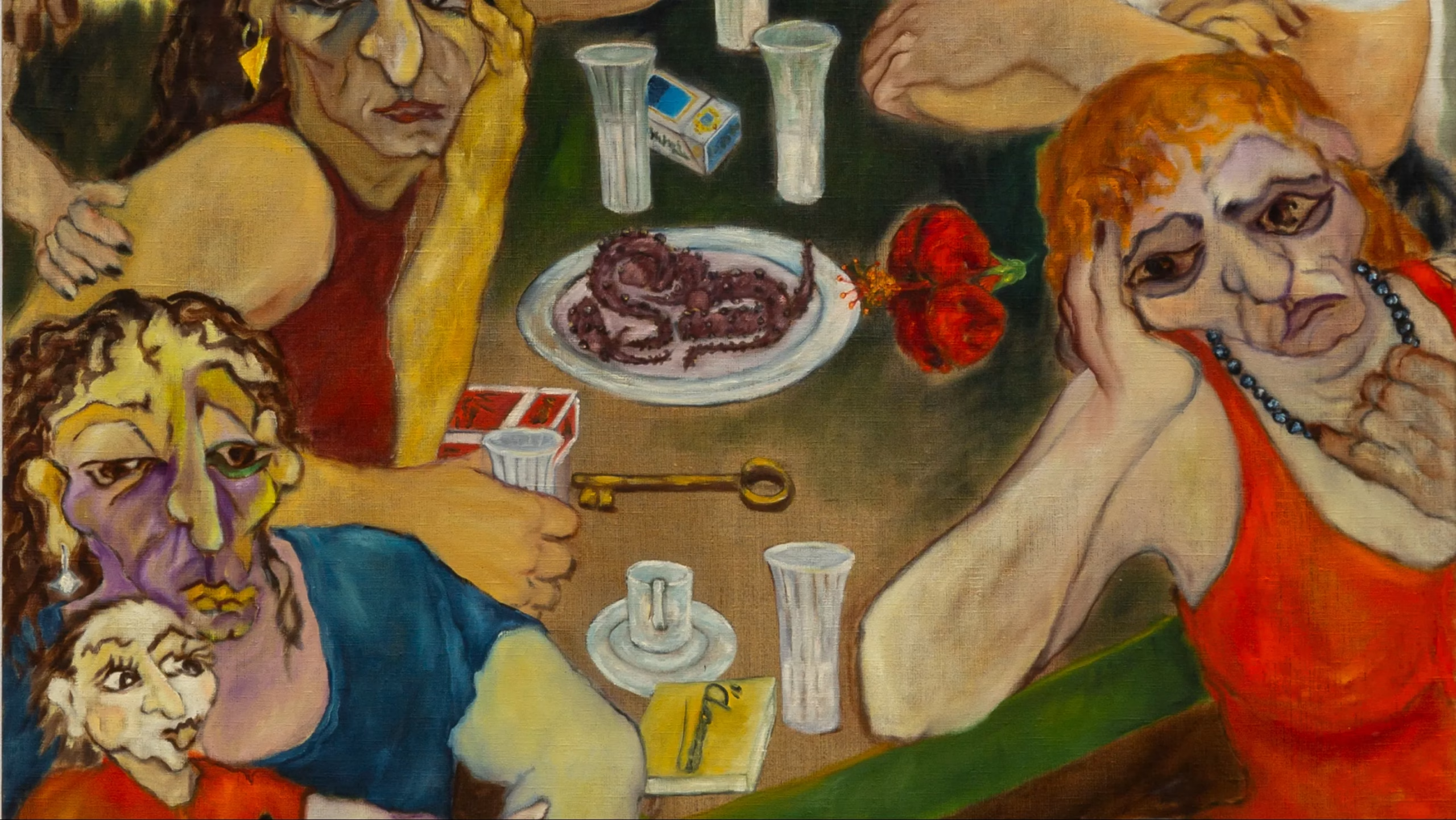
Kafeneia & Kreatagores: The works focus on the kafeneia—places for coffee and ouzo—and the kreatagores, spaces that are simultaneously markets and waiting rooms.
Marginal Characters: Christou’s protagonists are never polished figures. She transforms the ordinary and often overlooked people we pass by every day into heroes.
Geinaikes (Women): The most striking element on the canvases is the groups of women dominating the tables—playing cards, smoking, sharing meze, and forging intergenerational bonds. These women reclaim public space from masculine dominance, turning it into a platform of sisterhood.
In Search of Broken Relationships and Transparent Moments
Christou’s paintings offer an unromanticized reality, yet one that carries immense energy and tenderness.
Reflection in the Mirror: In her 1992 work The End of the Relationship, Kafeneia, a wall-hung mirror reflects the shared table. The food scraps and spilled drinks on the table silently witness the end of a relationship.
A Bohemian Legacy: During her time in Germany, Christou succeeded in blending the fierce, rule-breaking style of Neue Wilde painters such as Immendorff and Kippenberger with her own roots.
“Christou’s art is a personal struggle for independence waged in the narrow space where private and public intersect.”
Before leaving this floor of Apartment No:26, take one more look at Christou’s pugnacious female figures. Their stance in those smoky rooms reminds us of the authentic and courageous solidarity that modernity has tried to make us forget.