

Once Upon a Time, in the Heart of London: The Magical World of Fairy Tales – “Fairy Tales”

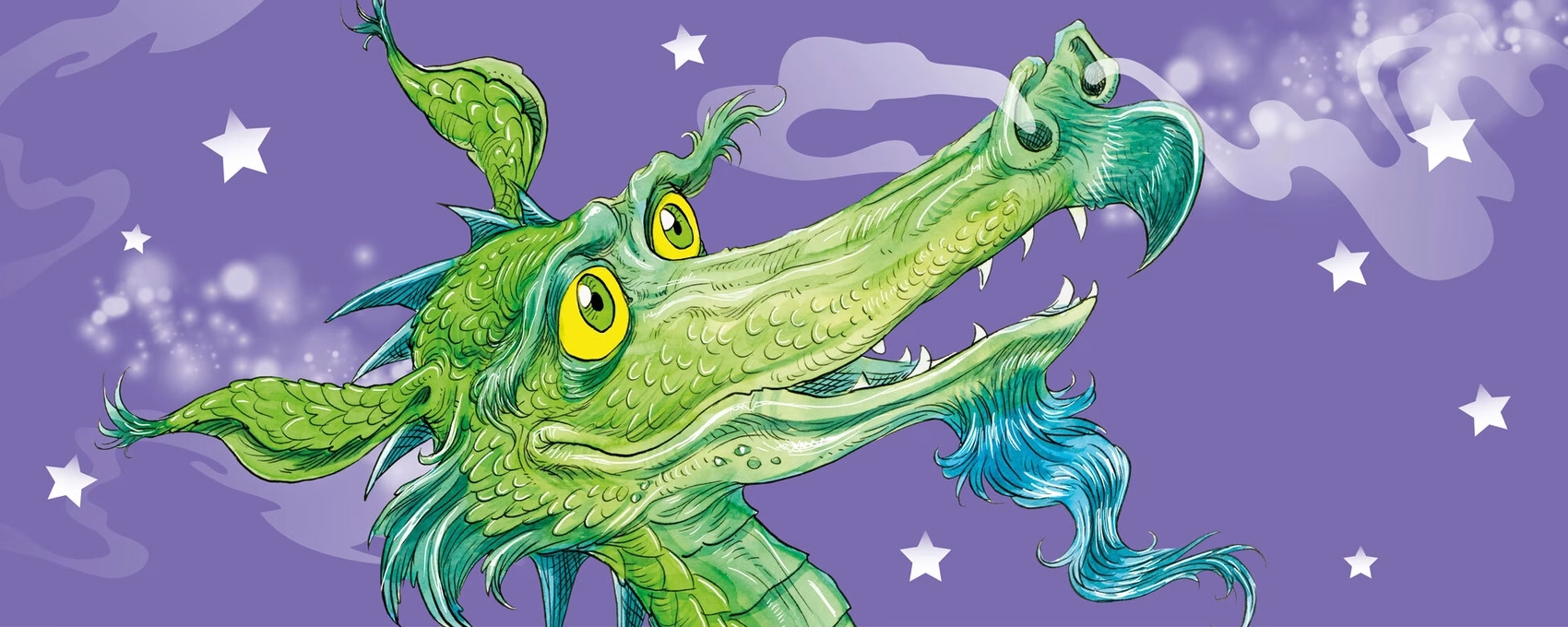
London is a city that hides a story in every corner, where every street could serve as the opening sentence of a novel. This time the address of the tale is one of the world’s greatest treasure houses of knowledge: the British Library. Opening its doors on March 27, 2026, the “Fairy Tales” exhibition takes us not merely into dusty shelves, but straight into the heart of the tales we know yet rediscover anew each time—the realm of giants, fairies, and frog princes.
This exhibition is ready to overflow the library’s usual solemn atmosphere—typically reserved for adults and scholars—like a “magic porridge pot,” embracing visitors of every age. Spanning from the Brothers Grimm to Hans Christian Andersen, from Disney’s glittering universe to Alice’s underground adventures, this journey reveals how fairy tales have evolved, how deeply they have seeped into us, and why we still need them. On this floor of our building today, logic is left outside the door; because here it is not only facts but also dreams that come alive with the words “once upon a time.”
The British Library’s new exhibition is far more than objects behind glass cases. Its design transforms the visitor from a passive observer into an active participant in the tale itself.
From Forest to Palace: Experiential Zones
Interactive Troll Bridge: You never know what you might encounter when crossing beneath the bridge. The unsettling yet curiosity-sparking atmosphere of fairy tales finds a physical counterpart here.
Witches’ Potion Room and the Three Bears’ Breakfast Table: The most iconic scenes from fairy tales are reimagined in touchable, immersive spaces.
Genie’s Lamp and Magical Objects: The mysterious lamp that leaps from the tales of One Thousand and One Nights merges with the library’s vast collection.
From the Attic: Rare Treasures – Manuscripts and Puppets
Original manuscripts—the pinnacle of literary heritage—form the intellectual backbone of the exhibition. Notes penned in the Brothers Grimm’s own hands, unique illustrations by Quentin Blake and Eric Carle prove that fairy tales are not mere children’s playthings but a profound cultural inheritance. Theater puppets and pop-up books, meanwhile, reveal the mastery of visual storytelling across history.
Cinema is undoubtedly the greatest carrier of fairy tales into the modern age. The effect analysis we so often discuss in the Boiler Room takes shape here through Disney’s monumental contribution. Original sketches from Disney and the vision that wove fairy tales into the very fabric of popular culture form one of the exhibition’s key stops. The luminous transformation of tales on screen is presented to visitors with an emotional intensity that goes far beyond technical details.
In short, “Fairy Tales” at the British Library does not simply display objects—it revives the ancient spell of storytelling, reminding us why, even in 2026, we still whisper “once upon a time” when the world feels too heavy.