

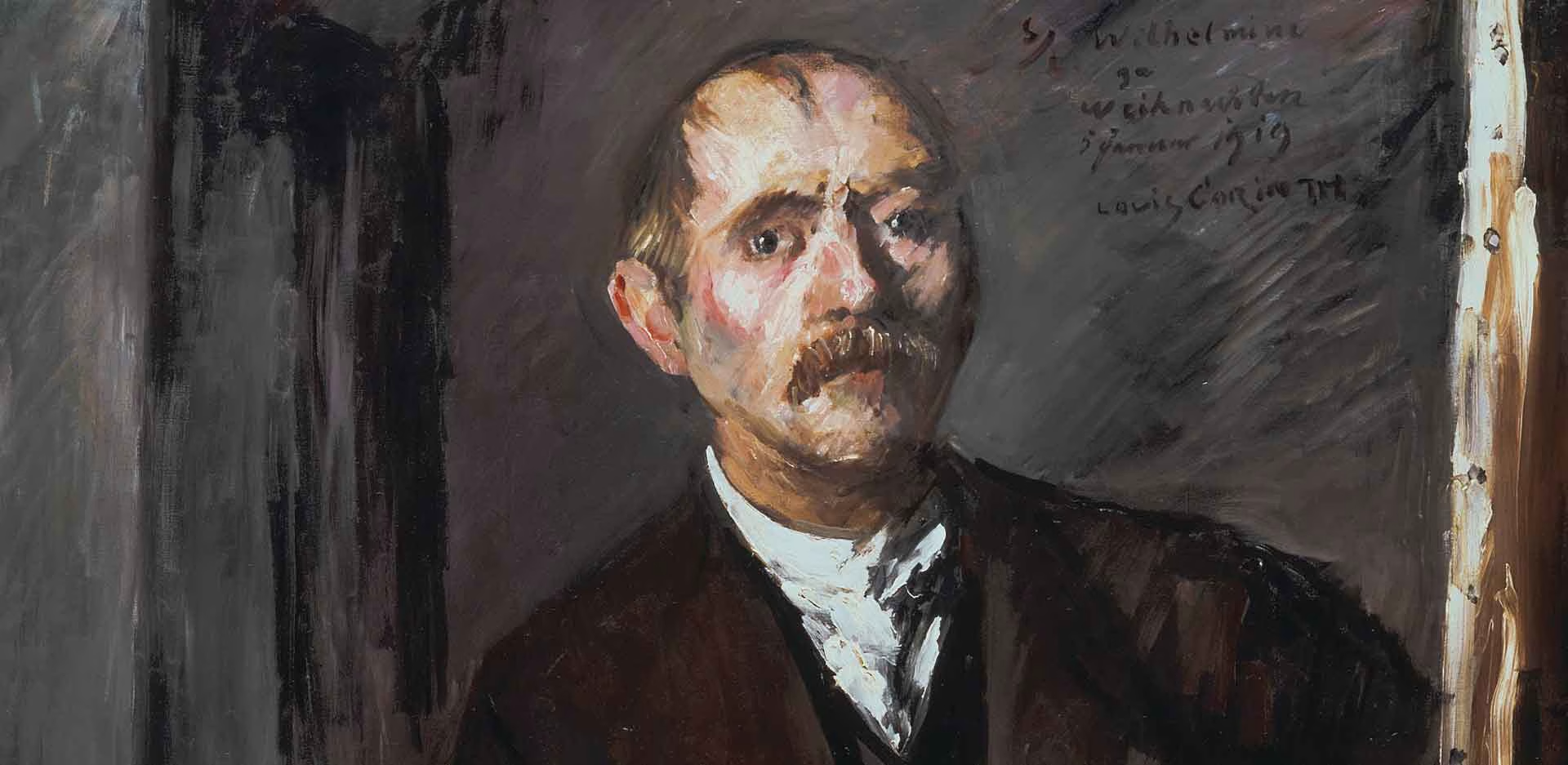
Amid the historic columns of Berlin’s Alte Nationalgalerie, we bear witness to one of the most sorrowful and thought-provoking periods in art history. The exhibition “In Sight! Lovis Corinth, the Nationalgalerie and the ‘Degenerate Art’ Campaign,” organised on the centenary of Lovis Corinth’s death, is entering its final days and will close on 25 January.
This exhibition is not merely an aesthetic retrospective; it is also a detective story of provenance. It lays bare the devastating impact of the Nazi regime’s “Degenerate Art” (Entartete Kunst) campaign—which weaponised art for political ends—on the works of Lovis Corinth and his wife Charlotte Berend-Corinth.
From German Impressionism to the Threshold of Expressionism
Lovis Corinth (1858–1925), regarded alongside Max Liebermann and Max Slevogt as one of the three great figures of German Impressionism, underwent a profound transformation throughout his artistic life. The exhibition allows visitors to feel this evolution:
- Early Period: The classical, light-filled Impressionist manner of his Munich and Berlin years.
- Turning Point (1911): After suffering a stroke, his brushstrokes became harsher and more expressive.
- Tragic End: On 17 July 1925, while travelling to Amsterdam to see works by Frans Hals and Rembrandt one last time, he died of pneumonia.
A Legacy Declared “Degenerate”
The most striking aspect of the exhibition is the exile stories of the paintings themselves. The fate of the works in the Nationalgalerie collection changed dramatically in 1937:
- Confiscation: In 1937, many paintings were removed from the museum walls by the Nazis on the grounds that they were “degenerate.”
- Unexpected Returns: Some works mysteriously reappeared in 1939, while others were sold abroad or vanished entirely.
- Divided Memory: After 1945, both West Germany (Bundesrepublik) and East Germany (DDR) made separate acquisitions to compensate for Corinth’s lost legacy.
This exhibition temporarily reunites these “lost children,” gathered from collections around the world, with their original home at the Nationalgalerie.
Charlotte Berend-Corinth: An Artist Who Did Not Remain in the Shadows
The exhibition also gives Charlotte Berend-Corinth, Lovis’s wife, the recognition she deserves. Far more than a model or spouse, she was an important figure in the Berlin art scene and a talented painter in her own right. Her works serve as a mirror to the architectural and cultural figures of the era. The portrait of the architectural genius Hans Poelzig (1926) stands out as one of the exhibition’s most compelling pieces.
If you wish to trace a legacy lost in the dusty pages of history and witness art’s confrontation with politics first-hand, this exhibition is exactly for you.